
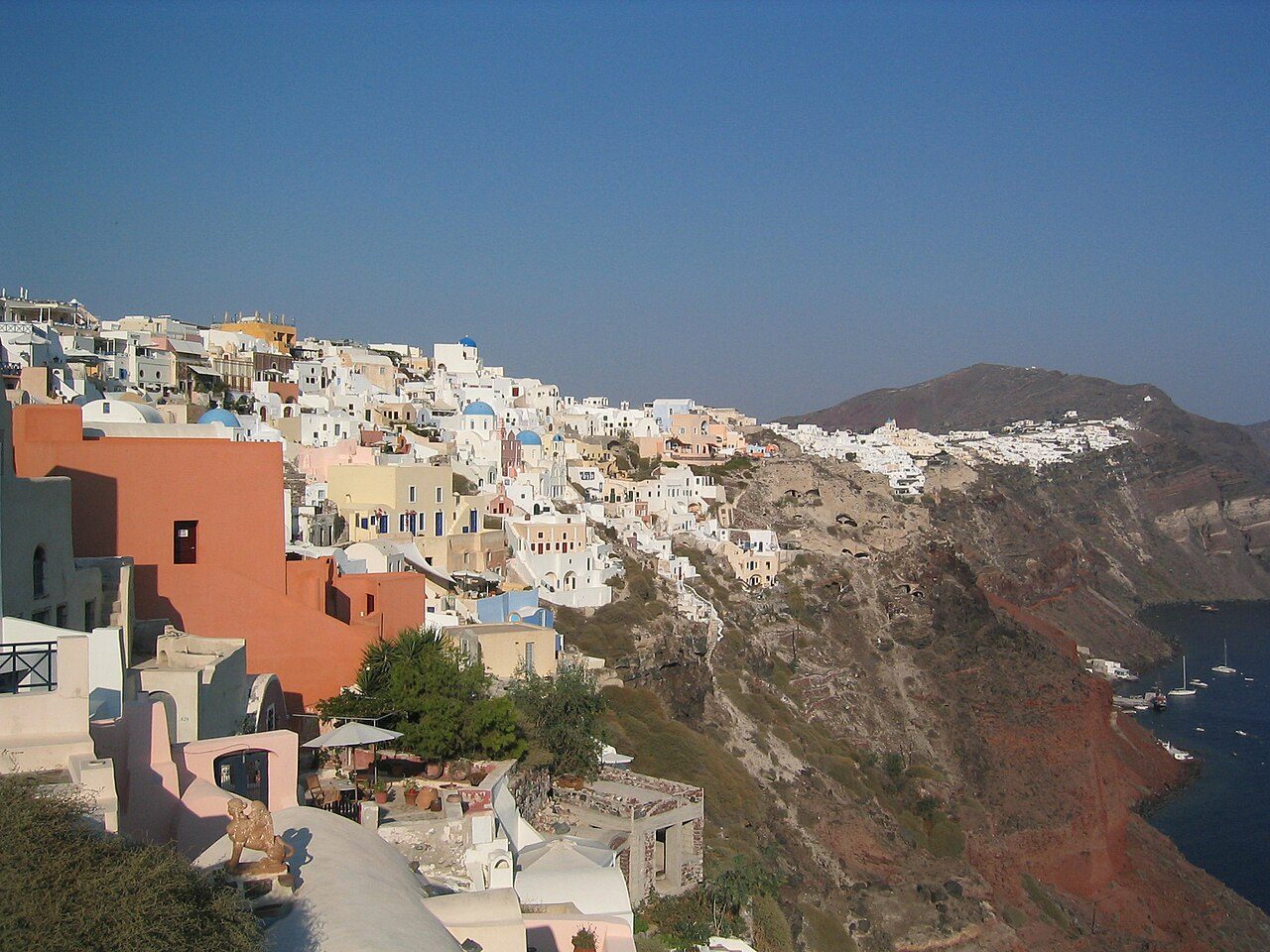
Oia
Perched along the northern rim of Santorini’s volcanic caldera, Oia flourished between the 13th and 16th centuries under Venetian rule before transforming into a major 19th-century maritime trade hub. This seafaring legacy shaped its distinct dual architecture: the grand, neoclassical *kapetanospita* (two-story sea captains’ mansions tinted in Venetian ochre, terracotta, and dusty pink) juxtaposed against the *yposkafa*—subterranean cave homes carved directly into the porous volcanic tuff by mariners. At the settlement's western edge stand the surviving watchtower ruins of the 15th-century Venetian fortress, the *Kasteli* of Agios Nikolaos, while the iconic blue domes of churches like Panagia Platsani anchor the terraced skyline, restored meticulously following the devastating 7.7-magnitude earthquake of 1956. Traversing Oia's narrow, marble-paved pedestrian spine requires navigating a labyrinth of sun-bleached staircases suspended nearly 150 meters above the submerged crater. Travelers encounter a stark, sculpted world where stark white lime wash reflects blinding Mediterranean glare, punctuated by vibrant magenta bougainvillea and the rustic timber sails of historic clifftop windmills. The sensation is one of vertical suspension; running a hand along the rough, chalky texture of curved caldera walls, one feels the persistent, salt-laden Aegean breeze. As twilight approaches, the blinding white facade shifts into shades of lavender, gold, and deep indigo, casting the layered cave terraces into sharp relief against the shimmering expanse of the sea below.
More in Santorini
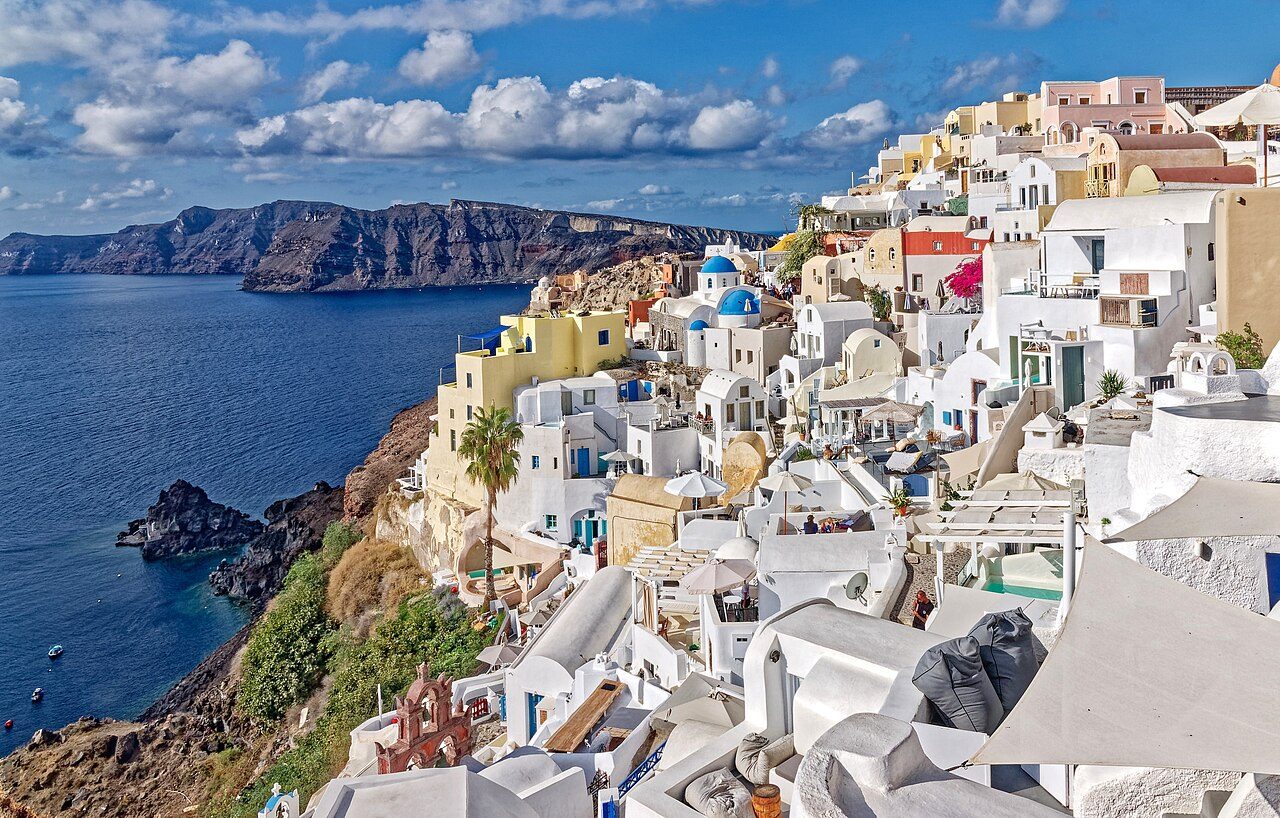
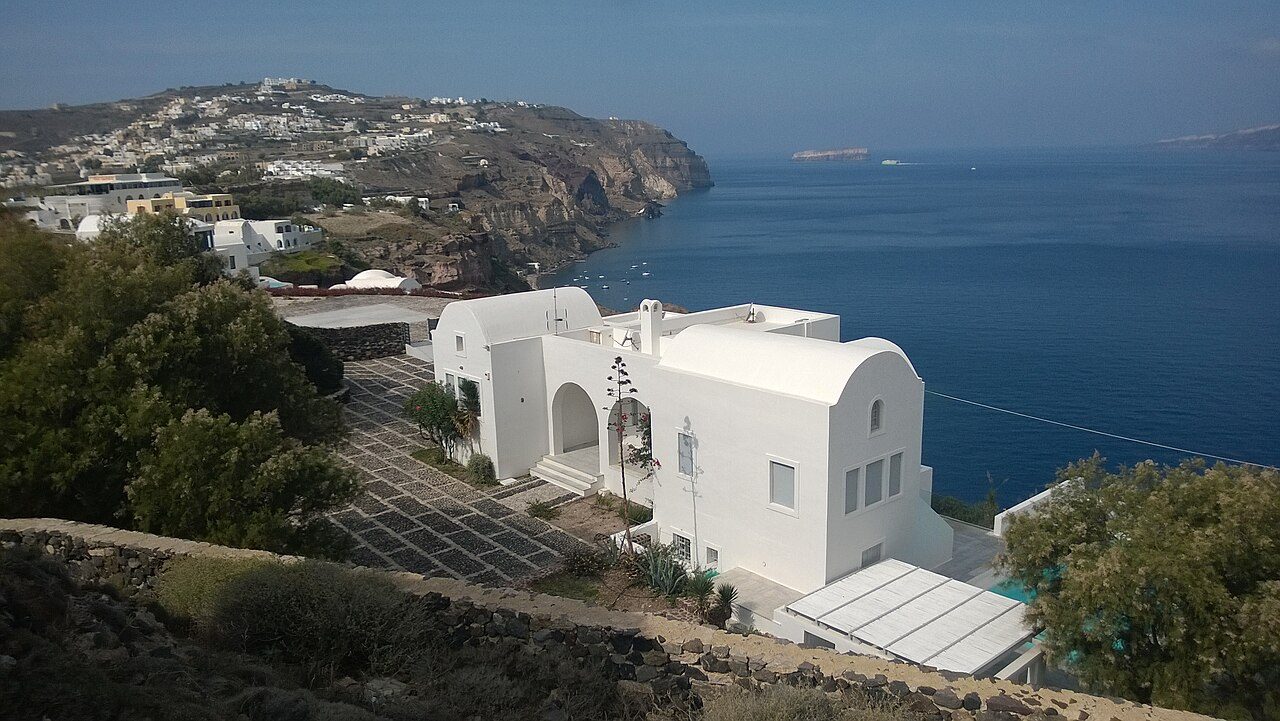
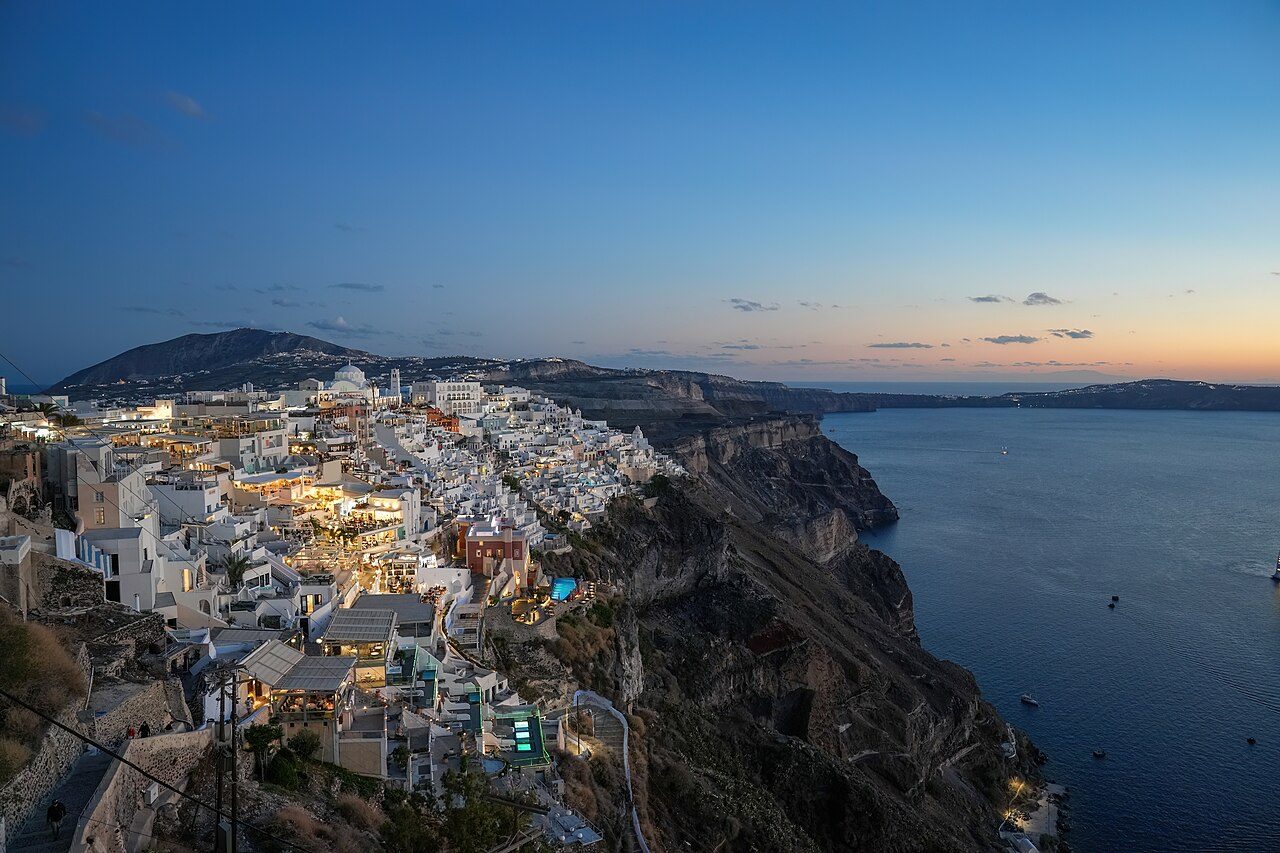
Photo credits (5)
- Meersan, CC BY-SA 3.0, via Wikimedia Commons
- Holger Uwe Schmitt, CC BY-SA 4.0, via Wikimedia Commons
- Jan M, CC BY-SA 3.0, via Wikimedia Commons
- Giles Laurent, CC BY-SA 4.0, via Wikimedia Commons
- Sidvics, CC BY-SA 4.0, via Wikimedia Commons