
 New added
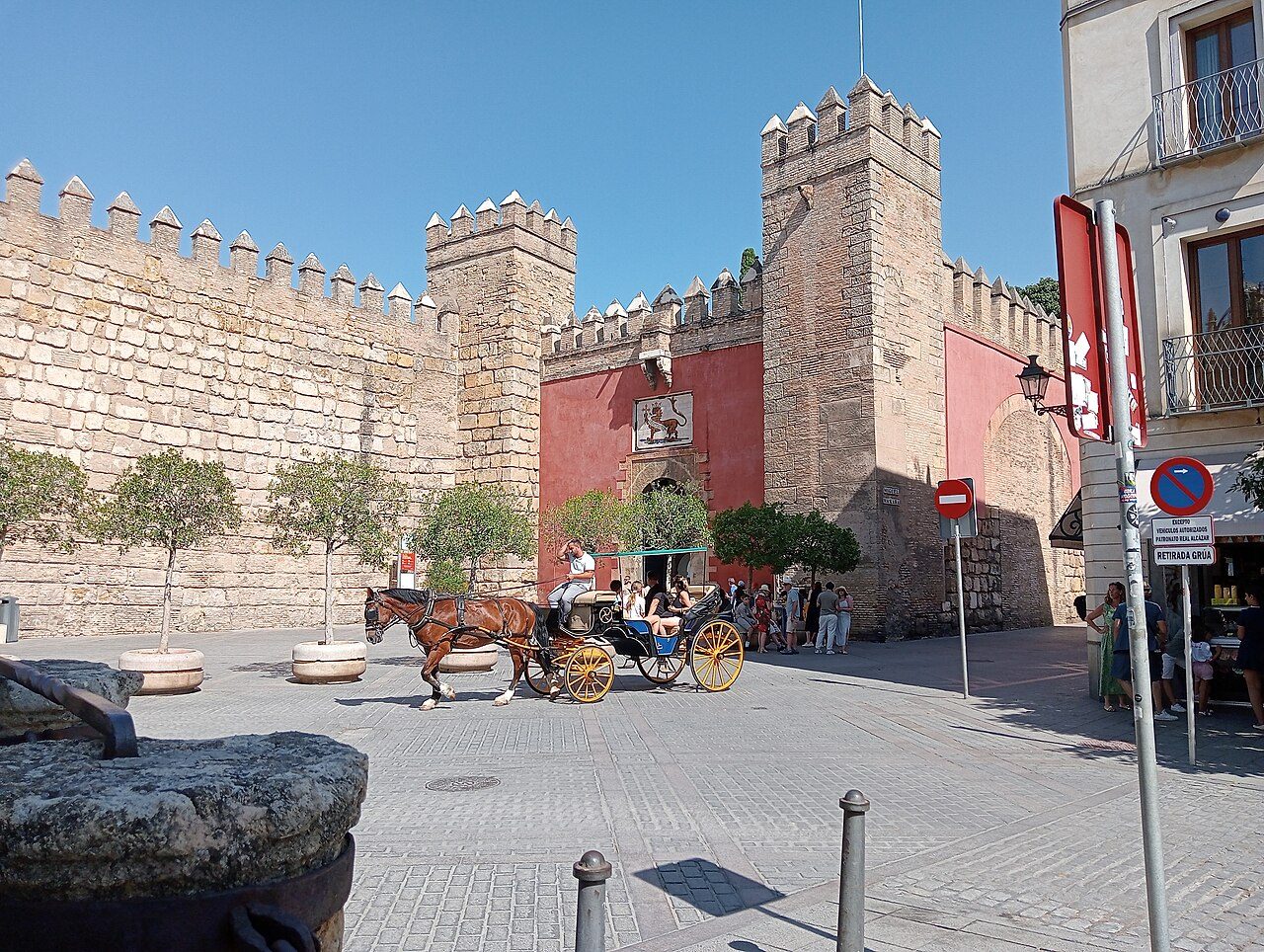
Real Alcázar
Step into a palimpsest of Iberian history where Christian monarchs co-opted the refined artistry of Islamic Al-Andalus. Founded as a 10th-century fortress under the Caliphate of Córdoba and transformed after 1364 by King Pedro I, the Real Alcázar is Europe's oldest continuously occupied royal palace and the crown jewel of Mudéjar design. In the *Salón de Embajadores* (Hall of Ambassadors), visitors crane their necks beneath an intricate 1427 cedar dome—a gilded hemisphere of geometric marquetry representing the cosmos. Around its perimeter, polychromatic *azulejo* tiles and lace-like *yesería* plasterwork interlace Arabic invocations with Castilian heraldry, bearing witness to centuries of courtly reinvention. Passing into the tranquil *Patio de las Doncellas*, multi-lobed plaster arches cast sharp shadows across a central reflecting pool flanked by sunken garden beds, cooling the Andalusian heat. Descending beneath the palace, the cavernous Baths of Doña María de Padilla reveal rib-vaulted brick arcades mirrored in still reservoir waters. Emerging into the daylight, travelers wander through seven hectares of terraced Renaissance and Baroque gardens shaded by bitter orange trees, towering date palms, and violet bougainvillea. Accompanied by the gentle trickle of ceramic fountains and the calls of resident peacocks, walking these grounds evokes the sensory seclusion of medieval Moorish royalty.
More in Seville
Photo credits (5)
- BuzzerLone, CC BY 4.0, via Wikimedia Commons
- Holger Uwe Schmitt, CC BY-SA 4.0, via Wikimedia Commons
- Weldon Kennedy from London, UK, CC BY 2.0, via Wikimedia Commons
- Andrei Dimofte from Stuttgart, Germany, CC BY 2.0, via Wikimedia Commons
- Gzzz, CC BY-SA 3.0, via Wikimedia Commons