
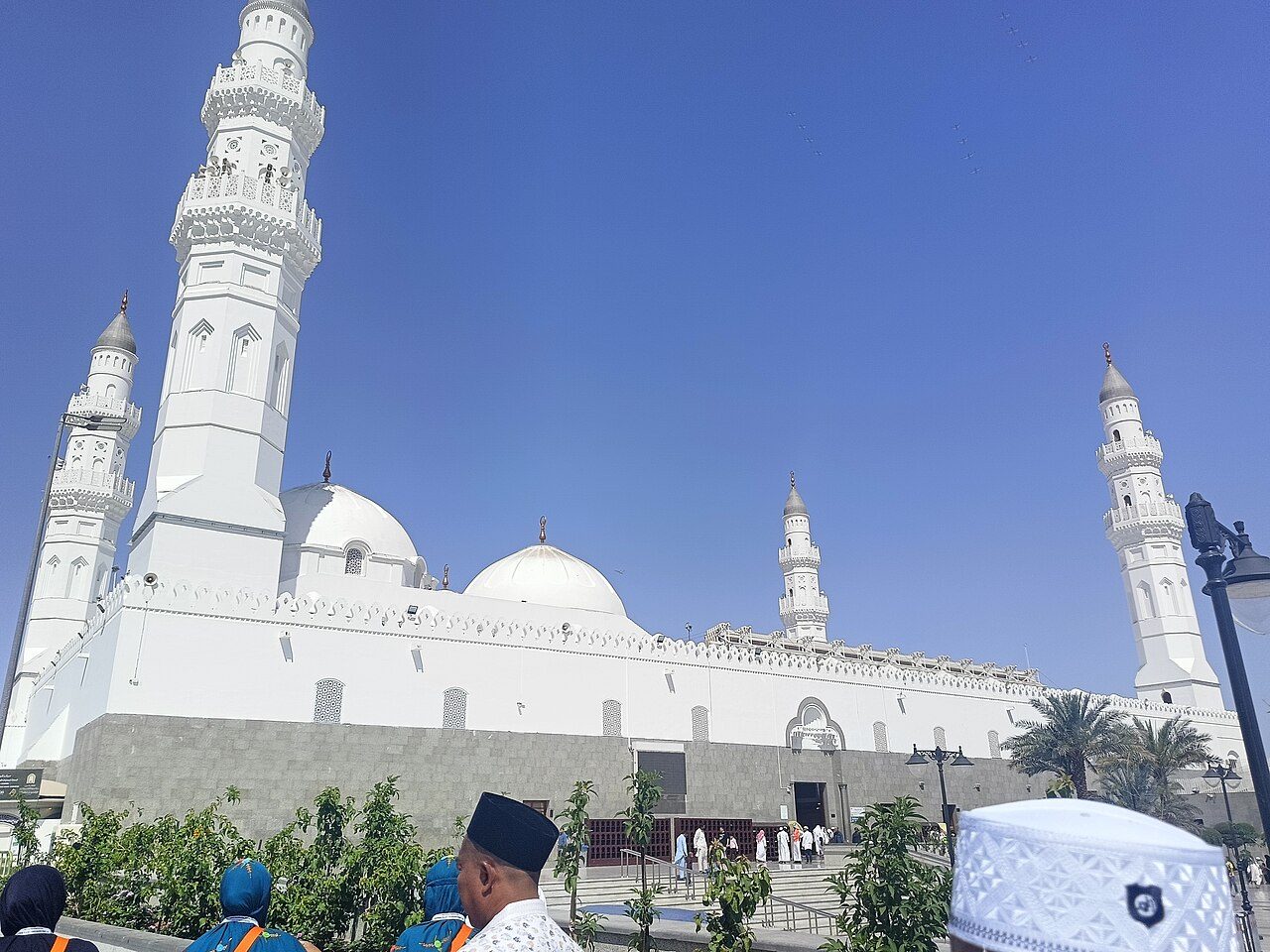
Quba Mosque
When Prophet Muhammad completed his emigration from Mecca in 622 CE, his very first act upon reaching the oasis settlement south of Medina was laying the foundation stones for this sanctuary, establishing it as the first mosque in Islamic history. Revered as the place of worship referenced in the Quran as founded upon piety from its first day, the complex underwent centuries of expansion under Umayyad caliphs and Ottoman sultans. Its present monumental expression, conceived by Egyptian architect Abdel-Wahed El-Wakil in 1986, honors traditional vernacular forms on an imperial scale, preserving the site where a single ritual prayer is traditionally believed to equal the reward of an entire Umrah pilgrimage. Approaching via the date-palm-lined pedestrian concourse, visitors are met by a gleaming white limestone facade punctuated by basalt accents and four slender, octagonal minarets vaulting forty-seven meters into the desert sky. A striking roofscape of six grand domes and fifty-six smaller cupolas encloses the interior, where the fierce Hejazi heat abruptly yields to the whispering silence of air-conditioned prayer halls. Stepping barefoot onto plush green carpets beneath massive brass chandeliers, travelers move toward the colonnaded central courtyard, where pale, highly polished marble tiles reflect the afternoon sky and retractable sailcloth canopies diffuse the Arabian sunlight into a soft, contemplative glow.
More in Medina
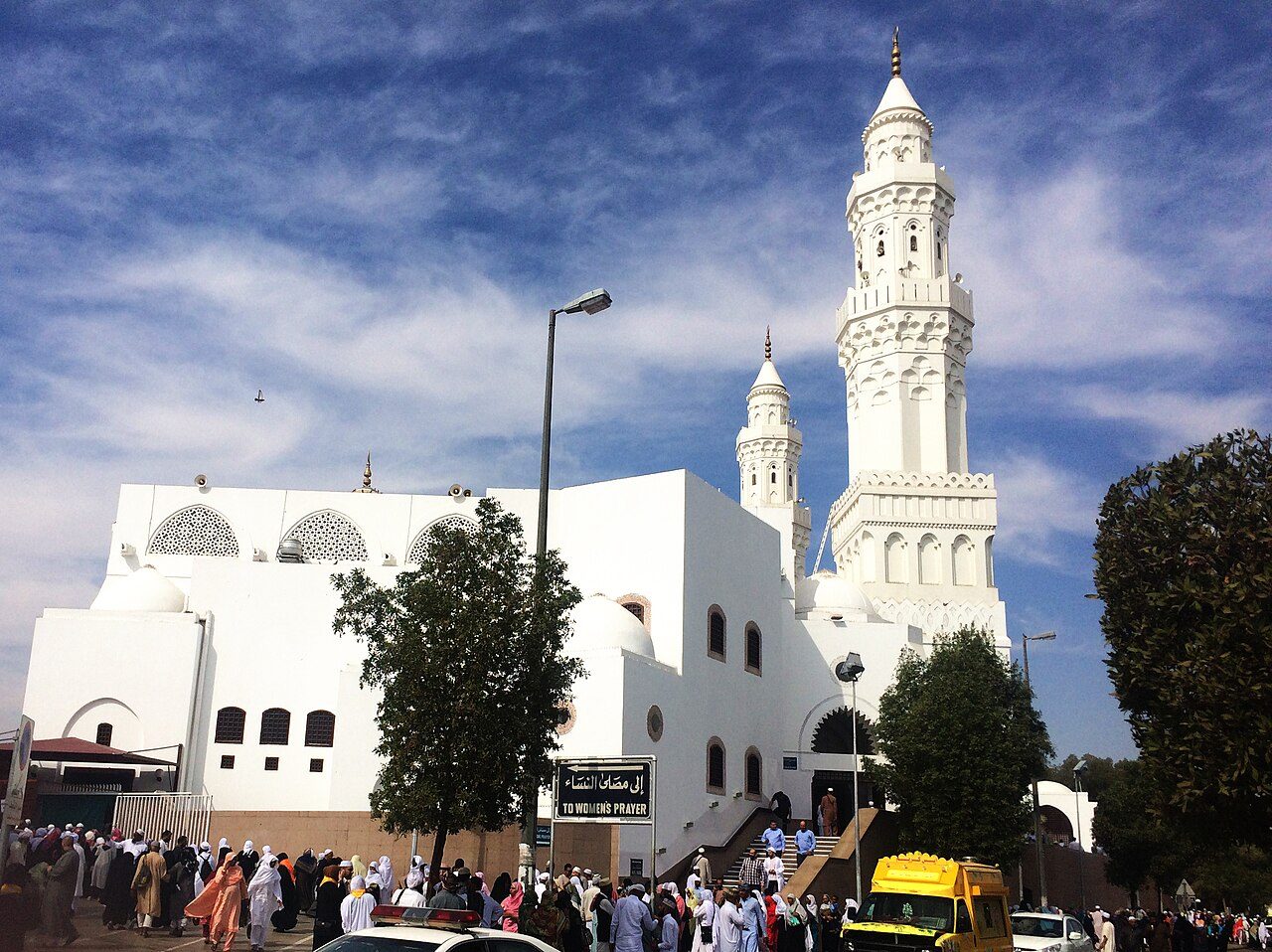
Photo credits (5)
- Indonesiagood, CC BY 4.0, via Wikimedia Commons
- CR Guru PK, CC BY-SA 4.0, via Wikimedia Commons
- Ahmed, CC BY 4.0, via Wikimedia Commons
- Indonesiagood, CC BY 4.0, via Wikimedia Commons
- Unknown author, CC BY-SA 3.0, via Wikimedia Commons