
Medina
Set in an arid basin of the Hejaz region, Medina rests against volcanic plains flanked by the crags of Mount Uhud. Walking the city feels measured and peaceful, where wide pedestrian concourses remain cooled by colossal mechanical umbrellas. Originally known as Yathrib, the oasis became the foundation of early Islamic governance when the Prophet Muhammad arrived in 622 CE. At its center stands Al-Masjid an-Nabawi, marked by its distinctive Green Dome and vast marble courtyards that receive thousands of pilgrims each day. Key sites around the perimeter trace this seventh-century heritage. South of the center lies Quba Mosque, recognized as the earliest house of prayer in Islam. To the north, the slopes of Mount Uhud and the Archers Hill overlook the terrain of the pivotal 625 CE battle. Nearby, the palm groves of the Al-Aliyah district preserve the natural aquifer that long supported the desert oasis. Local commerce centers on the date harvest, best experienced at Souq Al-Tumoor, where traders sell dark, supple Ajwa dates alongside cups of fresh Medina mint tea. A warm hospitality endures here, with residents frequently handing out dates and cardamom coffee to visitors after evening prayers. The mild months from November to March are ideal for wandering the open plazas. Arrive via the Haramain High-Speed Railway from Jeddah, and rely on app-based taxis or the city bus network to reach outlying historical quarters.
Read more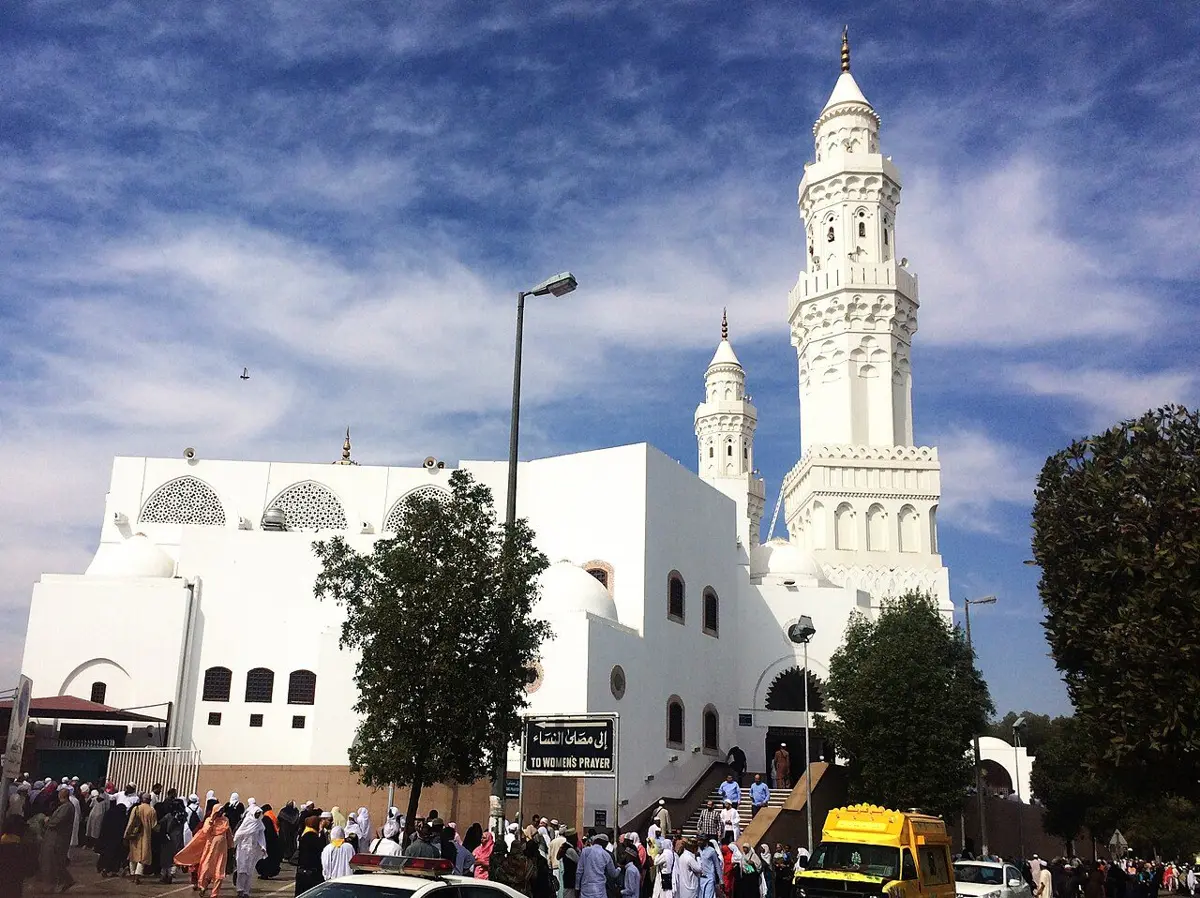
What to see in Medina
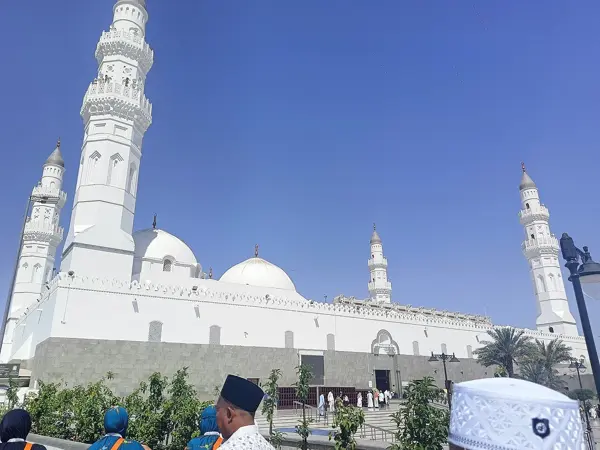
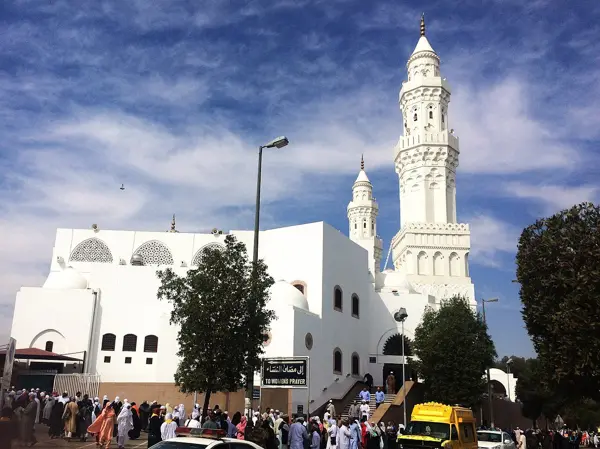
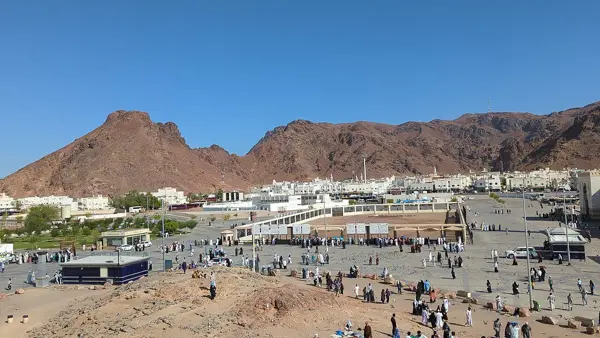
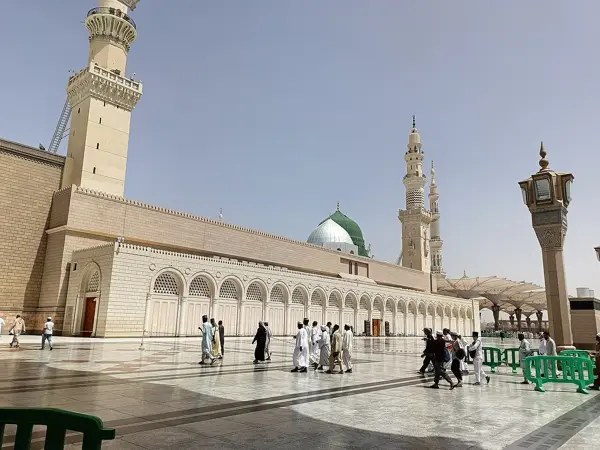
Photo credits (5)
- CR Guru PK, CC BY-SA 4.0, via Wikimedia Commons
- Indonesiagood, CC BY 4.0, via Wikimedia Commons
- Ahmed, CC BY 4.0, via Wikimedia Commons
- Indonesiagood, CC BY 4.0, via Wikimedia Commons
- Unknown author, CC BY-SA 3.0, via Wikimedia Commons