
 New added
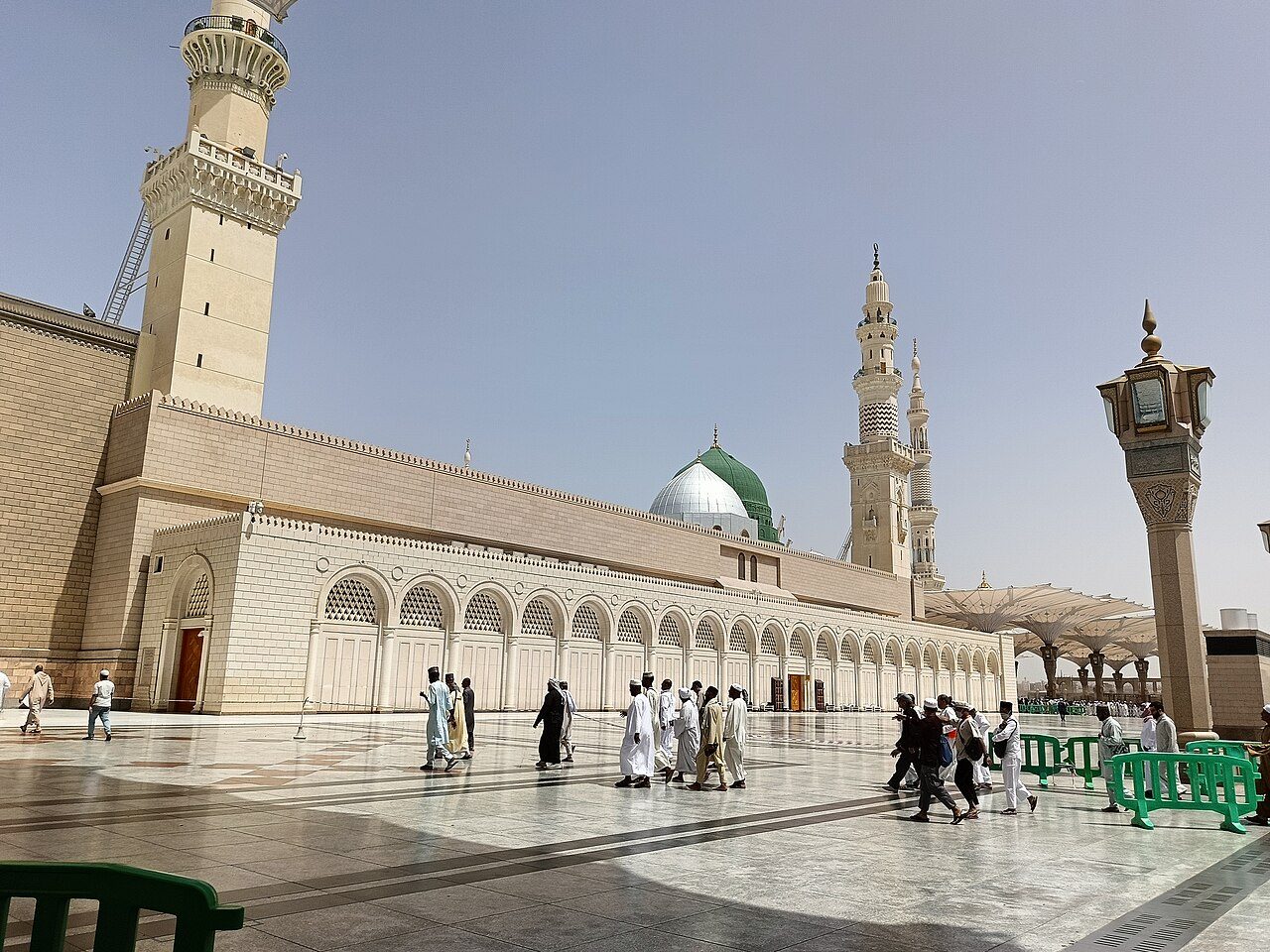
Al-Masjid an-Nabawi
Founded in 622 CE immediately following the Hijrah, this sprawling sanctuary began as an unadorned mudbrick courtyard adjacent to the Prophet Muhammad’s residence before expanding across fourteen centuries under Umayyad, Mamluk, Ottoman, and Saudi rule. Today, its architectural profile is anchored by the vivid Green Dome—erected in its modern form by Ottoman Sultan Mahmud II in 1837—which marks the final resting places of Muhammad and early caliphs Abu Bakr and Umar. Ten slender minarets rise 105 meters above expansive courtyards fitted with 250 massive, Teflon-coated hydraulic umbrella canopies. These mechanical marvels unfold like desert palms each morning, casting shade over heat-reflective white Thassos marble that remains cool beneath the blistering Hejazi sun. Stepping through the towering Bab as-Salam into the illuminated hypostyle halls, visitors encounter vast forests of polished granite columns crowned with gold-gilded capitals, bathed in the rich scent of burned oud and Taif rosewater. At the sanctuary’s beating heart lies the Rawdah ash-Sharifah, a sacred precinct distinguished from the mosque’s crimson carpets by a rich floral-patterned green floor, evoking the Prophet’s description of the space as an earthly garden of Paradise. Enclosed by intricate brass grilles and Mamluk-era calligraphic friezes, the Rawdah envelops worshippers in profound quietude, where whispered prayers blend with the resonant, unamplified acoustics of the ancient interior.
More in Medina
Photo credits (5)
- Indonesiagood, CC BY 4.0, via Wikimedia Commons
- Indonesiagood, CC BY 4.0, via Wikimedia Commons
- CR Guru PK, CC BY-SA 4.0, via Wikimedia Commons
- Ahmed, CC BY 4.0, via Wikimedia Commons
- Unknown author, CC BY-SA 3.0, via Wikimedia Commons