
 New added
Zamzam Well
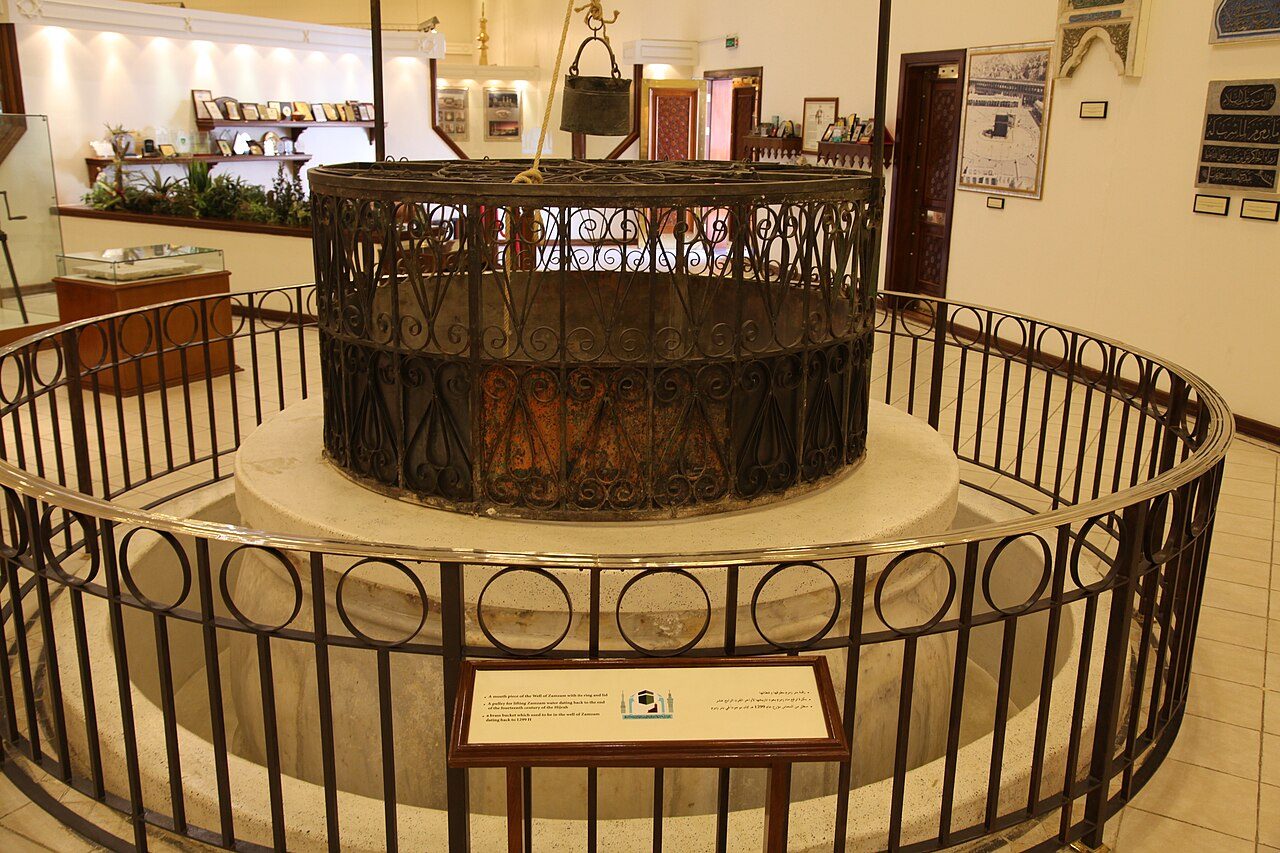
According to Islamic tradition, the spring first surged beneath the heel of the infant Ismail around 2000 BCE, answering his mother Hagar’s desperate search for water between the hills of Safa and Marwah. Rediscovered in the fifth century CE by the Prophet Muhammad’s grandfather, Abd al-Muttalib, the 30-meter-deep shaft sustained Mecca’s survival along arid trade corridors. Historically crowned by an elaborate Ottoman dome, the surface-level wellhouse was dismantled during twentieth-century expansions to enlarge the circumambulation courtyard (*Mataf*). Today, the hand-dug well remains sealed beneath cool white Thassos marble, pumping water directly from fractured granite bedrock and wadi alluvium through advanced automated filtration lines without interrupting the circular flow of pilgrims above. Although the subterranean wellhead itself is inaccessible to crowds, visitors engage with its sacred yield throughout the cavernous interior of the Grand Mosque. Row upon row of gleaming cylindrical stainless-steel urns line the prayer halls, dispensing water both chilled and ambient. Pilgrims gather to pour the clear liquid into cups, noticing its distinct, mineral-dense character—naturally saturated with high concentrations of calcium, magnesium, and fluorides that impart a slightly alkaline, heavy mouthfeel. Standing amidst the resonant echoes of prayer beneath towering vaulted arches, drinking from the cistern while facing the black-draped Kaaba offers a deeply tactile ritual, cutting through the desert heat with an unbroken four-thousand-year-old hydrologic legacy.
More in Mecca
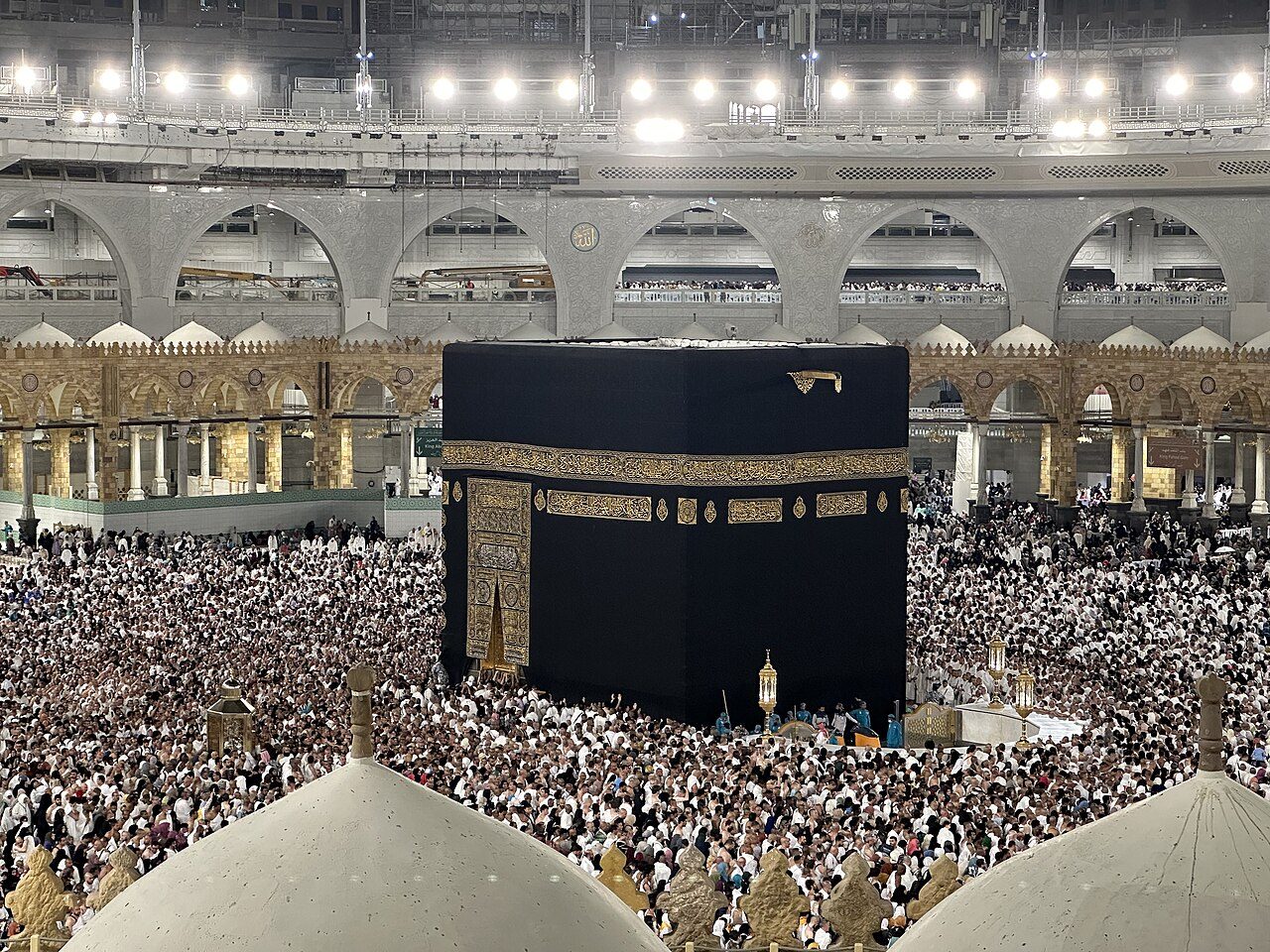
Photo credits (6)
- Mohammad Bahareth, CC BY-SA 2.0, via Wikimedia Commons
- Indonesiagood, CC BY 4.0, via Wikimedia Commons
- Qibla-direction, CC0, via Wikimedia Commons
- King Eliot, CC BY-SA 4.0, via Wikimedia Commons
- saudipics, CC BY-SA 4.0, via Wikimedia Commons
- King Eliot, CC BY-SA 4.0, via Wikimedia Commons