
 New added
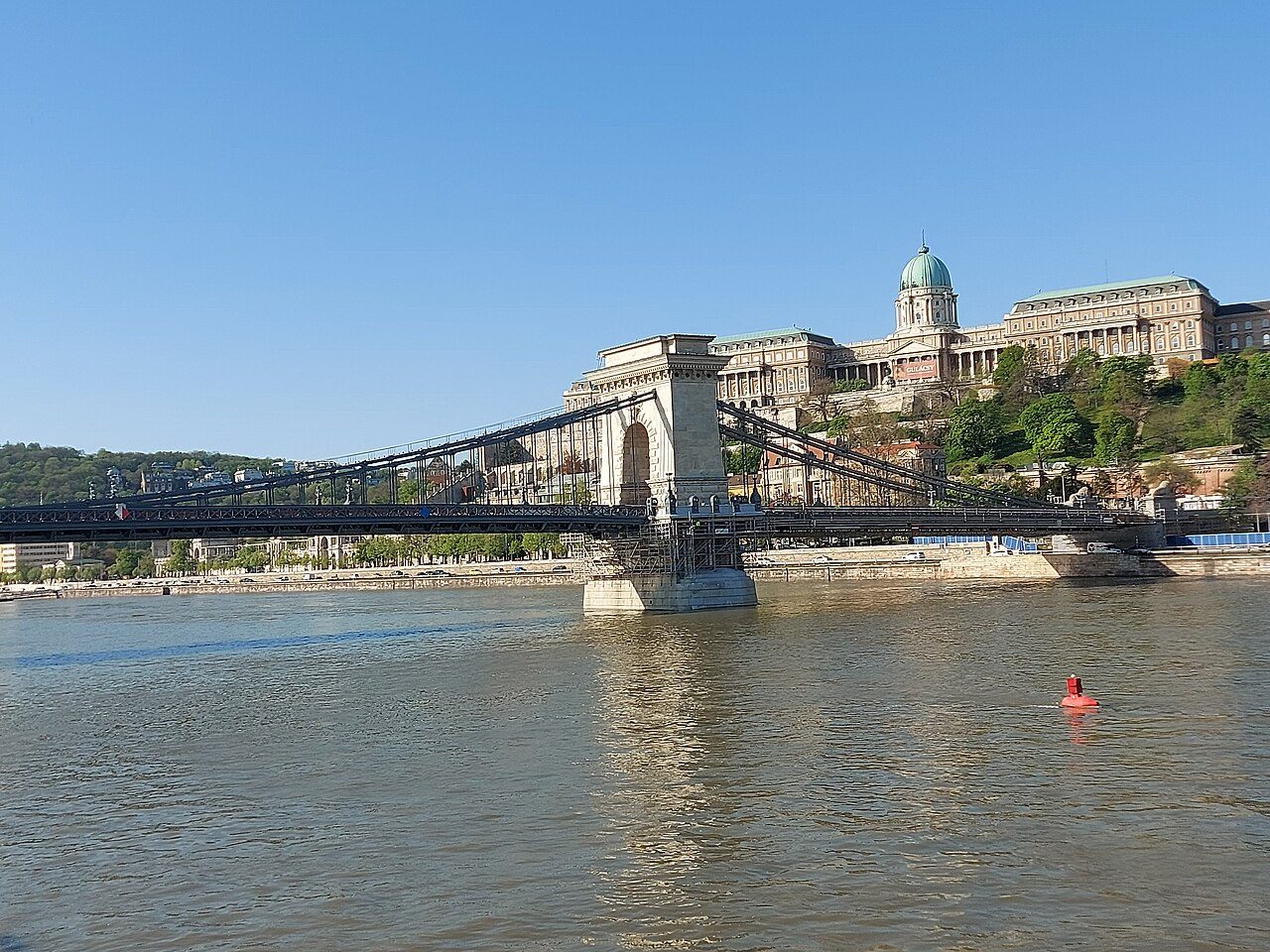
Budapest Chain Bridge
Conceived by reformer Count István Széchenyi and brought to life by engineers William Tierney Clark and Adam Clark, the Széchenyi Chain Bridge permanently bound the historically divided cities of Buda and Pest upon its completion in November 1849. Designed in a triumphant Classical style, this pioneering suspension bridge survived total detonation by retreating German forces in 1945, standing today as an enduring emblem of Hungarian rebirth. Its roadway threads through two massive neoclassical stone piers carved with the royal coat of arms, supported by colossal iron links that dip toward the riverbed. At either bridgehead, sculptor János Marschalkó’s famous stone lions rest stoically atop granite plinths, their expressive manes and resting paws guarding the historic crossings. Strolling along the pedestrian sidewalks at twilight, visitors feel the subtle, rhythmic pulse of the suspended roadway as city life hums across the span. Leaning over the wrought-iron balustrades, one is caught between two distinct architectural worlds: to the west, the illuminated terracing of Buda Castle looms over Clark Ádám Square, while to the north, the neo-Gothic spires of the Hungarian Parliament ignite in brilliant amber along the Pest embankment. The cool breeze rolling off the Danube carries the hum of river cruisers below, offering an immersive sensory encounter with the grand central artery of Central Europe.
More in Budapest

Photo credits (6)
- Bybbisch94, Christian Gebhardt, CC BY-SA 4.0, via Wikimedia Commons
- Bybbisch94, Christian Gebhardt, CC BY-SA 4.0, via Wikimedia Commons
- User:Sveter (Please credit as "Petr Šmerkl, Wikipedia" in case you use this outside WMF projects.), CC BY-SA 3.0, via Wikimedia Commons
- Nan Palmero from San Antonio, TX, USA, CC BY 2.0, via Wikimedia Commons
- Elekes Andor, CC BY 4.0, via Wikimedia Commons
- Thaler Tamas, CC BY-SA 4.0, via Wikimedia Commons