
 New added
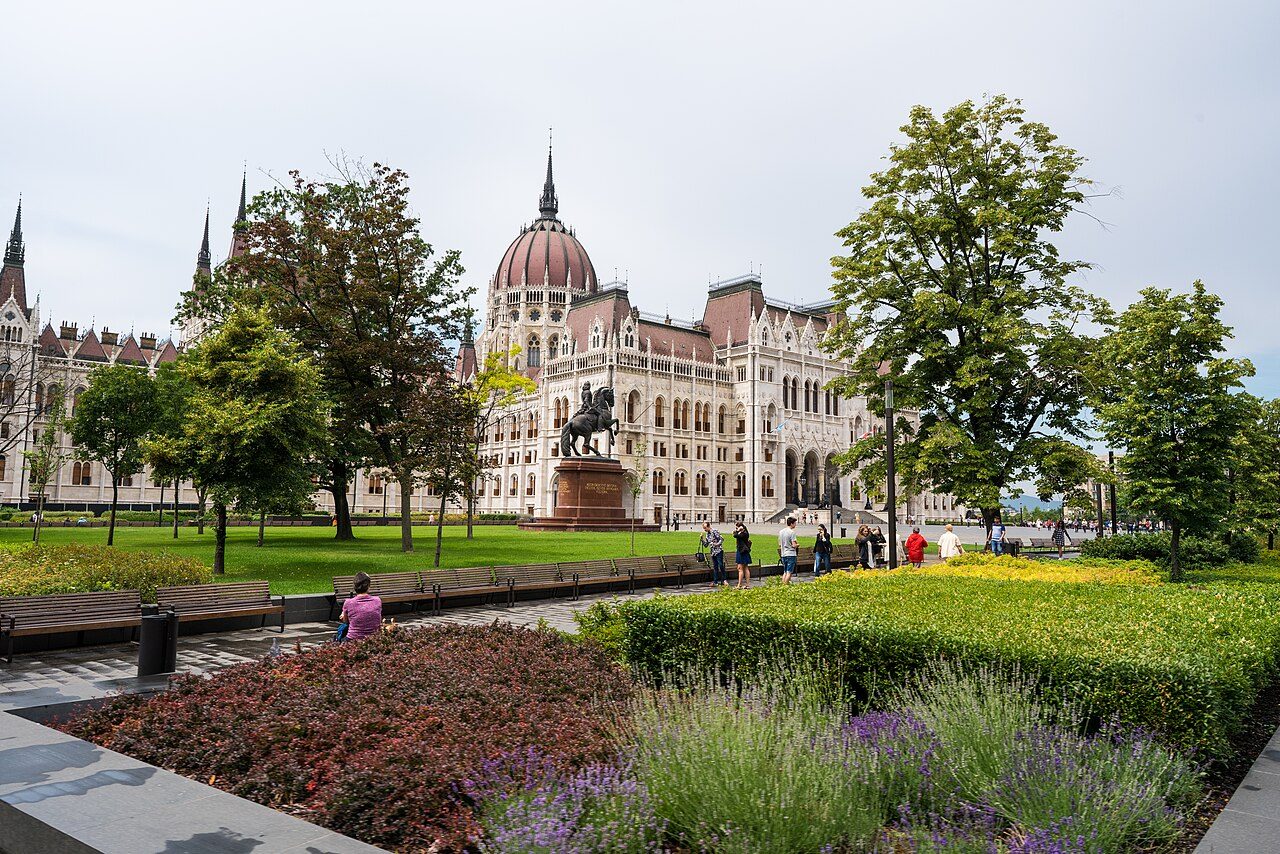
Hungarian Parliament Building
Conceived during the patriotic fervor of Hungary’s 1896 millennial celebrations and completed in 1904, the *Országház* stands as architect Imre Steindl’s masterwork of Neo-Gothic and Renaissance revival design. Dominating the eastern bank of the Danube, its symmetrical limestone façade bristles with 365 soaring turrets and pinnacles, punctuated by a central dome that reaches precisely 96 meters—a calculated height matching St. Stephen’s Basilica to symbolize the historic equilibrium between church and state. Viewed from across the river at dusk, the pale stone catches the twilight before disappearing into the amber brilliance of night illuminations, casting a golden reflection across the water. Stepping inside reveals a monumental labyrinth of 691 rooms swathed in forty kilograms of 22-carat gold leaf. Visitors ascend the sweeping Grand Stairway, where crimson carpets trace beneath vaulted ceilings adorned with allegorical frescoes by Károly Lotz. In the cavernous, sixteen-sided central domed hall, the air turns cool and reverent; here, guarded round-the-clock by saber-bearing soldiers, rests the eleventh-century Holy Crown of St. Stephen. Jewel-toned sunlight filters through intricate stained-glass windows crafted by Miksa Róth, illuminating statues of Hungarian monarchs and granite columns carved to evoke a forest of petrified stone, immersing travelers in the sheer weight of central European statecraft.
More in Budapest

Photo credits (6)
- Nan Palmero from San Antonio, TX, USA, CC BY 2.0, via Wikimedia Commons
- Bybbisch94, Christian Gebhardt, CC BY-SA 4.0, via Wikimedia Commons
- Bybbisch94, Christian Gebhardt, CC BY-SA 4.0, via Wikimedia Commons
- User:Sveter (Please credit as "Petr Šmerkl, Wikipedia" in case you use this outside WMF projects.), CC BY-SA 3.0, via Wikimedia Commons
- Elekes Andor, CC BY 4.0, via Wikimedia Commons
- Thaler Tamas, CC BY-SA 4.0, via Wikimedia Commons