
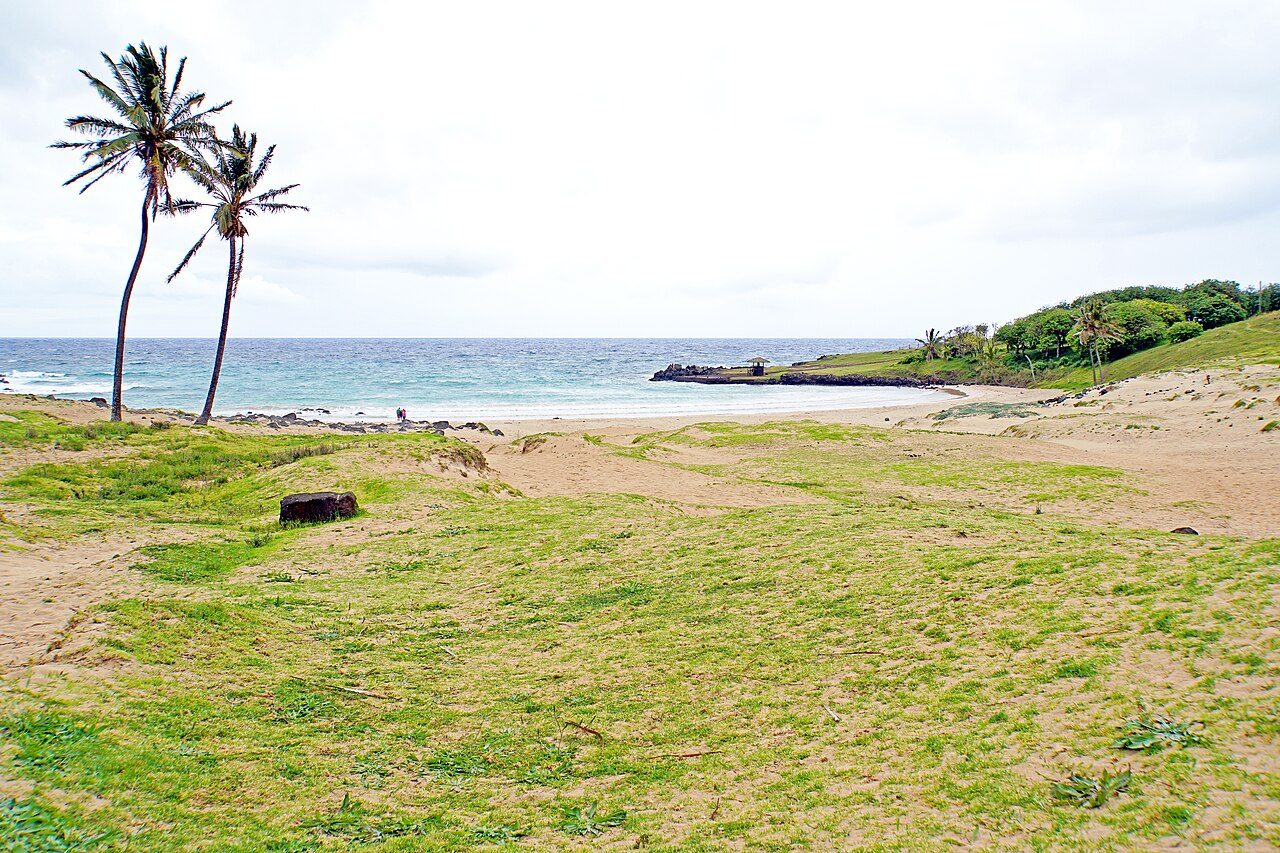
Anakena
According to Rapa Nui oral tradition, this sheltered northern bay served around 1200 CE as the royal landing site of the island's founding king, Hotu Matu‘a. Rising directly from the pale, crushed-coral sand stands Ahu Nau Nau, an exceptional ceremonial stone platform crowned by seven colossal moai. Four of these statues retain their cylindrical *pukao*—heavy topknots sculpted from brick-red volcanic scoria mined at Puna Pau—while their backs preserve intricate bas-relief tattoos and belt carvings protected by drifting sands until their 1978 excavation. Higher on the rise stands the solitary, stoic figure of Ahu Ature Huki, famously hoisted back into position in 1956 by local islanders using only timber levers and ropes during Thor Heyerdahl’s Norwegian expedition. Walking toward the shoreline, the lush Tahitian coconut palm grove—gifted and planted in the 1960s—sways overhead, casting dappled shade across pinkish-white sand that contrasts sharply with the island’s typical jagged black basalt cliffs. The Pacific breaks here in calm, translucent turquoise ripples rather than ferocious surf, inviting visitors to wade into the temperate sea while staring directly up at ancestral megaliths. Standing in the gentle ocean breeze, travelers feel the surreal intimacy of an active, sun-drenched beach anchored by some of the most meticulously preserved Polynesian antiquity on Earth.
More in Hanga Roa
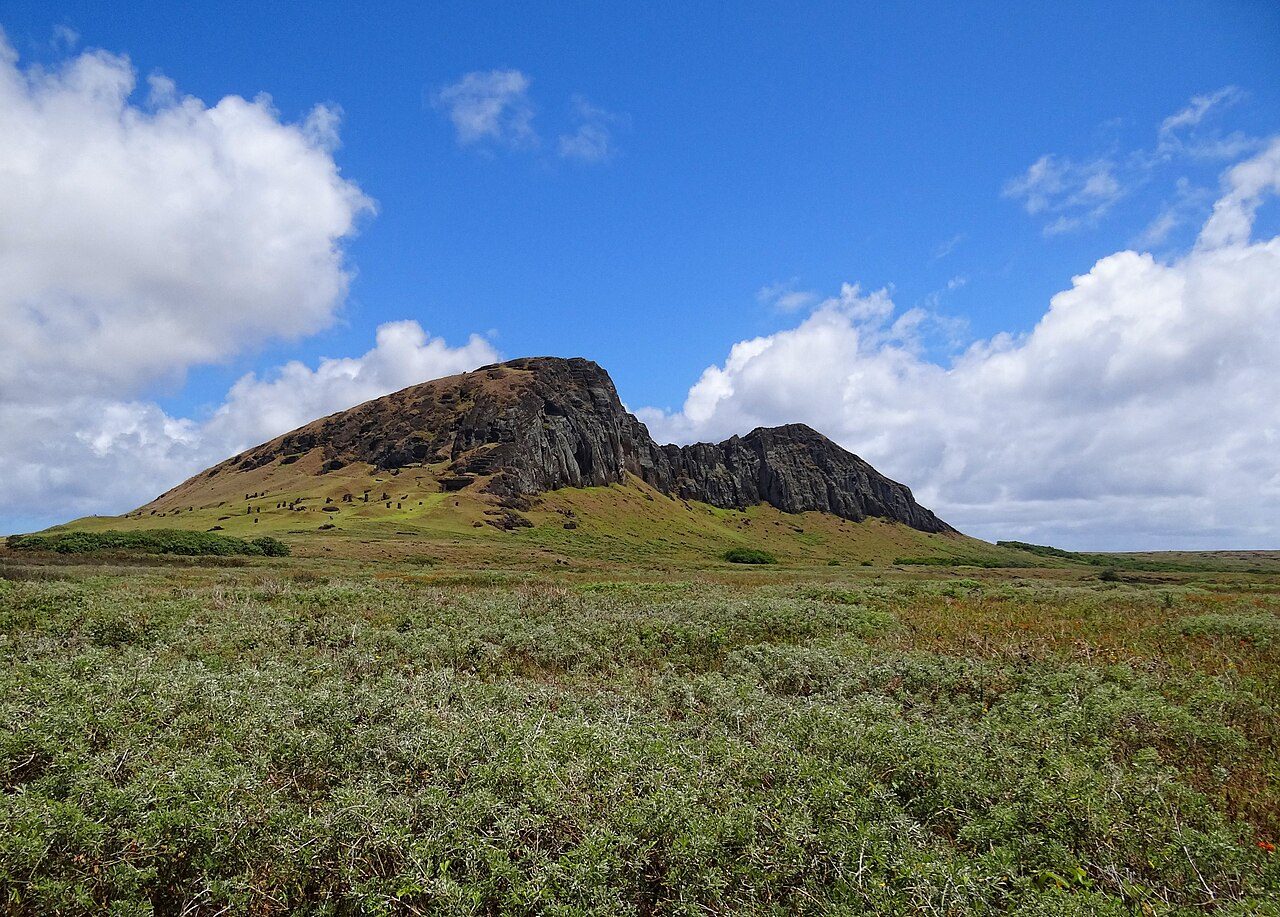
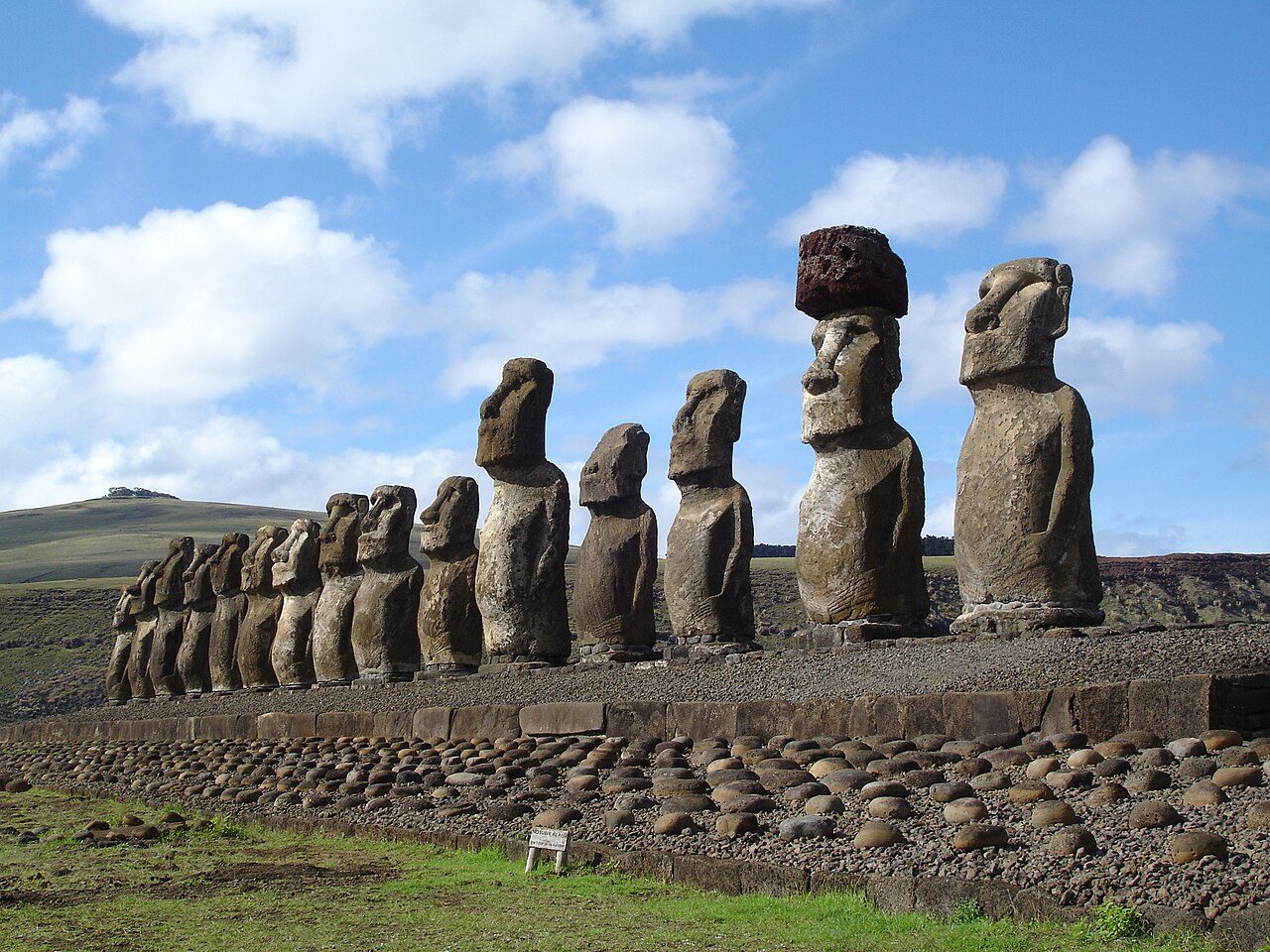
Photo credits (4)
- Dennis G. Jarvis, CC BY-SA 2.0, via Wikimedia Commons
- Bjørn Christian Tørrissen, CC BY-SA 3.0, via Wikimedia Commons
- The original uploader was Hhooper1 at English Wikipedia ., CC BY 2.5, via Wikimedia Commons
- Dennis G. Jarvis, CC BY-SA 2.0, via Wikimedia Commons