
Hanga Roa
Hanga Roa curves along the southwestern shore of Easter Island, flanked by the Pacific swell and the extinct volcanic ridge of Rano Kau. Life here runs at a deliberate, pedestrian pace. Walking down the main thoroughfare, Avenida Atamu Tekena, you share the unhurried streets with wild-roaming horses, sea-salt breezes, and hibiscus bushes spilling over wooden garden fences. Chile annexed the island in 1888, eventually concentrating the indigenous population in Hanga Roa during the early twentieth century. Today, history anchors every corner. At the northern edge of town, the Ahu Tahai ceremonial complex features upright moai, including one with restored white coral eyes. Nearby, the Iglesia de Santa Cruz displays hand-carved wooden figures integrating Christian saints with traditional Rapa Nui birdman imagery. Down at Caleta Hanga Roa, fishing skiffs unload the morning catch while green sea turtles drift around the stone boat slip. The ocean dictates the town appetite, with harborside shacks serving tuna empanadas and fresh ceviche served alongside cold sweet potatoes. In February, the town transforms for the Tapati Rapa Nui festival, when families compete in traditional sports, song, and ancestral body-painting rituals. Hanga Roa is compact enough to navigate on foot or by rented bicycle, though an early start lets you wander comfortably before the midday Pacific sun settles over the coast.
Read more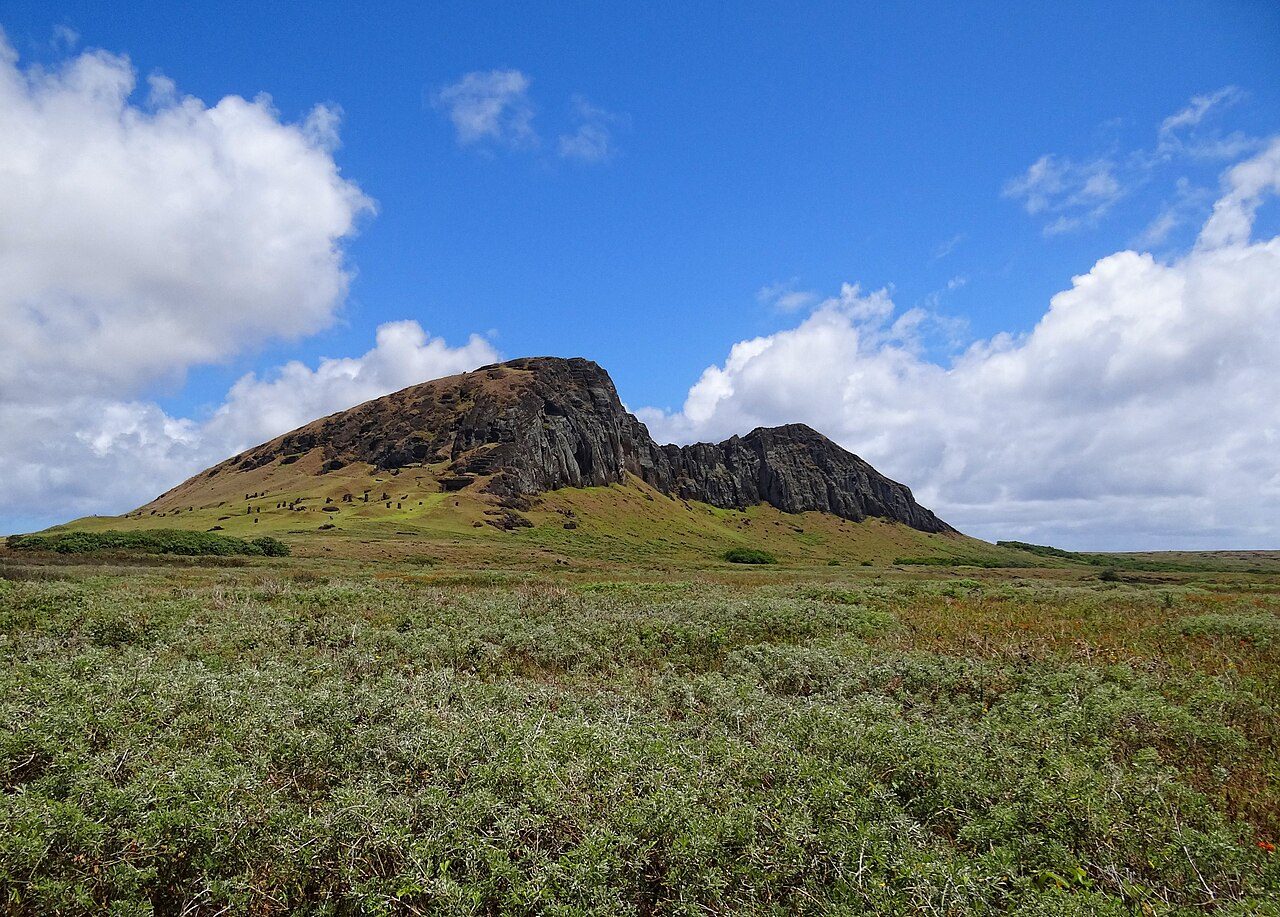
What to see in Hanga Roa
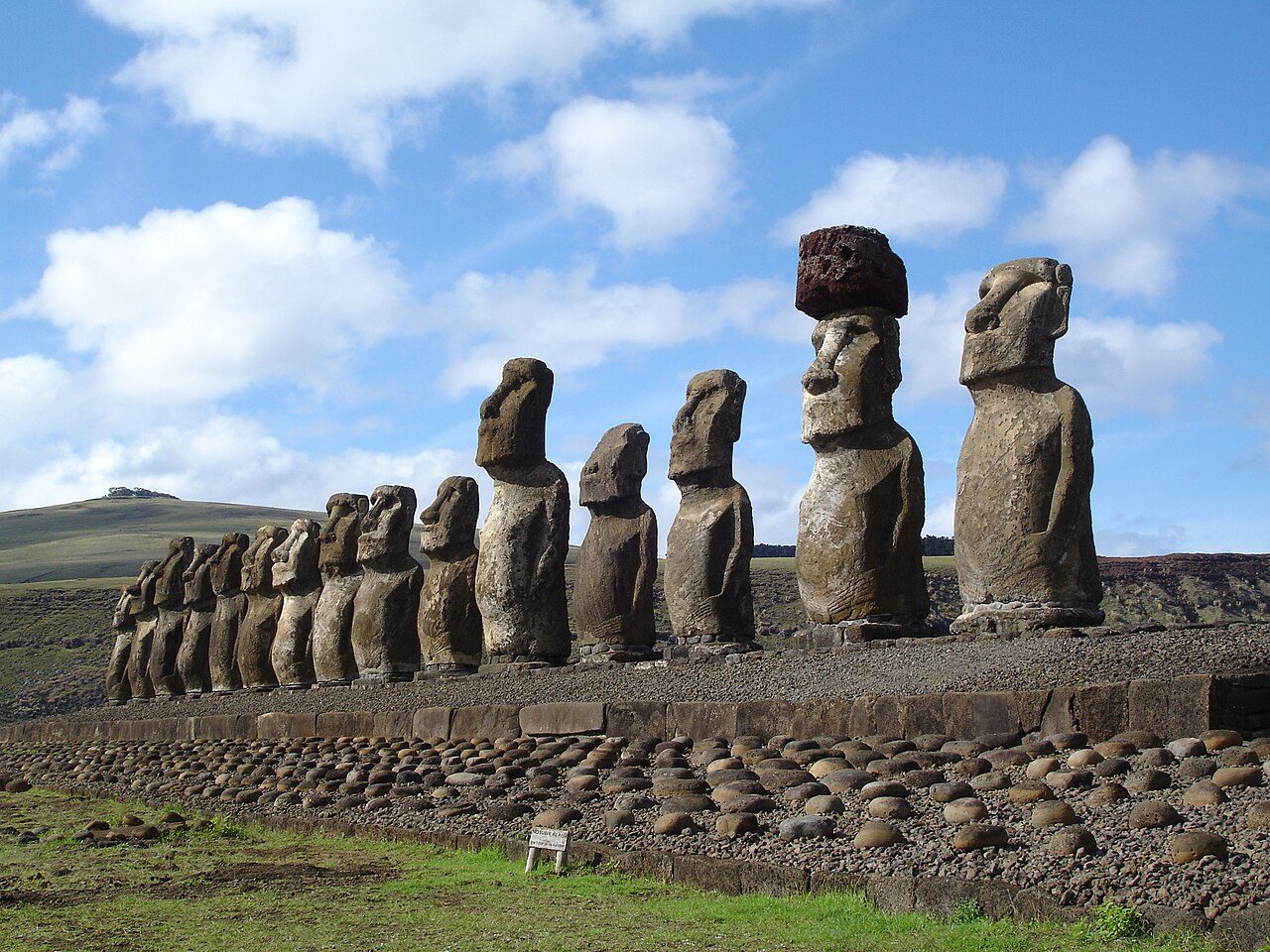
Photo credits (4)
- Bjørn Christian Tørrissen, CC BY-SA 3.0, via Wikimedia Commons
- Dennis G. Jarvis, CC BY-SA 2.0, via Wikimedia Commons
- The original uploader was Hhooper1 at English Wikipedia ., CC BY 2.5, via Wikimedia Commons
- Dennis G. Jarvis, CC BY-SA 2.0, via Wikimedia Commons