
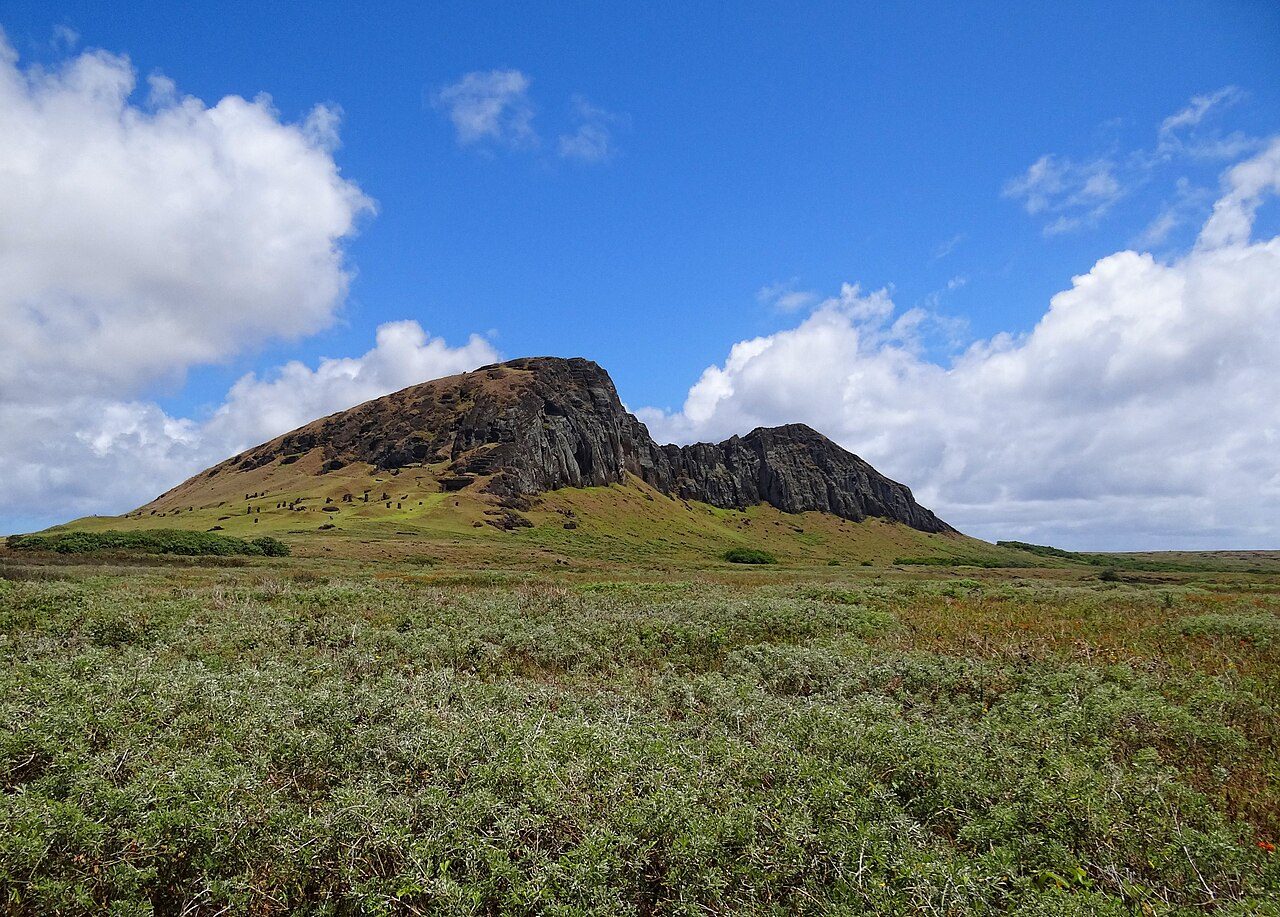
Rano Raraku
Carved into the basaltic tuff of an extinct volcanic cone, Rano Raraku served between the 12th and 17th centuries as the monumental quarry of Rapa Nui civilization. Here, master sculptors (*mahai maori*) chipped away at golden-brown volcanic ash to birth nearly all of the island’s monolithic *moai*. Today, the volcano remains a suspended workshop, cradling nearly 400 statues in various stages of emergence. Unfinished colossi lie permanently fused to sheer quarry walls along the outer flanks, while others stand rooted around an interior caldera lake carpeted in vivid green totora reeds. Walking the narrow dirt footpaths, you encounter colossal stone heads protruding at odd angles from the wind-whipped, grassy slopes, their torsos buried beneath centuries of shifted sediment. Prominent among these is *Te Tokanga* (The Giant), a prone colossus measuring nearly 22 meters that would have weighed over 250 tons, and *Tukuturi*, a rare kneeling statue featuring distinct legs and an upturned beard. In the presence of these weathered faces with their heavy brows and elongated ears, the silence is broken only by the Pacific gale, offering a haunting, face-to-face encounter with an ancient carving tradition that abruptly ceased, leaving basalt stone picks resting right where their carvers laid them down.
More in Hanga Roa
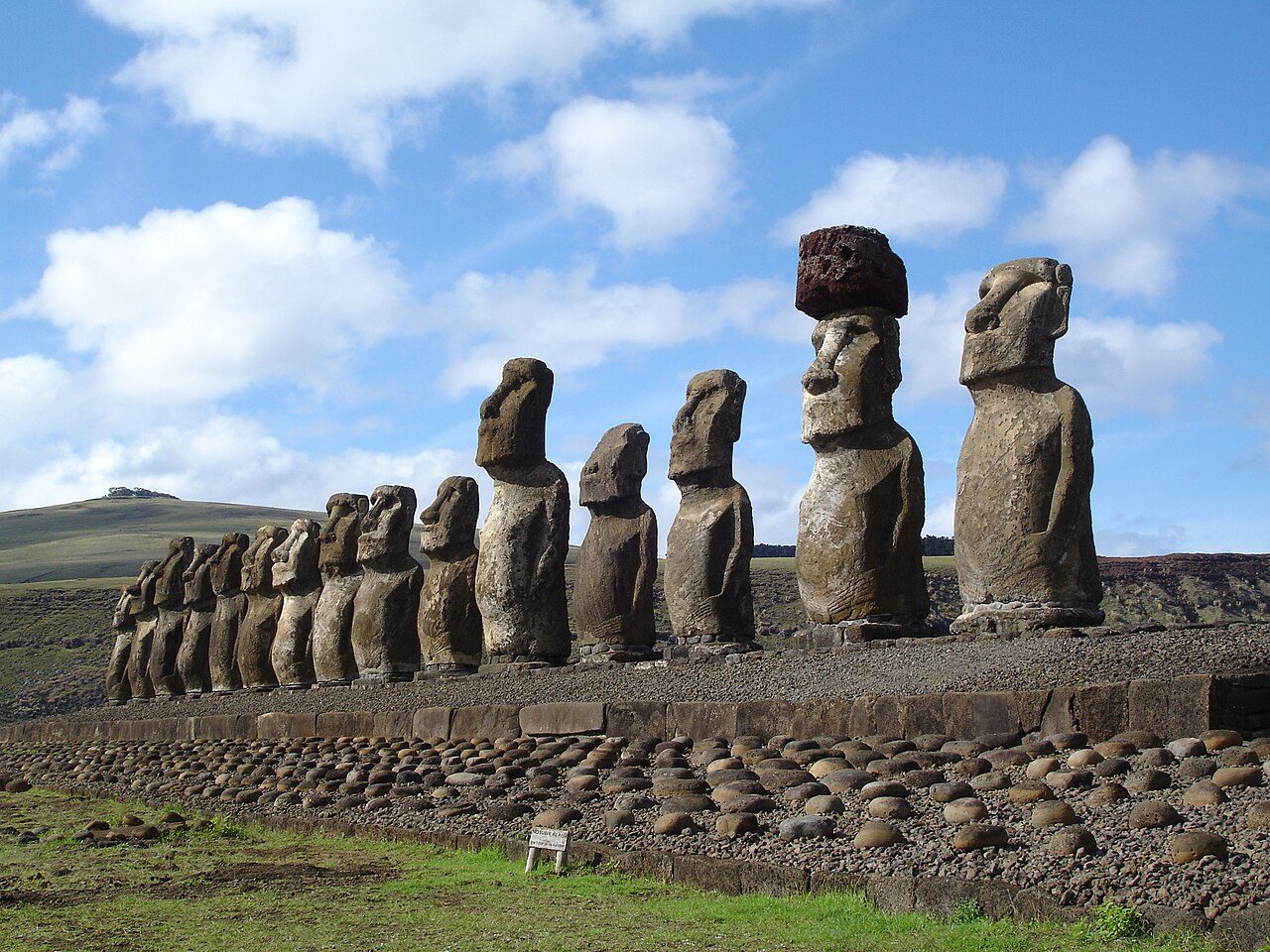
Photo credits (4)
- Bjørn Christian Tørrissen, CC BY-SA 3.0, via Wikimedia Commons
- Dennis G. Jarvis, CC BY-SA 2.0, via Wikimedia Commons
- The original uploader was Hhooper1 at English Wikipedia ., CC BY 2.5, via Wikimedia Commons
- Dennis G. Jarvis, CC BY-SA 2.0, via Wikimedia Commons