
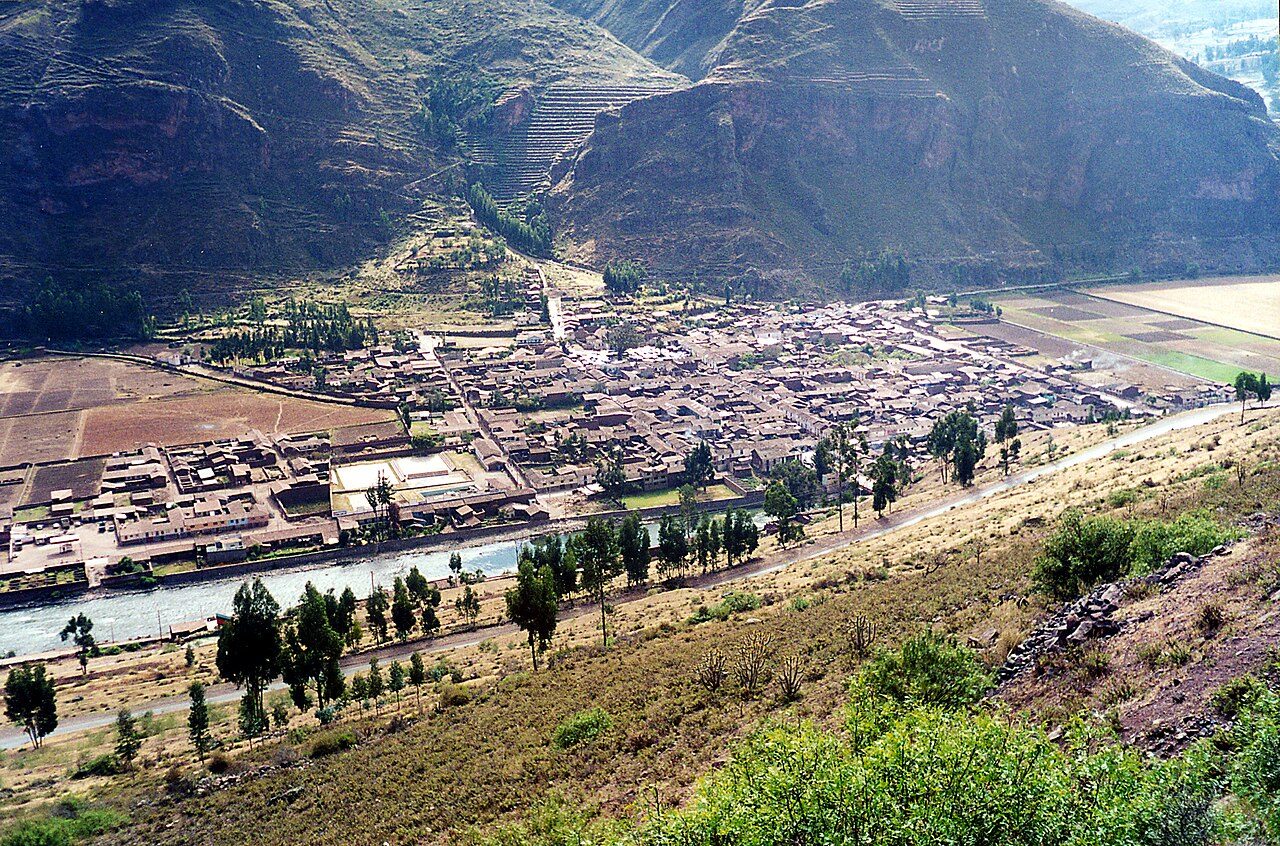
Pisac
Commissioned in the mid-15th century under the Inca Emperor Pachacuti, the citadel of Pisac functioned as an imperial estate, astronomical observatory, and fortress guarding the southern entrance to the Sacred Valley. Its architecture exemplifies the pinnacle of classical Inca masonry, featuring monumental agricultural terraces—*andenes*—that sweep in concentric, emerald waves along the mountain's contours. At the ceremonial heart lies the *Intihuatana*, a sacred solar hitching post carved directly from a spur of living pink granite and encircled by an elegant D-shaped temple wall. Across the precipitous gorge, the sheer rock face of *Tankanamarka* reveals thousands of ancient cliffside tomb cavities, where mummified nobility were once entombed above the valley floor. Ascending the vertiginous stone staircases cut into the ridgeline, travelers are met by the biting chill of high-altitude winds funneling upward from the Urubamba River far below. Standing within the upper barracks of *Q’allaqasa*, you encounter dizzying drop-offs framing panoramic views of mist-crowned peaks and golden maize fields. Running your hand along the mortarless ashlar masonry, the cool, polished andesite blocks fit together with microscopic precision, completely unyielding after six centuries of Andean earthquakes. The scent of wild mountain mint drifts across the ancient channels where glacial meltwater still trickles through stone aqueducts, immersing visitors in the solemn grandeur of an empire carved out of the clouds.
More in Cusco

Photo credits (6)
- Xauxa , Håkan Svensson, CC BY 2.5, via Wikimedia Commons
- W. Bulach, CC BY-SA 4.0, via Wikimedia Commons
- Diego Delso, CC BY-SA 4.0, via Wikimedia Commons
- Håkan Svensson ( Xauxa ), CC BY 2.5, via Wikimedia Commons
- Christian Morales Callo, CC BY-SA 4.0, via Wikimedia Commons
- Draceane, CC BY-SA 4.0, via Wikimedia Commons