
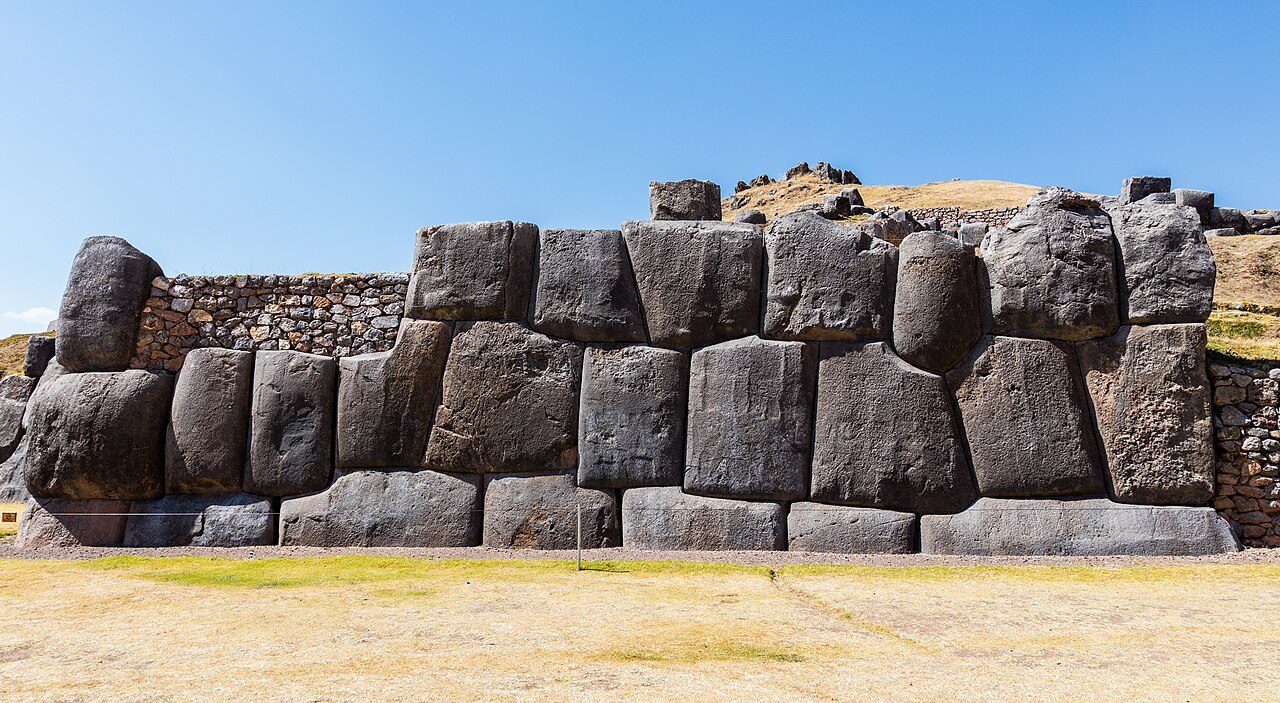
Sacsayhuaman
Commissioned in the mid-15th century by the ninth Sapa Inca, Pachacuti, and completed under Huayna Capac, Sacsayhuamán functioned as both an imperial fortress and a celestial ceremonial complex towering over the Inca capital. Its three-tiered, zig-zagging ramparts evoke the jagged teeth of the sacred puma—the symbolic shape Cusco was engineered to mirror. Inca masons utilized cyclopean dry-stone ashlar masonry, hauling colossal limestone and diorite blocks from quarries miles away and carving them to interlock with seismic-resistant precision. The largest megaliths surpass eight meters in height and weigh over 125 metric tons. It was here, during the bloody 1536 siege, that Manco Inca nearly recaptured Cusco from the Spanish conquistadors, a clash that fatally wounded Juan Pizarro and forever scarred the citadel’s defensive towers. Standing at an elevation of 3,700 meters, visitors immediately feel the breathless scale of the megaliths, running their hands along stone joints fitted so flush that a sheet of paper cannot slide between them. The thin, cool mountain breeze carries the scent of sun-warmed ichu grass across the vast ceremonial esplanade, which still hosts the winter solstice festival of Inti Raymi every June. Climbing past the terraced bastions leads to the concentric stone foundations of Muyuqmarka, a legendary cylindrical water and watchtower. From this vantage, the fortress’s weathered gray stones frame a panoramic vista of modern Cusco below, contrasting ancestral Inca masonry with the terracotta rooftops and Spanish baroque spires erected from Sacsayhuamán’s dismantled stones.
More in Cusco

Photo credits (6)
- Diego Delso, CC BY-SA 4.0, via Wikimedia Commons
- W. Bulach, CC BY-SA 4.0, via Wikimedia Commons
- Håkan Svensson ( Xauxa ), CC BY 2.5, via Wikimedia Commons
- Christian Morales Callo, CC BY-SA 4.0, via Wikimedia Commons
- Draceane, CC BY-SA 4.0, via Wikimedia Commons
- Xauxa , Håkan Svensson, CC BY 2.5, via Wikimedia Commons