
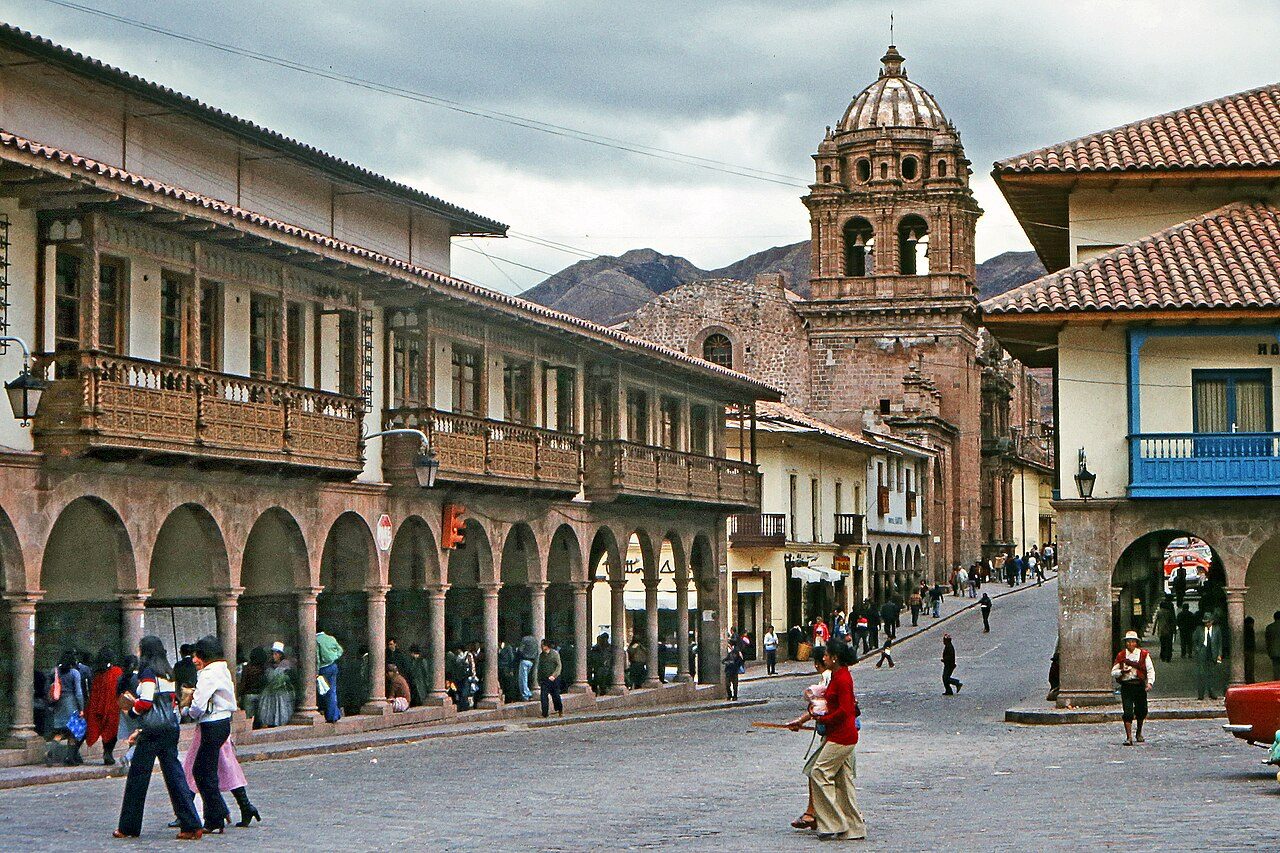
Plaza de Armas of Cusco
Once the ceremonial heart of the Inca Empire known as *Huacaypata* (Terrace of the Weeping), this high-altitude esplanade was orchestrated by the ninth Inca ruler, Pachacuti, in the 15th century to host grand solstice rituals and military triumphs. Following the 1534 Spanish conquest, conquistadors dismantled the surrounding imperial palaces—including the Casana and Amaru Cancha—to lay colonial foundations directly over the precisely carved Incan ashlar. The plaza’s stones carry a potent history of defiance: in 1781, Spanish authorities executed the indigenous rebel leader Túpac Amaru II here. Today, the square presents a striking collision of Andean and Spanish Renaissance-Baroque architecture, ringed by wide double-tiered stone arcades with ornate, dark-varnished cedar balconies suspended over the walkways. Standing at 3,400 meters above sea level, visitors face the imposing twin bell towers of the Cathedral Basilica of the Virgin of the Assumption, constructed from red-granite blocks systematically hauled from the nearby Incan fortress of Sacsayhuamán. Directly adjacent, the intricate carved-stone façade of the 17th-century Jesuit church, *La Compañía de Jesús*, anchors the southern flank. In the center, manicured flower beds surround an ornate bronze fountain crowned by a gleaming statue of Pachacuti brandishing his staff. The crisp mountain air carries the faint scent of eucalyptus and burning palo santo, while the footsteps of Quechua weavers in radiant woven *llikllas* echo against colonial flagstones as dusk paints the surrounding Andean slopes in deep ochre and violet.
More in Cusco

Photo credits (6)
- W. Bulach, CC BY-SA 4.0, via Wikimedia Commons
- Diego Delso, CC BY-SA 4.0, via Wikimedia Commons
- Håkan Svensson ( Xauxa ), CC BY 2.5, via Wikimedia Commons
- Christian Morales Callo, CC BY-SA 4.0, via Wikimedia Commons
- Draceane, CC BY-SA 4.0, via Wikimedia Commons
- Xauxa , Håkan Svensson, CC BY 2.5, via Wikimedia Commons