
Teotihuacan
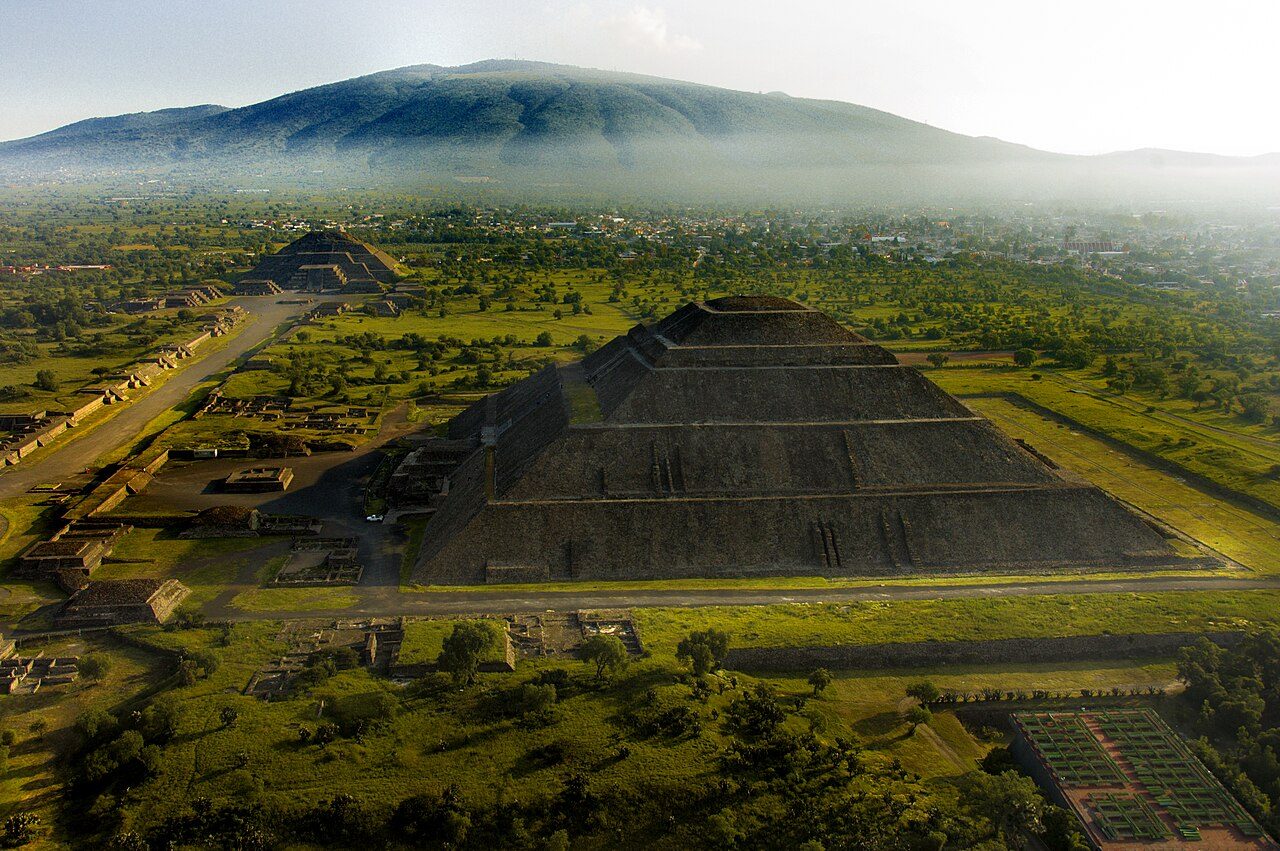
Long before the Aztecs stumbled upon its colossal ruins in the fourteenth century and christened it the "birthplace of the gods," Teotihuacan flourished between roughly 100 BCE and 650 CE as the Americas' most formidable pre-Columbian metropolis. At its urban heart lies the Avenue of the Dead, a two-and-a-half-mile axis flanked by ceremonial platforms built in the signature *talud-tablero* style—alternating sloping aprons and projecting rectangular tablets. Dominating the horizon is the monumental Pyramid of the Sun, rising over 200 feet from a base rivaling Giza's Great Pyramid. Nearby, the Temple of the Feathered Serpent displays elaborate high-relief sculptures, where stone heads of Quetzalcoatl and the storm god Tlaloc bare their fangs from weathered volcanic andesite. Standing on the dusty causeway, travelers are enveloped by a disorienting, cosmic geometry strictly aligned to celestial movements and the surrounding volcanic ridges. Dry plateau winds sweep across the sun-drenched stone, carrying the quiet gravity of a fallen city that once housed over 100,000 souls in dense apartment compounds. Within the shaded, limestone-walled Palace of Quetzalpapálotl, visitors encounter intricately carved pillars depicting feathered butterflies with obsidian-inlaid eyes, alongside surviving splashes of radiant red cinnabar paint. Looking south from the broad plaza of the Pyramid of the Moon, the sheer architectural symmetry pulls the eye straight down the monumental corridor, framing the extinct peak of Cerro Gordo in an unforgettable testament to ancient Mesoamerican ambition.
More in Mexico City
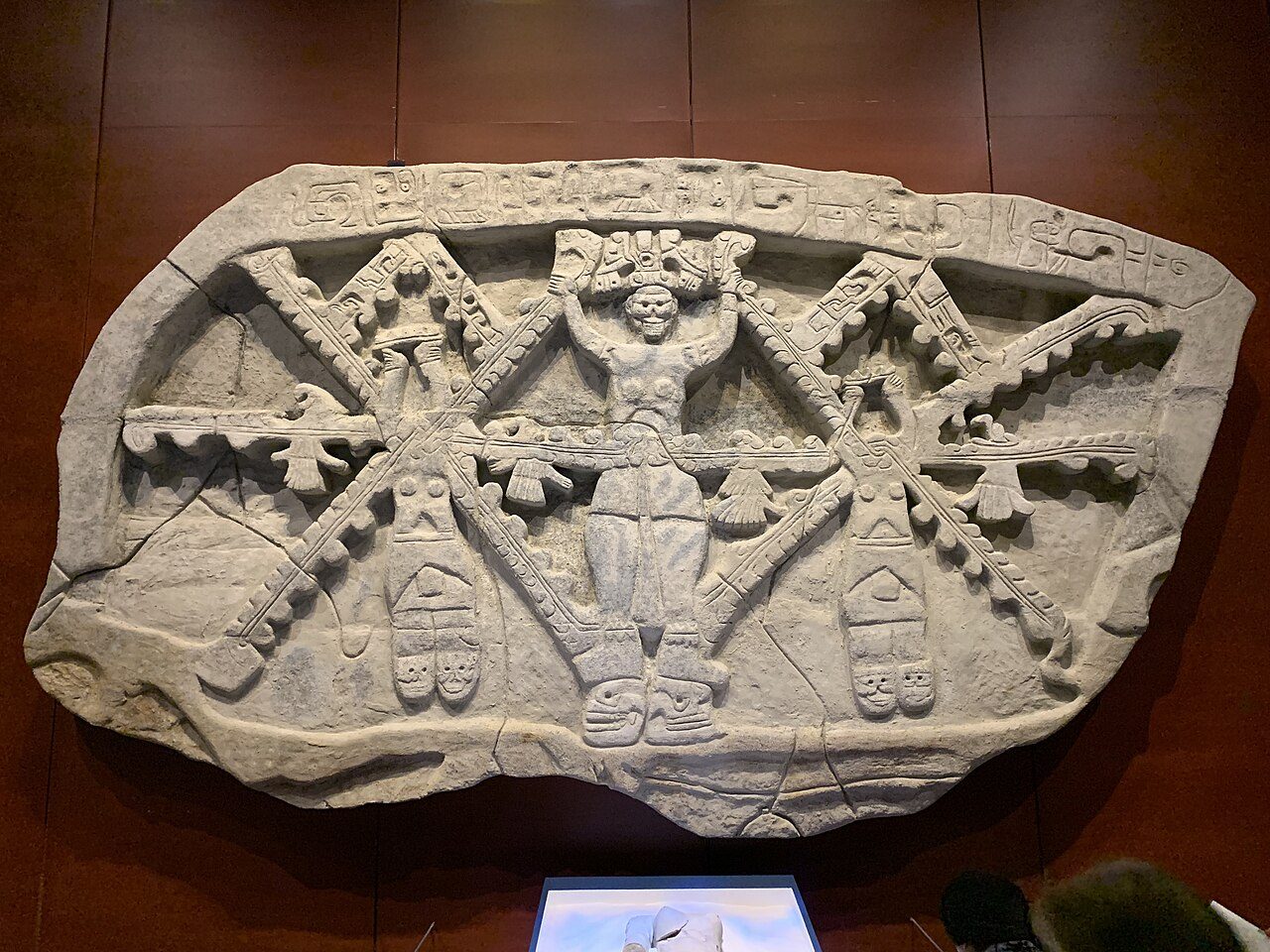
Photo credits (7)
- Hdlrosa, CC BY-SA 4.0, via Wikimedia Commons
- Gobierno CDMX, CC0, via Wikimedia Commons
- ProtoplasmaKid, CC BY-SA 4.0, via Wikimedia Commons
- GAED, CC BY-SA 3.0, via Wikimedia Commons
- Oleg Yunakov, CC BY-SA 4.0, via Wikimedia Commons
- Own work, CC BY-SA 4.0, via Wikimedia Commons
- Octavio Alonso Maya Castro, CC BY-SA 3.0, via Wikimedia Commons