
Zocalo
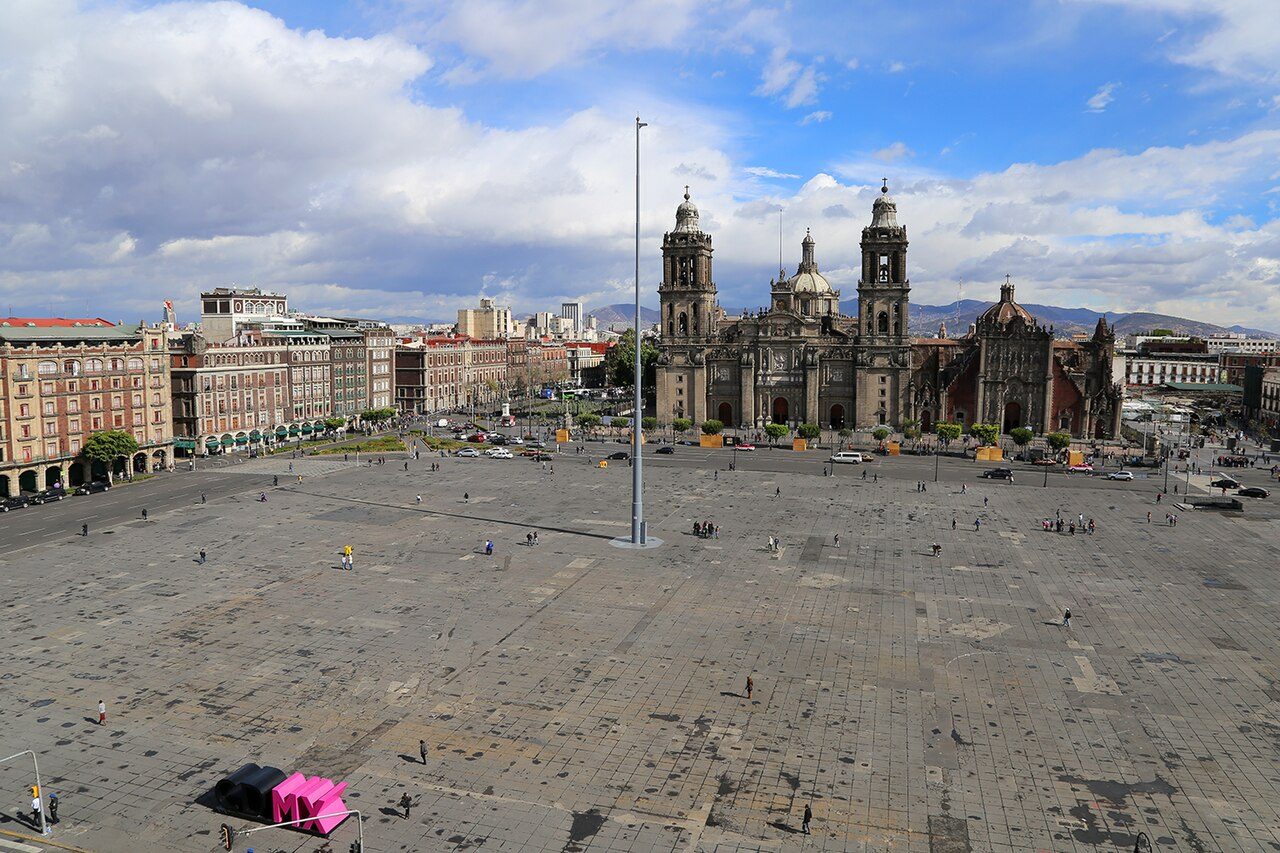
Laid over the ceremonial heart of Aztec Tenochtitlan following the Spanish conquest in 1521, the Plaza de la Constitución—universally known as the Zócalo—forms one of the world's grandest public squares. Bordering its northern edge rises the Metropolitan Cathedral, constructed between 1573 and 1813, showcasing a staggering fusion of Churrigueresque, Baroque, and Neoclassical styles beneath twin bell towers and a central dome. Along the eastern perimeter stretches the monumental National Palace, its volcanic *tezontle* stone facade glowing deep rust-red, concealing courtyards filled with Diego Rivera’s sweeping mid-century murals that chronicle the nation's pre-Hispanic roots and turbulent revolution. Standing on the vast expanse of gray paving stones, visitors are dwarfed by an immense national flag hoisted high in the square's center by military guards during daily dawn and dusk ceremonies. The air thickens with the piney scent of burning copal incense as indigenous dancers adorned in iridescent pheasant feathers stomp to the hypnotic cadence of wooden *huehuetl* drums and seed-pod ankle rattles. Around the perimeter, the nostalgic hum of brass-geared organ grinders mingles with the deep chime of 25-ton cathedral bells, offering a sensory immersion into centuries of layered empire, civic demonstration, and living street culture.
More in Mexico City
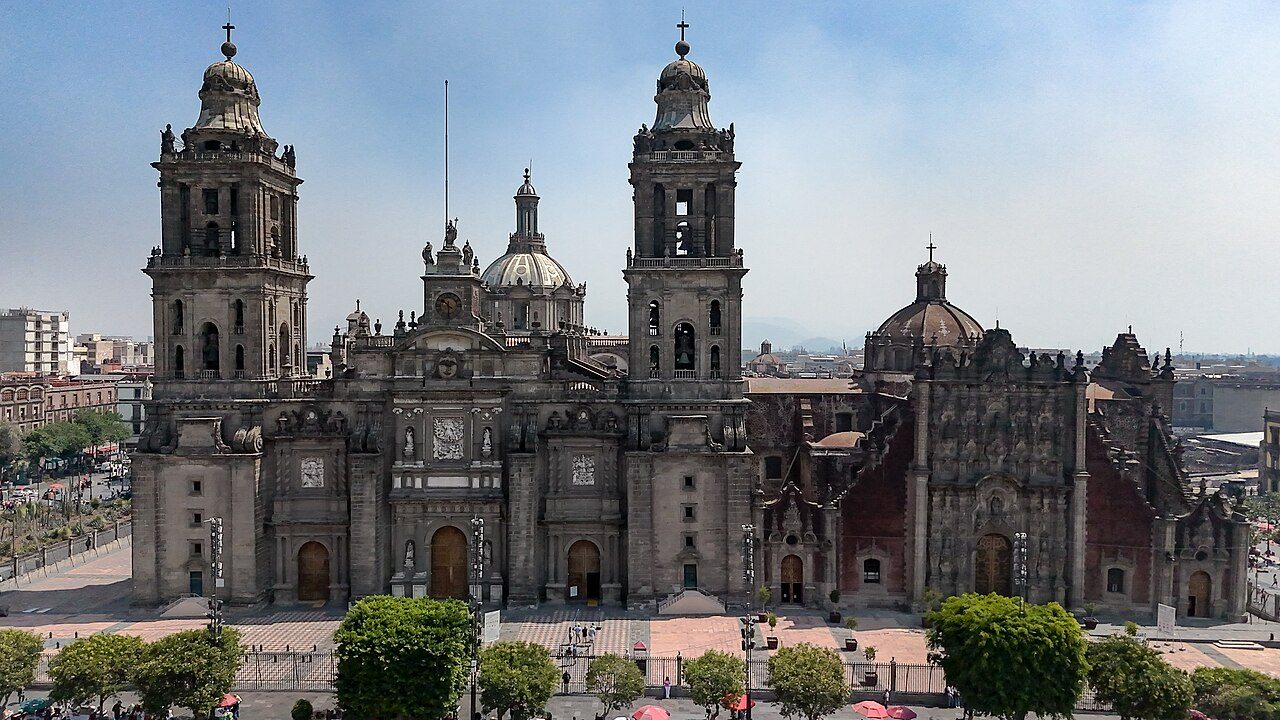
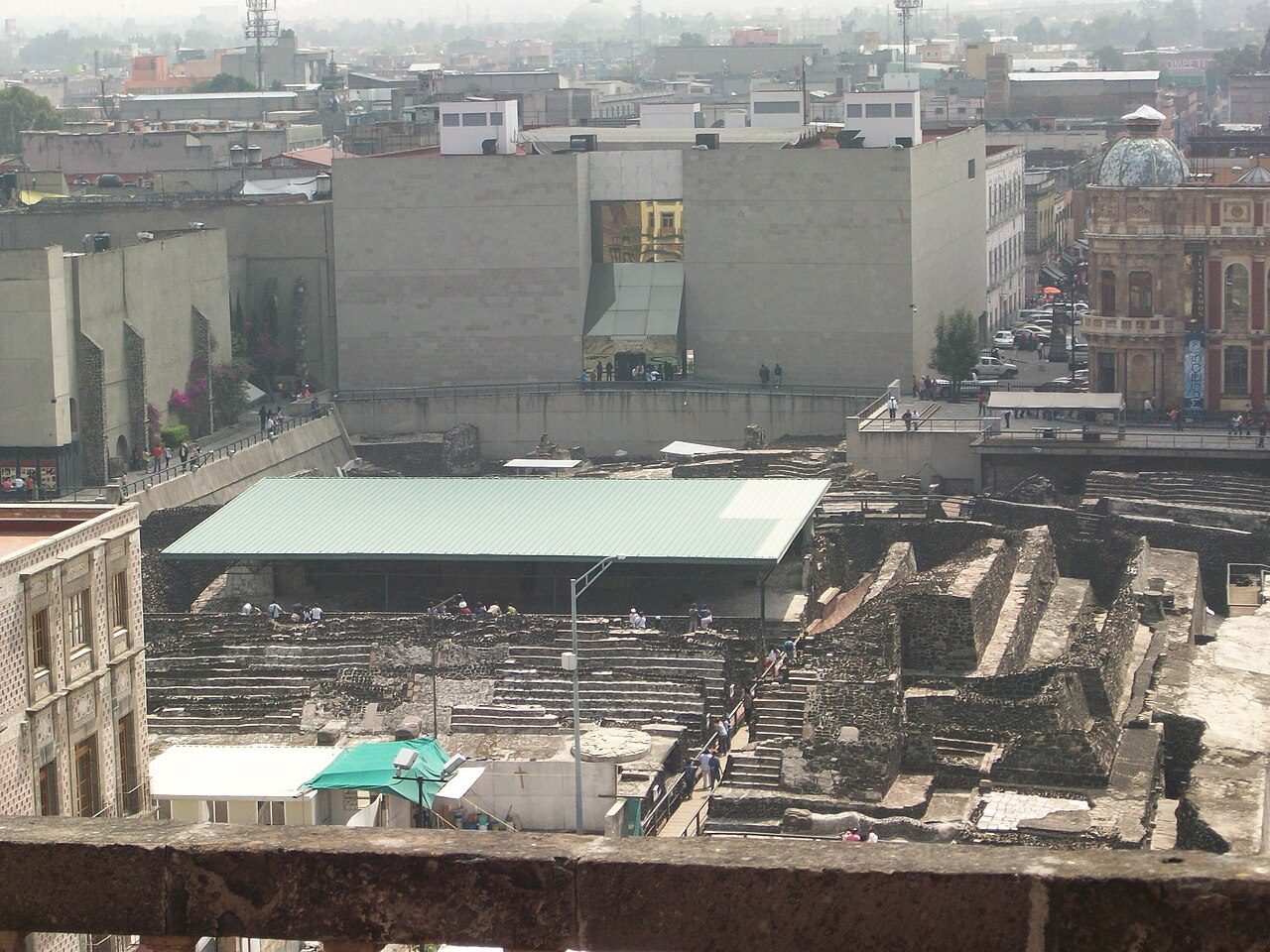
Photo credits (7)
- Gobierno CDMX, CC0, via Wikimedia Commons
- ProtoplasmaKid, CC BY-SA 4.0, via Wikimedia Commons
- GAED, CC BY-SA 3.0, via Wikimedia Commons
- Oleg Yunakov, CC BY-SA 4.0, via Wikimedia Commons
- Own work, CC BY-SA 4.0, via Wikimedia Commons
- Octavio Alonso Maya Castro, CC BY-SA 3.0, via Wikimedia Commons
- No machine-readable author provided. Nachtwächter assumed (based on copyright claims)., CC BY-SA 3.0, via Wikimedia Commons