
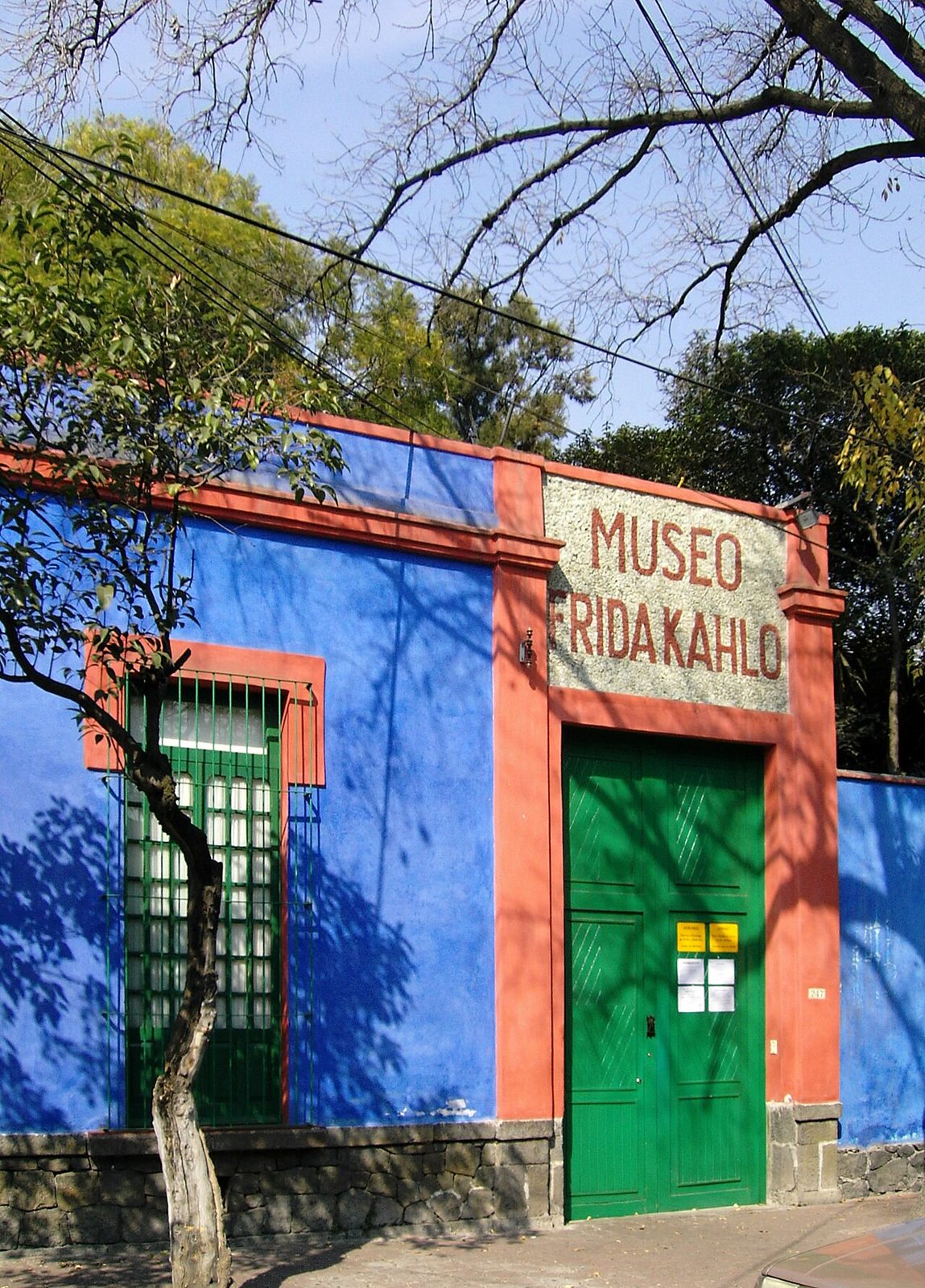
Frida Kahlo Museum
Behind towering cobalt-blue walls trimmed in brilliant terracotta, *La Casa Azul* in the leafy neighborhood of Coyoacán preserves the fierce, intimate sanctuary of Mexico’s most celebrated painter. Originally constructed in 1904 by Guillermo Kahlo as a modest domestic residence, the volcanic-stone home evolved into a vibrant enclave of international radicalism under Frida Kahlo and Diego Rivera, famously providing political asylum to Leon Trotsky in 1937. Today, the central courtyard acts as a tranquil, shaded oasis, where native cacti and climbing bougainvillea grow around Diego Rivera’s personal collection of pre-Columbian basalt sculptures, which sit perched upon a miniature tiered pyramid. Within the museum's ten preserved rooms, visitors step directly into the physical reality of Kahlo’s daily endurance. In the light-drenched studio designed in 1946 by functionalist architect Juan O’Gorman, Frida’s wheelchair remains positioned before her easel, flanked by earthen jars of powdered pigment and animal-hair brushes. Moving into the night bedroom, a profound stillness takes hold beneath her four-poster bed, where the ceiling-mounted mirror—installed after her near-fatal 1925 bus collision—still stares down at the empty mattress where her haunting self-portraits were conceived. Surrounded by embroidered Tehuana tunics, folk-art papier-mâché *judas* figures, and the defiant crimson flesh of her final still-life, *Viva la Vida*, the encounter feels less like viewing an exhibition and more like walking through a living diary of pain, political conviction, and creative resilience.
More in Mexico City
Photo credits (7)
- No machine-readable author provided. Nachtwächter assumed (based on copyright claims)., CC BY-SA 3.0, via Wikimedia Commons
- Gobierno CDMX, CC0, via Wikimedia Commons
- ProtoplasmaKid, CC BY-SA 4.0, via Wikimedia Commons
- GAED, CC BY-SA 3.0, via Wikimedia Commons
- Oleg Yunakov, CC BY-SA 4.0, via Wikimedia Commons
- Own work, CC BY-SA 4.0, via Wikimedia Commons
- Octavio Alonso Maya Castro, CC BY-SA 3.0, via Wikimedia Commons