
Xochimilco
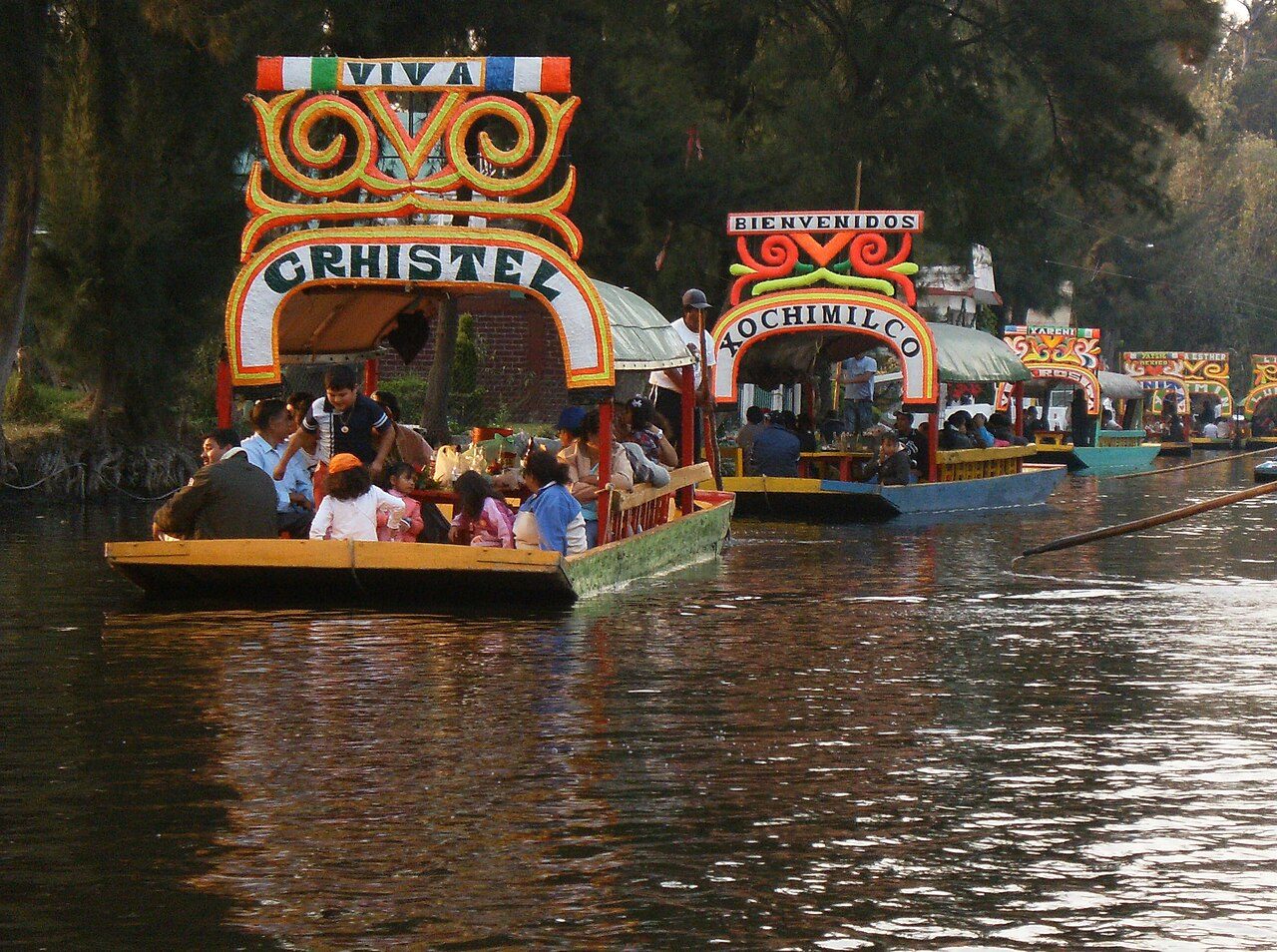
Long before Tenochtitlan fell, the Xochimilca people engineered an ingenious lacustrine civilization across the southern Valley of Mexico, anchoring artificial agricultural plots (*chinampas*) into the shallow lakebed using the dense root systems of native *ahuejote* willows. Designated a UNESCO World Heritage site in 1987, this 170-kilometer labyrinth of waterways survives as the last living vestige of the pre-Columbian lake system that once filled the entire basin. Gliding through these channels are fleets of *trajineras*—flat-bottomed wooden punts adorned with high, arched headboards hand-painted in vibrant shades of magenta, yellow, and turquoise, each bearing traditional names like *Lupita* or *Carmelita* painted in ornate floral script. Stepping aboard at the docks of Embarcadero Cuemanco or Nativitas, travelers enter an kinetic floating commons. Boatmen wield heavy wooden poles (*palancas*), thrusting them against the canal silt to navigate waterways where critically endangered axolotls harbor in the quiet shallows. The journey quickly becomes an orchestra of sights and sounds: costumed mariachi and marimba bands pull alongside to pitch their songs directly over the gunwales, while floating vendors in narrow canoes grill chili-dusted ears of *elote*, dish out rich *mole*, and ladle fermented *pulque* from clay jars, filling the damp wetland air with the scent of charred corn and sweet agave.
More in Mexico City
Photo credits (7)
- Jflo23, CC BY-SA 3.0, via Wikimedia Commons
- Gobierno CDMX, CC0, via Wikimedia Commons
- ProtoplasmaKid, CC BY-SA 4.0, via Wikimedia Commons
- GAED, CC BY-SA 3.0, via Wikimedia Commons
- Oleg Yunakov, CC BY-SA 4.0, via Wikimedia Commons
- Own work, CC BY-SA 4.0, via Wikimedia Commons
- Octavio Alonso Maya Castro, CC BY-SA 3.0, via Wikimedia Commons