
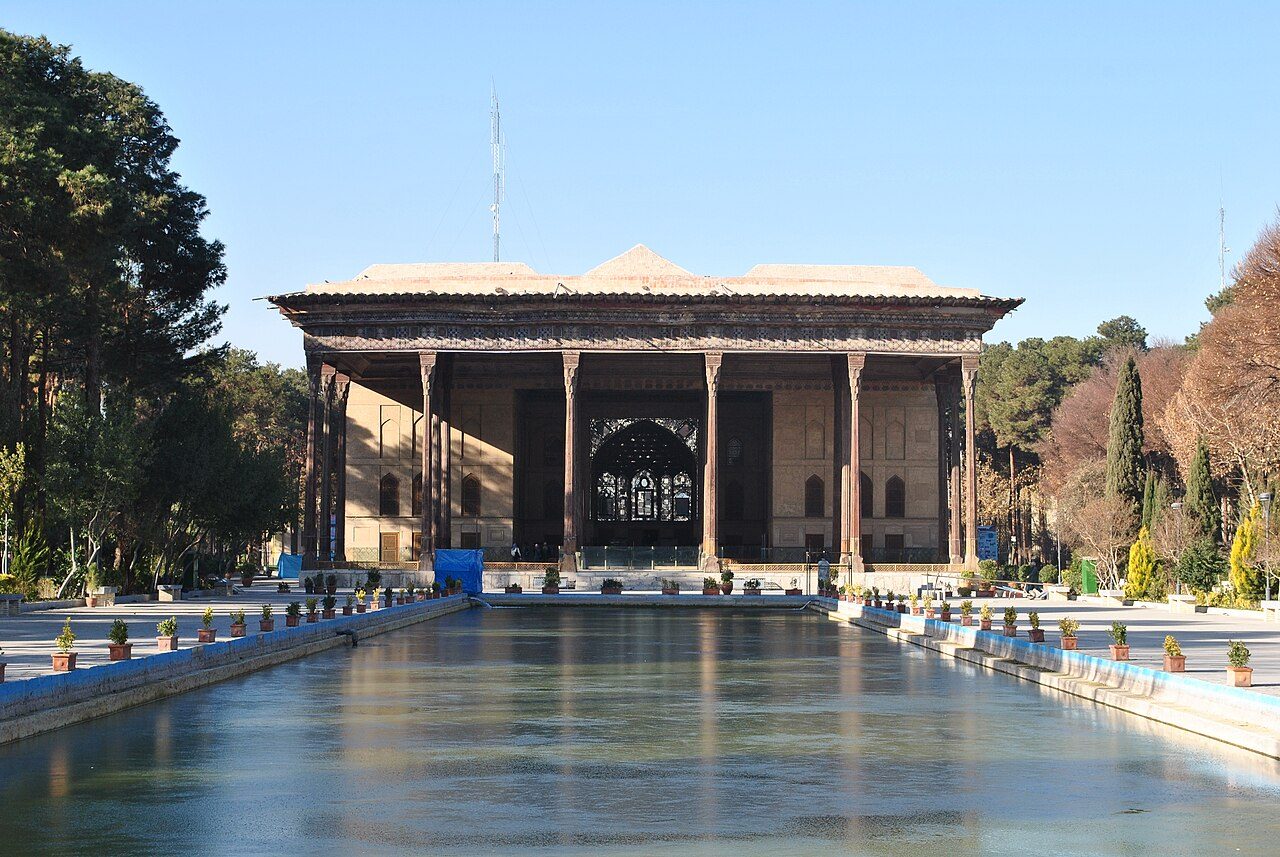
Chehel Sotoun
Approaching along the central axis of this UNESCO-inscribed Persian garden, the palace reveals the poetic sleight of hand that gives it its name. Completed in 1647 under Safavid ruler Shah Abbas II to entertain foreign dignitaries, the open-air veranda rests on twenty slender pillars of plane-tree wood that soar toward an intricately coffered ceiling. When the mirror-flat surface of the grand reflecting pool catches the pavilion in the afternoon sun, the twenty columns double into forty—a visual realization of *chehel sotoun*, the Persian idiom for abundance. Stepping beneath the terrace, travelers pass between sculpted stone lion bases and intricate mirror mosaics (*ayeneh-kari*) that catch the breeze shifting through surrounding pine and cypress groves. Inside the vaulted reception hall, garden serenity yields to the lavish theater of 17th-century diplomacy. Six monumental frescoes dominate the upper walls, glowing with pigments of lapis lazuli, cinnabar, and burnished gold leaf. These sweeping canvases capture pivotal imperial moments: the courtly grace of Shah Tahmasp I welcoming the exiled Mughal emperor Humayun, alongside the furious clash of scimitars at the 1514 Battle of Chaldiran against the Ottomans. Standing beneath the undulating, gold-embossed ceilings where European envoys once bowed, one feels the calculated majesty of an empire that declared Isfahan to be half the world.
More in Isfahan
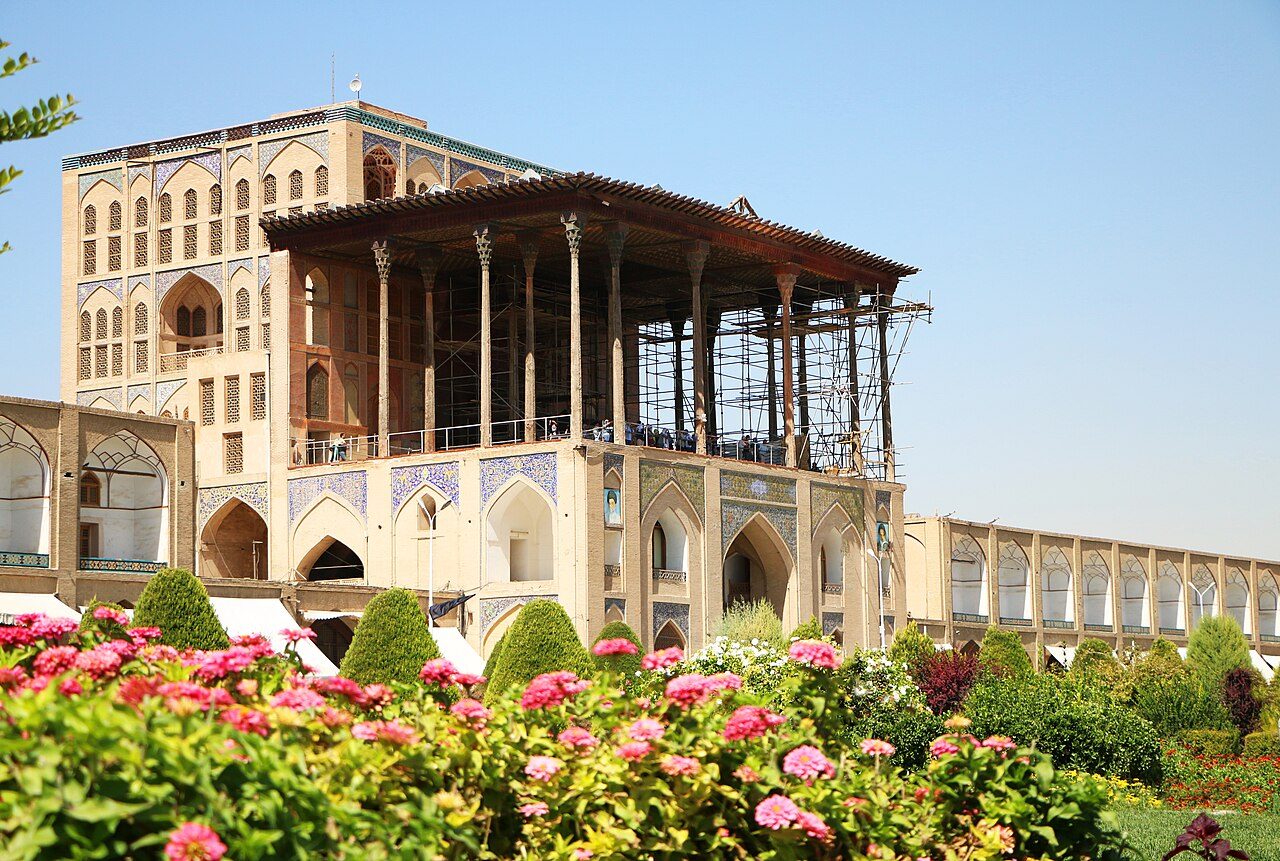
Photo credits (4)
- Zenith210 ( talk ) ( Uploads ), CC BY-SA 3.0, via Wikimedia Commons
- شهاب الدین علیشاهی, CC BY-SA 4.0, via Wikimedia Commons
- درفش کاویانی, CC BY-SA 3.0, via Wikimedia Commons
- Zahradibaji, CC BY-SA 4.0, via Wikimedia Commons