
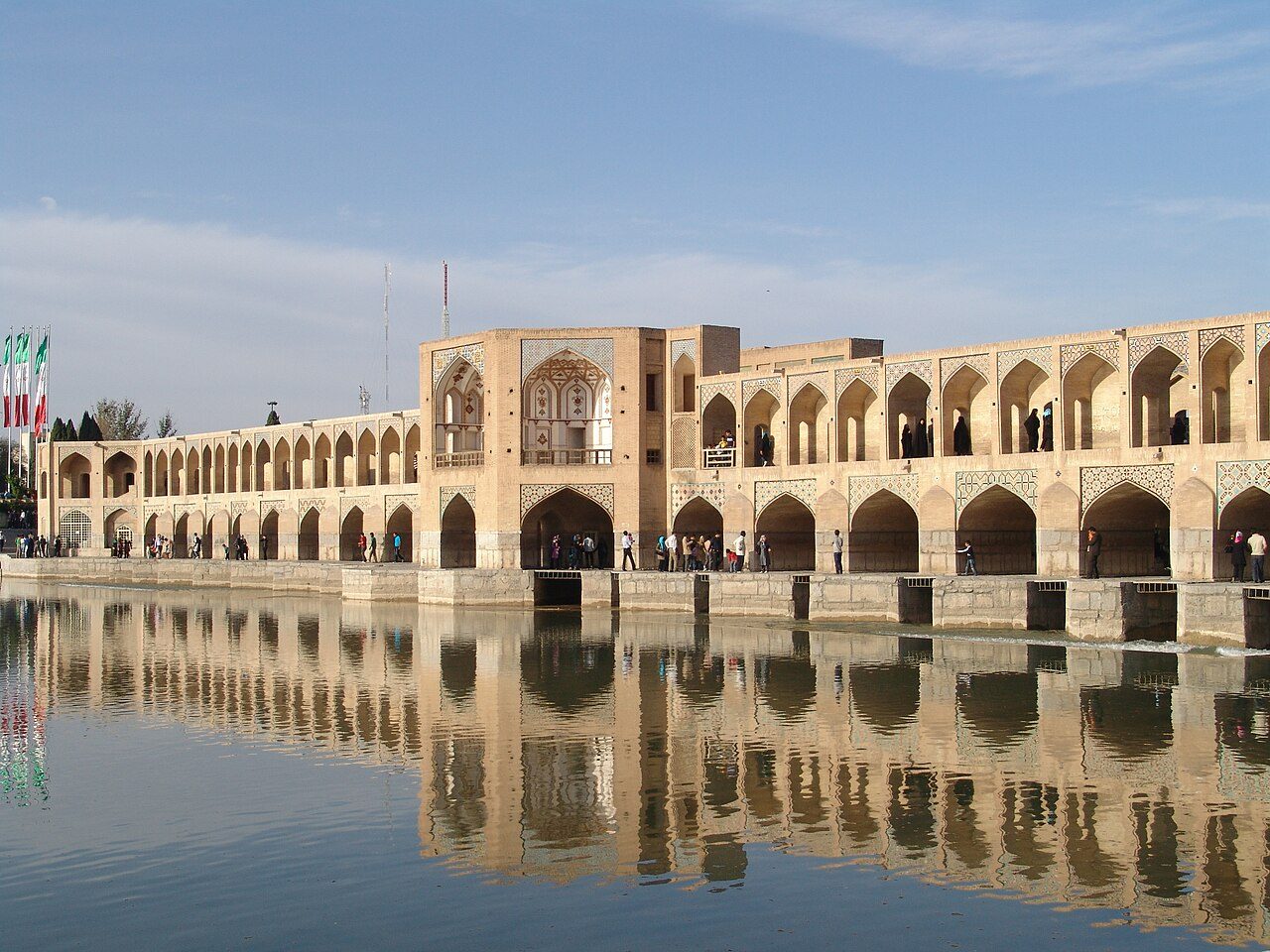
Khaju Bridge
Commissioned around 1650 CE by the Safavid monarch Shah Abbas II, Khaju Bridge spans the Zayandeh River as a masterstroke of hydraulic engineering and Persian royal architecture. Built over the foundations of an earlier Timurid crossing, this double-tiered monument functioned simultaneously as a pedestrian viaduct and a functioning weir, utilizing twenty-three stone sluice gates to regulate downstream irrigation for Isfahan’s royal gardens. At its core stands the *Shah Neshin*, an octagonal pavilion embellished with remnants of seventeenth-century frescoes and intricate turquoise and ochre tilework, designed as a cool retreat where the monarch reclined to watch aquatic pageants. Carved stone lions with watchful marble eyes flank the eastern approach, guarding the bridge’s stepped sandstone plinth. As twilight descends, the structure transforms into Isfahan’s most evocative acoustic chamber. Descending the broad stone steps toward the riverbed, travelers encounter a dramatic drop in temperature as drafts pull through the subterranean vaults. Here, beneath the vaulted brick groin arches, local elders and poets gather in the amber spill of evening lanterns to sing impromptu verses of classical Persian *avaz*. The vaulted ceilings amplify their voices into rich, echoing crescendos that drift over the water. Resting against the worn ashlar pillars, visitors experience the living pulse of the city, framed by the rhythmic repetition of illuminated arches reflecting across the river’s glassy surface.
More in Isfahan
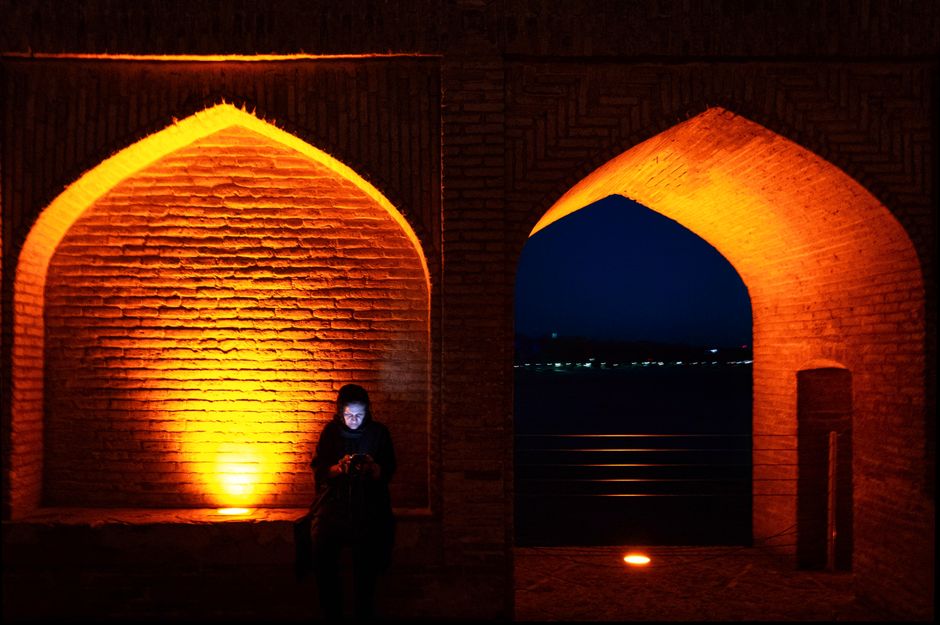
Photo credits (4)
- درفش کاویانی, CC BY-SA 3.0, via Wikimedia Commons
- شهاب الدین علیشاهی, CC BY-SA 4.0, via Wikimedia Commons
- Zahradibaji, CC BY-SA 4.0, via Wikimedia Commons
- Rasool abbasi17, CC BY-SA 4.0, via Wikimedia Commons