
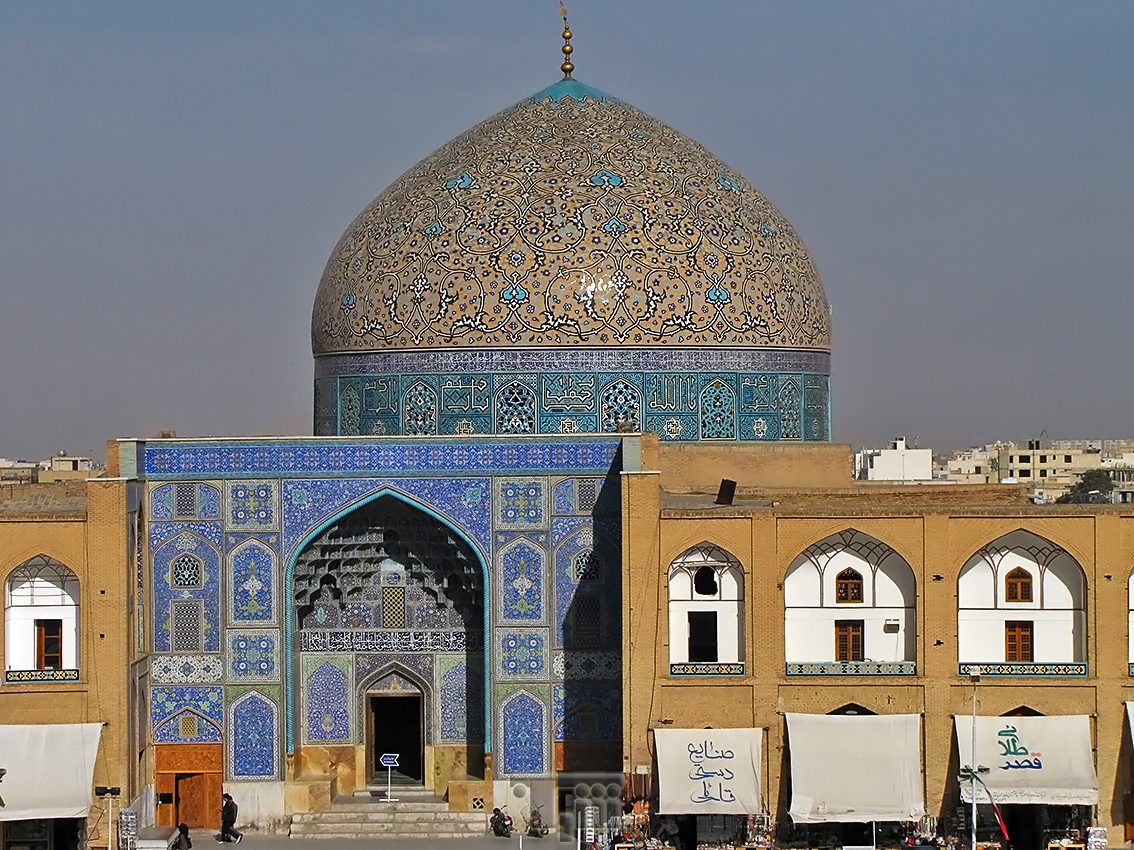
Sheikh Lotfollah Mosque
Commissioned in 1603 by Safavid ruler Shah Abbas I and completed in 1619, this masterpiece of Persian architecture on the eastern edge of Naqsh-e Jahan Square was conceived not for the public, but as an exclusive private sanctuary for the royal court. Master architect Mohammad Reza Isfahani broke classic mosque conventions by omitting both minarets and a central courtyard. Travelers enter through an off-center, recessed portal dripping with deep lapis stalactite vaulting, only to be guided into a winding, dim-lit corridor of polished tile. This deliberately shadowed subterranean passage serves a dual purpose: it quietly reorients the worshiper forty-five degrees southwest toward Mecca while cleansing the senses for the visual revelation that lies ahead. Stepping into the single domed chamber induces immediate awe as natural light spills through sixteen high latticed windows, illuminating walls adorned with the master calligraphy of Ali Reza Abbasi. Overhead, the dome defies gravity through four massive squinches that seamlessly transform the square floor into an octagonal drum. Outside, its unglazed, cafe-au-lait exterior shifts to warm rose gold under the fading desert light. Inside, an ingenious optical marvel captivates visitors: when the sun hits the apex at particular hours, the filtered light forms the radiant body and sweeping plumage of a golden peacock, trailing across a hypnotic vortex of lemon-shaped medallions, turquoise arabesques, and saffron floral filigree.
More in Isfahan
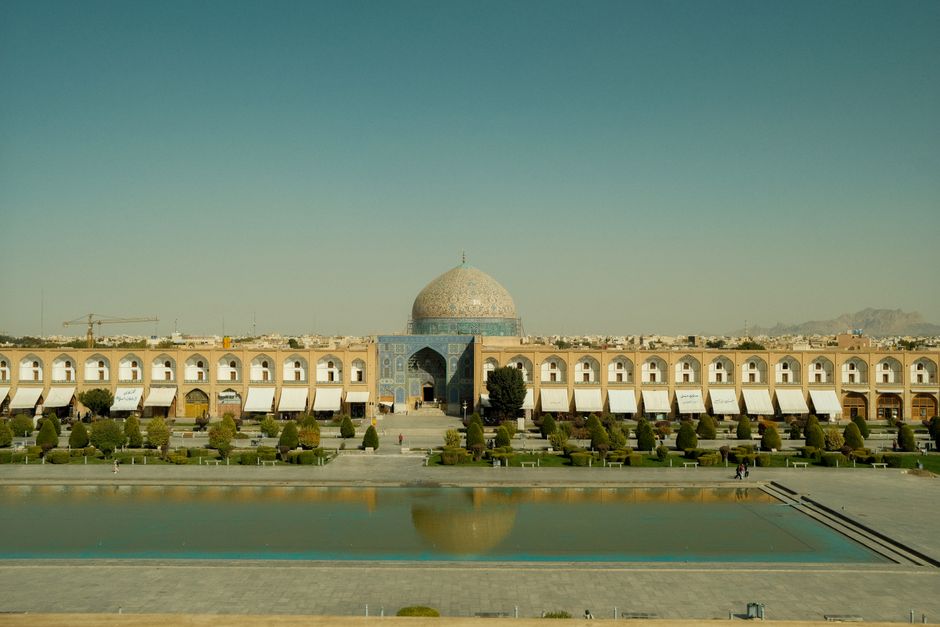
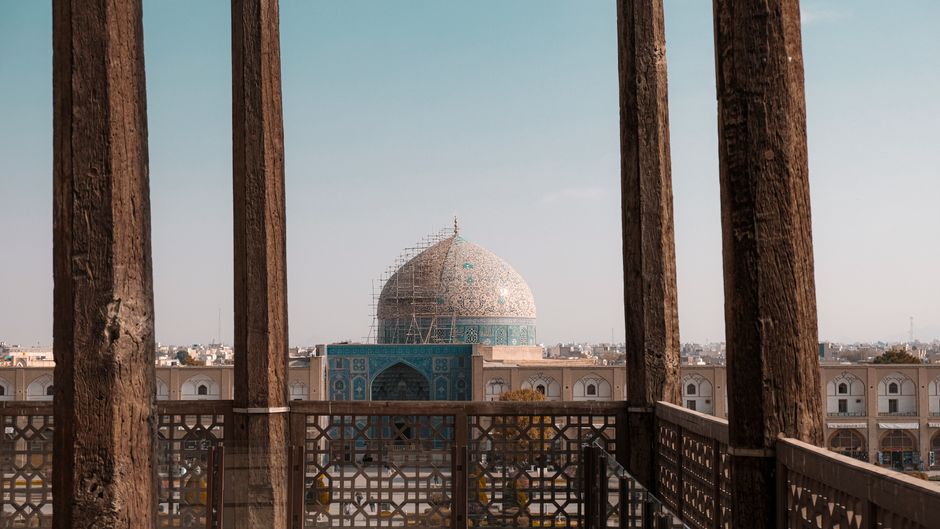
Photo credits (4)
- شهاب الدین علیشاهی, CC BY-SA 4.0, via Wikimedia Commons
- درفش کاویانی, CC BY-SA 3.0, via Wikimedia Commons
- Zahradibaji, CC BY-SA 4.0, via Wikimedia Commons
- Rasool abbasi17, CC BY-SA 4.0, via Wikimedia Commons