
 New added
Underground Cities
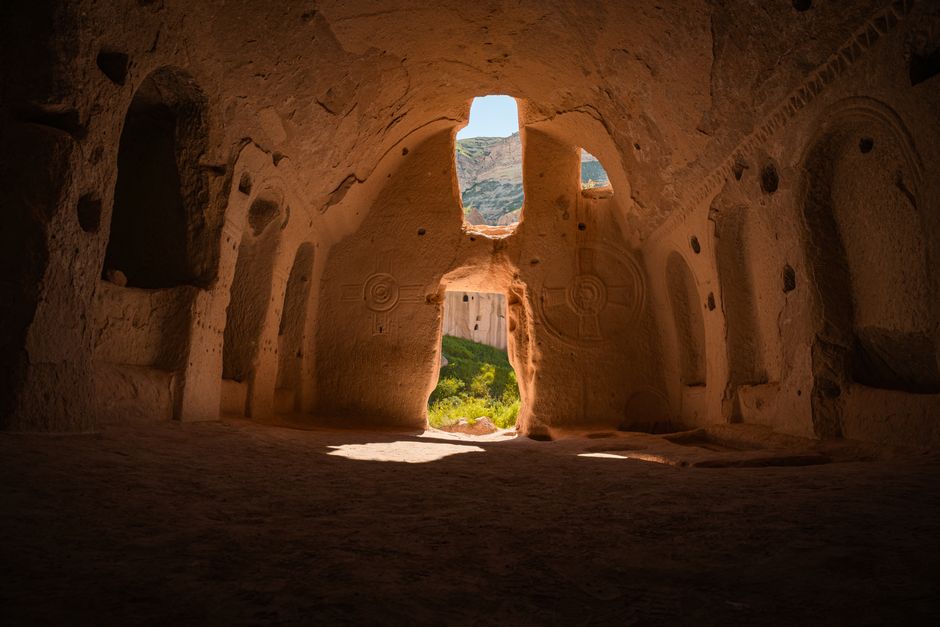
Carved deep into Cappadocia’s soft volcanic tufa, subterranean strongholds like Derinkuyu and Kaymaklı evolved over millennia, initiated by the Phrygians around the 8th century BCE and massively expanded during the Byzantine era. Between the 7th and 10th centuries CE, early Christian populations transformed these subterranean networks into fully functional, multi-tiered redoubts to survive Arab-Byzantine raids. Plunging up to eight accessible tiers—reaching depths of roughly 85 meters—these subterranean cities housed up to 20,000 people alongside their livestock. Complex infrastructure included soot-blackened communal kitchens, stone-trough stables, rock-cut wineries, and subterranean cruciform churches. Security hinged on ingenious defensive engineering: massive, half-ton volcanic millstones were slotted into lateral wall niches, designed to roll shut and seal narrow choke points exclusively from the inside. Stepping into the depths, visitors leave the sun-scorched Anatolian plateau for an immediate, damp chill hovering around 13°C. Navigating the network requires hunching through claustrophobic, hand-hewn conduits where ancient pickaxe gouges remain sharply defined in the porous stone. Standing beside a sheer, 55-meter ventilation shaft dropping straight into the abyss, you feel the steady, rhythmic draft of engineered airflow that sustained underground society for months at a time. The atmosphere is stark and muffled, deadening outside noise until only the scrape of shoes on basalt grit and the cool echo of dripping water break the heavy silence of this buried sanctuary.
More in Cappadocia

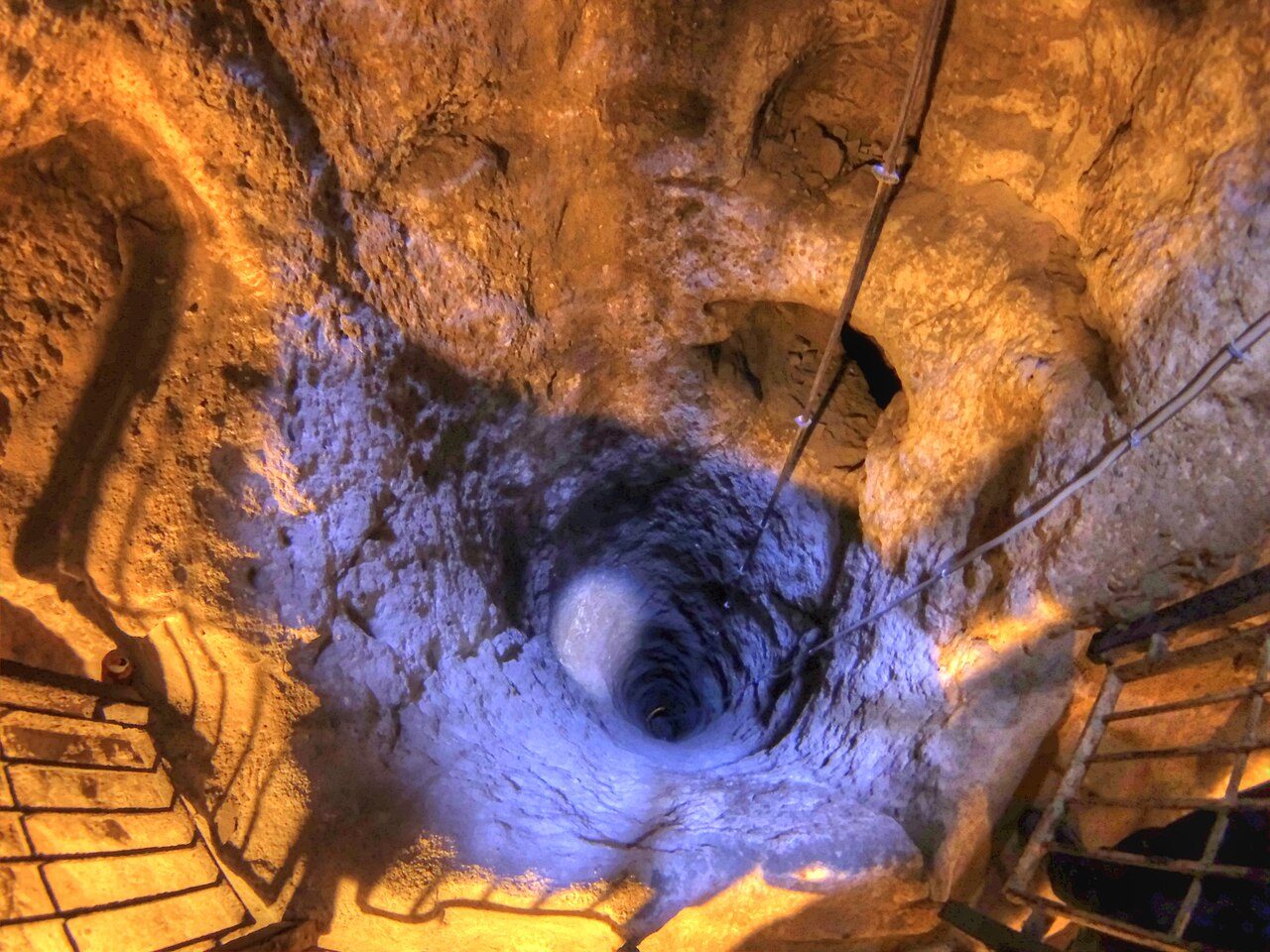
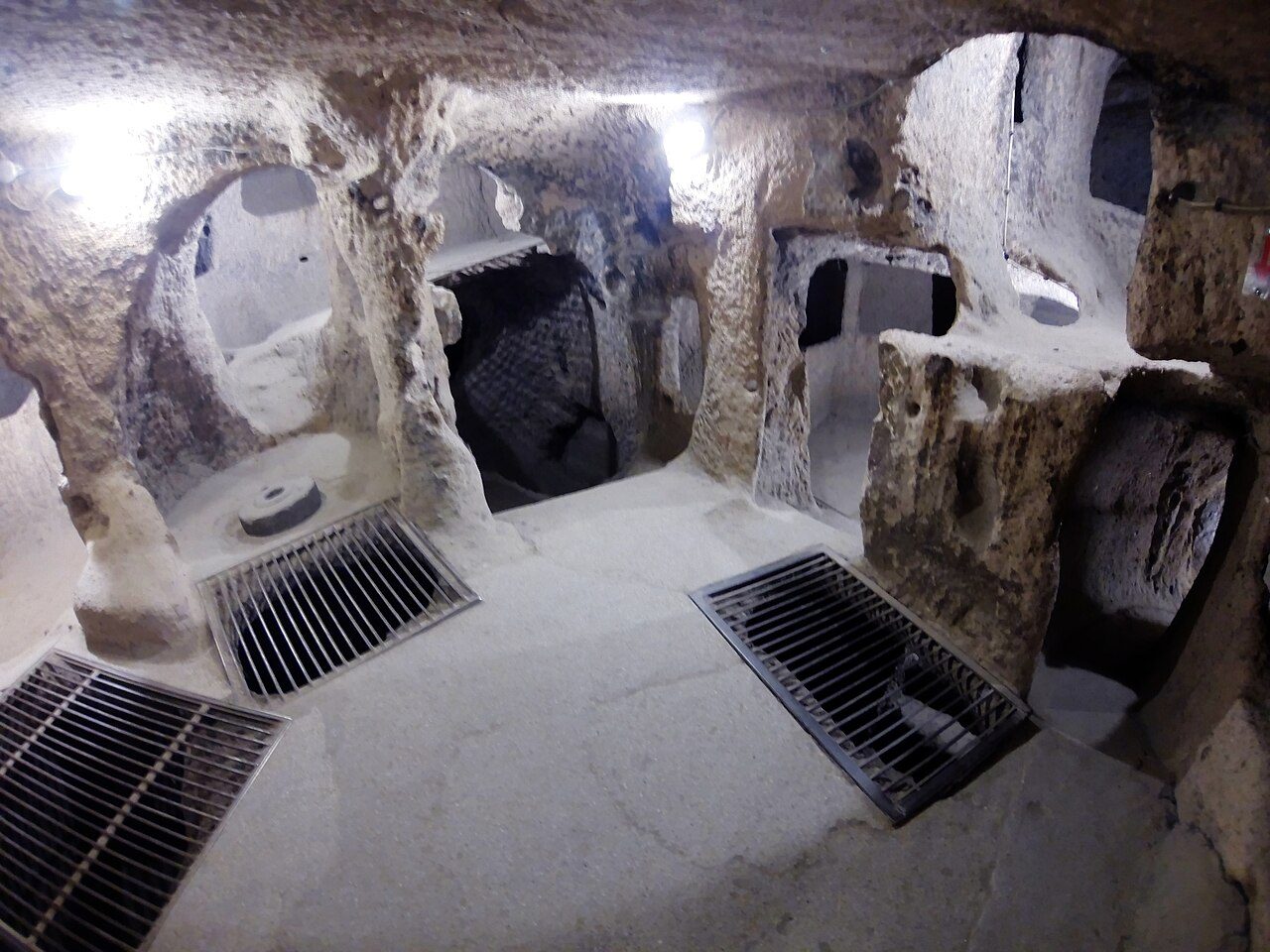
Photo credits (4)
- Moyan Brenn from Italy, CC BY 2.0, via Wikimedia Commons
- Nevit Dilmen ( talk ), CC BY-SA 3.0, via Wikimedia Commons
- Nevit Dilmen ( talk ), CC BY-SA 3.0, via Wikimedia Commons
- Nevit Dilmen ( talk ), CC BY-SA 3.0, via Wikimedia Commons