
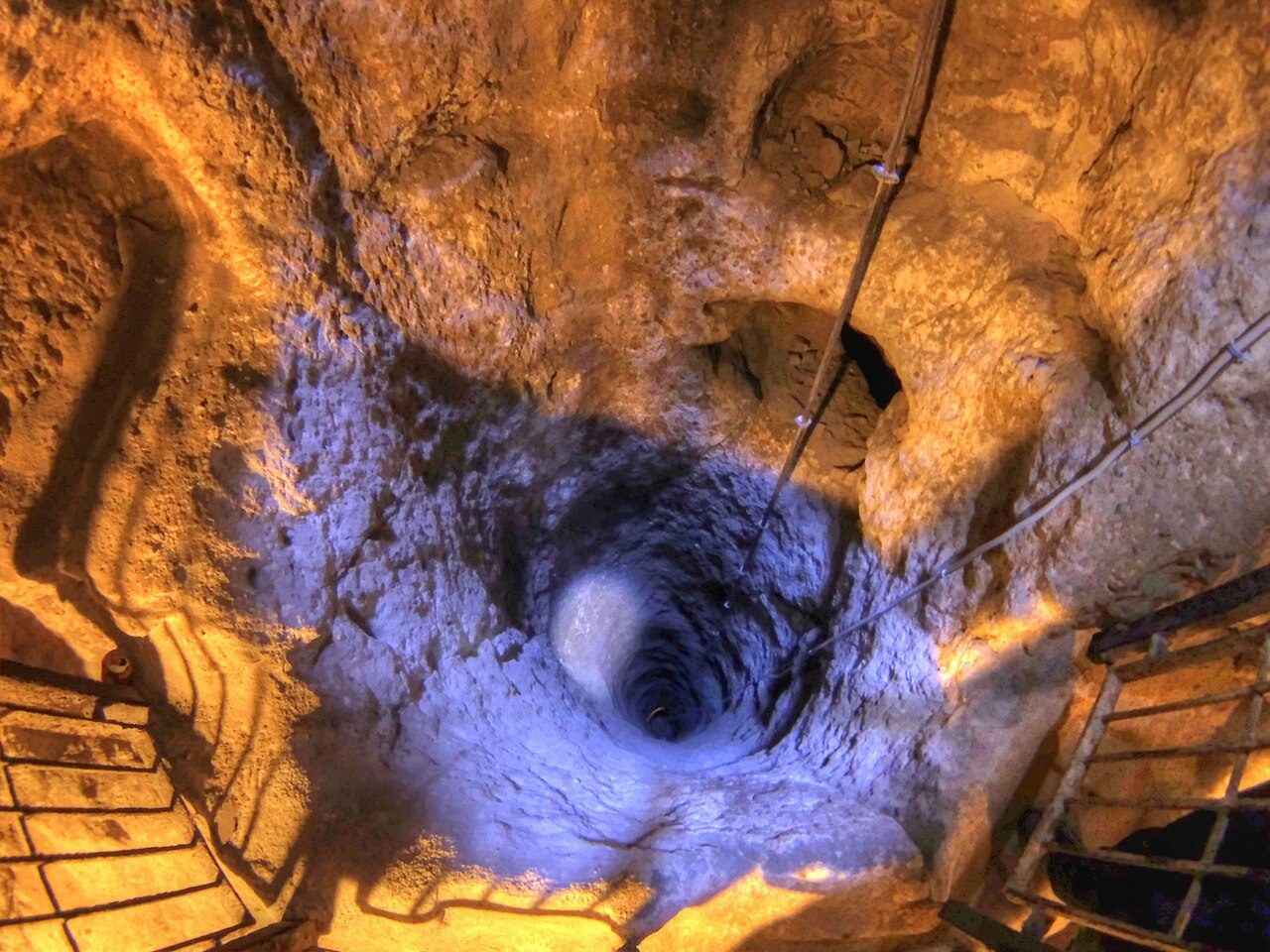
Derinkuyu Underground City
Carved deep into the malleable volcanic tuff of the Nevşehir plateau, Derinkuyu plunges roughly eighty-five meters across eighteen subterranean tiers. Initiated by the Phrygians in the eighth century BCE and significantly expanded by Byzantine Christians during the Arab-Byzantine wars, this subterranean redoubt was engineered to safeguard twenty thousand inhabitants alongside their livestock. Massive, half-ton rolling stone doors—operable only from the interior—sealed off descending corridors, protecting a sophisticated infrastructure complete with stables, olive-oil presses, dining halls, and a barrel-vaulted theological school carved directly out of the ash-gray stone. Stepping beyond the threshold, the arid Anatolian heat gives way to a constant, clammy thirteen-degree chill scented with damp basalt and petrified dust. Visitors navigate narrow, soot-blackened tunnels hunched at the waist, descending steep staircases toward the lower levels where a rock-cut cruciform church anchors the seventh tier. Looking up through the fifty-five-meter ventilation shafts that still draw fresh air from the surface, one feels the crushing weight of the earth overhead juxtaposed against brilliant ancient engineering. The acoustics swallow everyday noise, leaving only the hollow echo of footsteps on steps smoothed by centuries of fugitive feet and the haunting stillness of a sanctuary hewn beneath the world.
More in Cappadocia
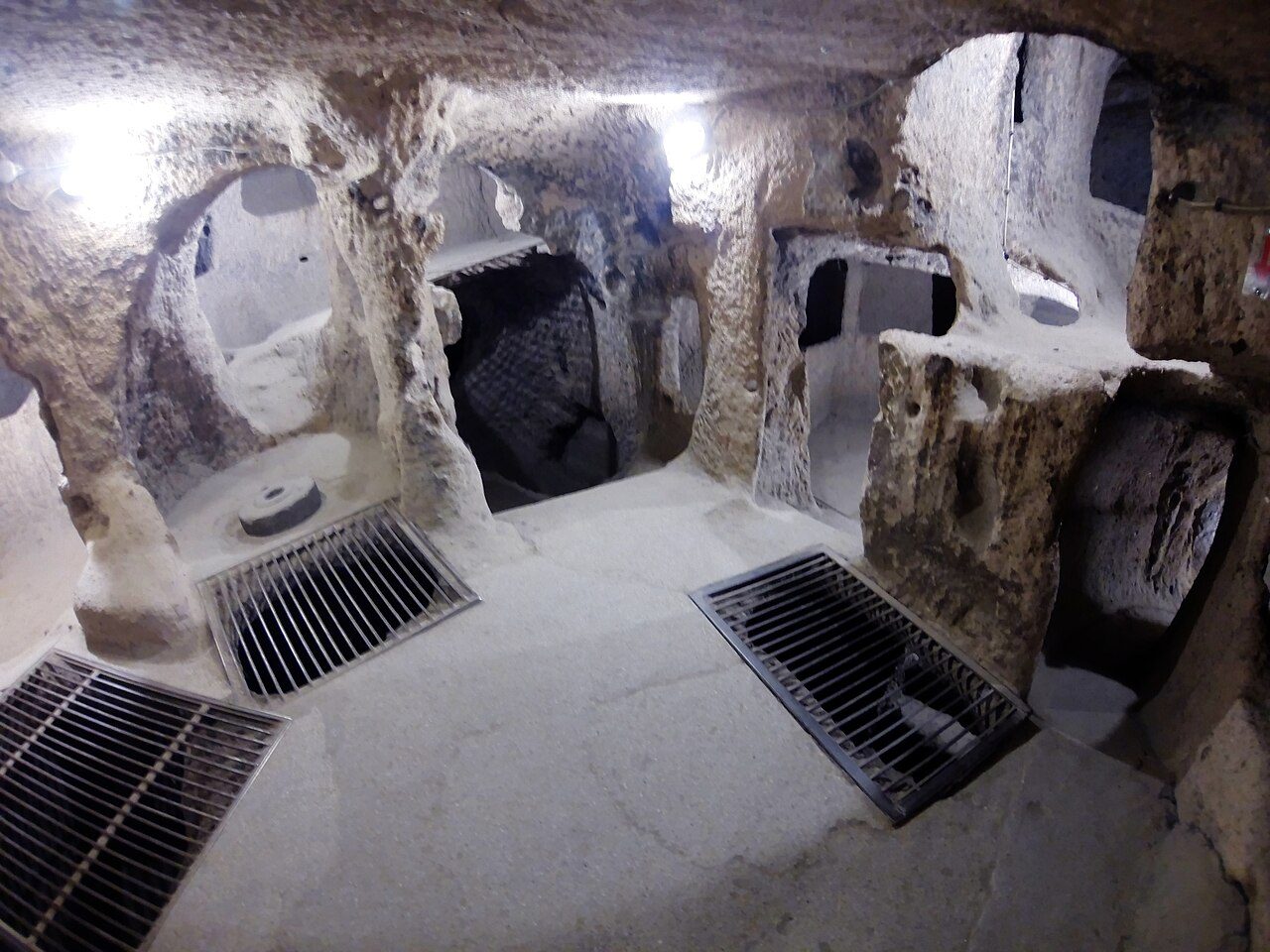
Photo credits (5)
- Nevit Dilmen ( talk ), CC BY-SA 3.0, via Wikimedia Commons
- Moyan Brenn from Italy, CC BY 2.0, via Wikimedia Commons
- Nevit Dilmen ( talk ), CC BY-SA 3.0, via Wikimedia Commons
- Nevit Dilmen ( talk ), CC BY-SA 3.0, via Wikimedia Commons
- The original uploader was Morphosis at Turkish Wikipedia ., Public domain, via Wikimedia Commons