
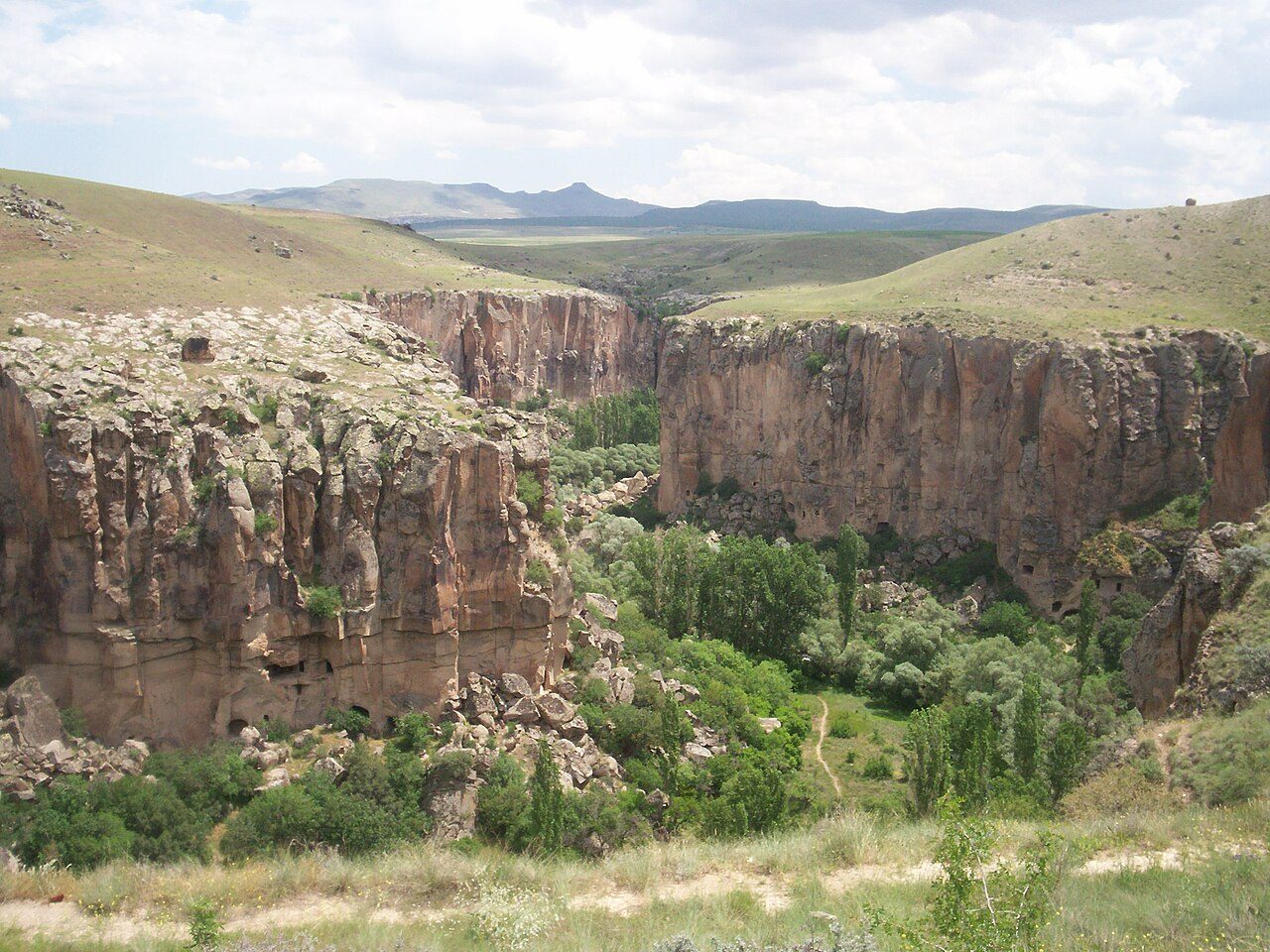
Ihlara Valley
Carved over millennia by the Melendiz River through brittle volcanic basalt and andesite from Mount Hasan, this sheer 150-meter-deep tectonic chasm cuts an emerald ribbon across the arid Anatolian steppe. Descending the nearly 400 wooden steps from the plateau rim, travelers immediately trade the howling winds for a humid, sheltered microclimate redolent of wild mint, pistachio shrubs, and rustling willows. The rushing, jade-tinted river accompanies the dirt path along the canyon floor, where vertical ochre cliffs swallow modern sound, framing the same cloistered sanctuary that shielded early Christian ascetics fleeing Roman persecution and subsequent Arab raids. Between the 4th and 13th centuries, monastic hermits hewed more than one hundred barrel-vaulted basilicas directly into the soft tufa walls. Stepping through the humble rock apertures into Ağaçaltı Kilisesi (the Church beneath the Tree), visitors look up into a cruciform hall to confront vivid 6th-century frescoes executed in raw cinnabar, malachite, and ochre, displaying a rare blend of Cappadocian and Syrian iconography with Sasanian-influenced palmettes. Further down the waterway, the 11th-century Yılanlı Kilisesi (Snake Church) confronts explorers with striking, primitive Last Judgment scenes—frescoed serpents coiling around sinners on the dim stone walls—preserving an unfiltered, subterranean world of Byzantine monastic devotion.
More in Cappadocia
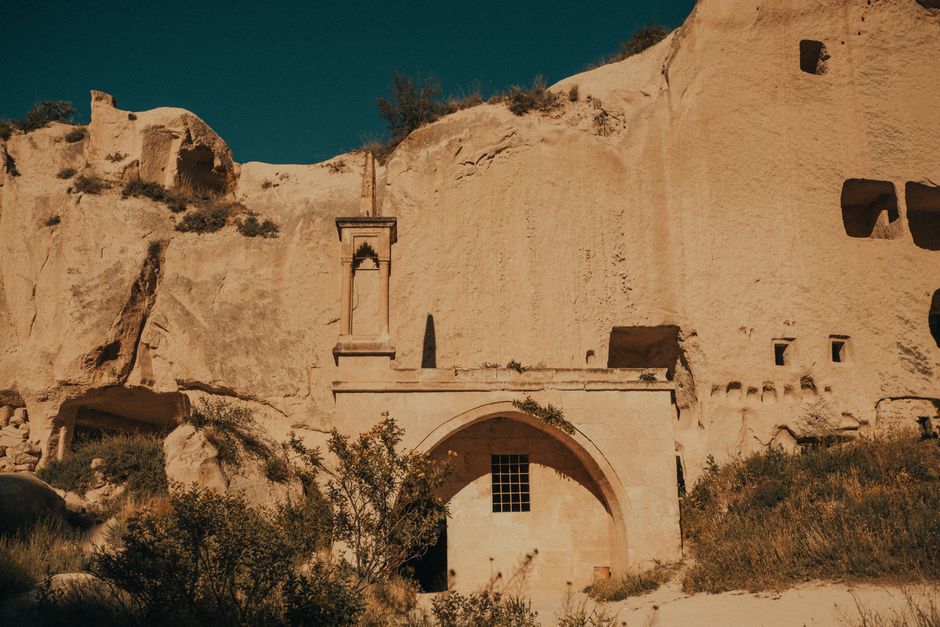
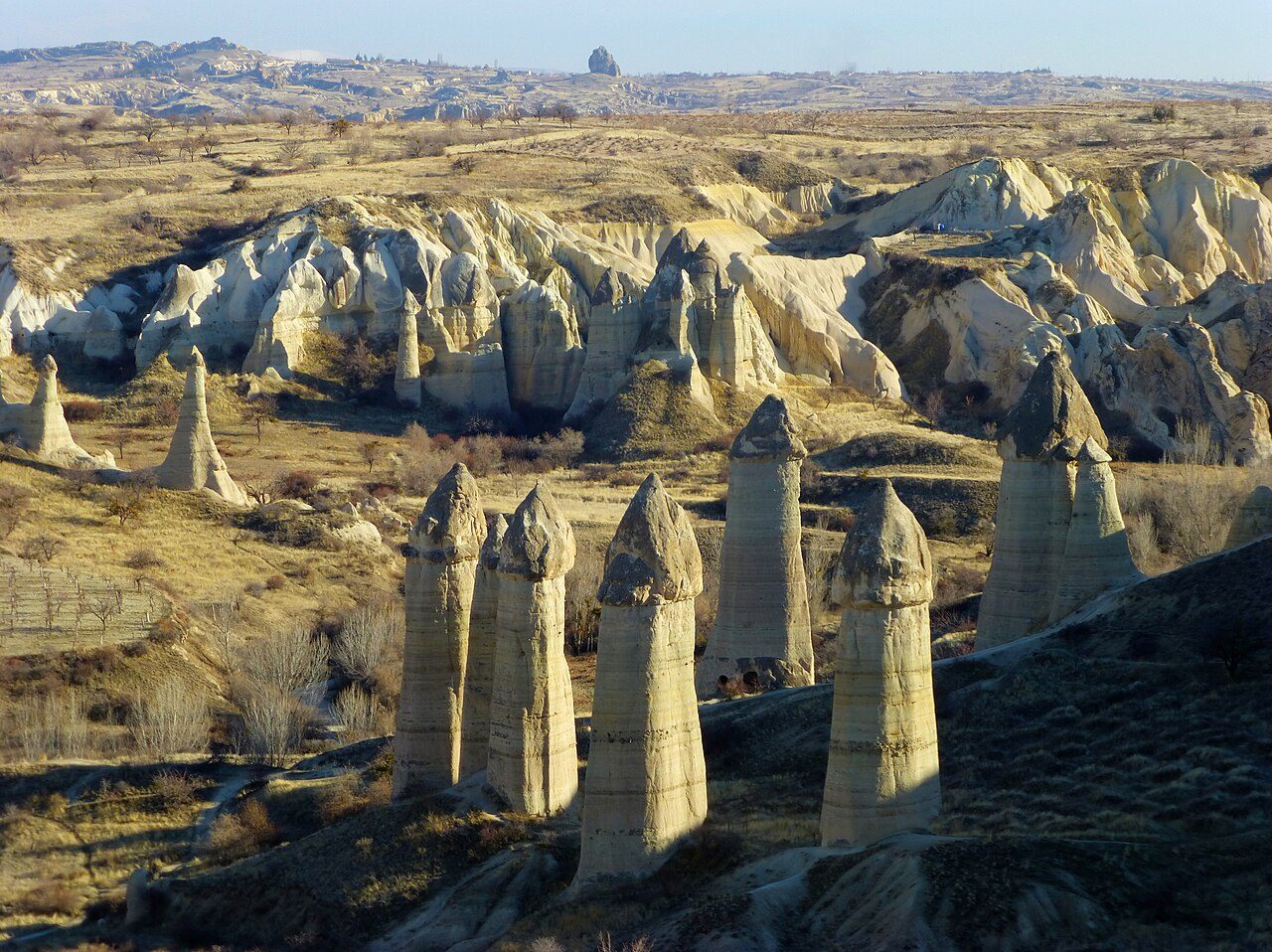
Photo credits (5)
- The original uploader was Morphosis at Turkish Wikipedia ., Public domain, via Wikimedia Commons
- Moyan Brenn from Italy, CC BY 2.0, via Wikimedia Commons
- Nevit Dilmen ( talk ), CC BY-SA 3.0, via Wikimedia Commons
- Nevit Dilmen ( talk ), CC BY-SA 3.0, via Wikimedia Commons
- Nevit Dilmen ( talk ), CC BY-SA 3.0, via Wikimedia Commons