
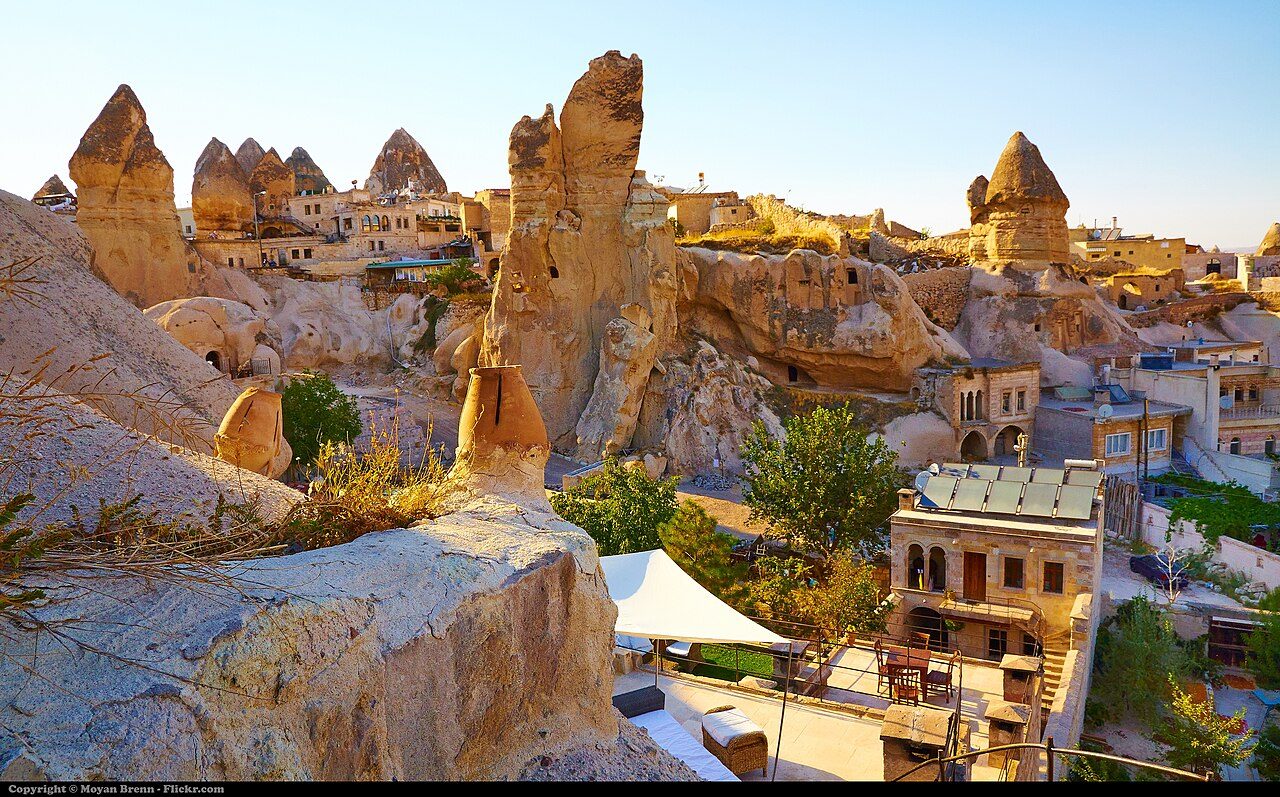
Goreme Open-Air Museum
Chiseled directly into the honey-colored volcanic tuff of the Anatolian plateau, the Göreme Open-Air Museum preserves the zenith of Byzantine monastic life between the 10th and 12th centuries. Rooted in the communal monastic models codified by St. Basil of Caesarea, medieval Christian communities hollowed out an intricate network of refectories, cloistered cells, and barrel-vaulted chapels from the malleable rock. Within the shadow-cloaked interior of the Karanlık Kilise (Dark Church), where tiny embrasures deliberately restricted natural daylight, master artisans coated plaster with radiant pigments. Here, post-Iconoclastic masterworks depicting the Pantocrator and the Nativity survive in astonishing saturation, shielded for centuries from atmospheric decay. Stepping off the sun-bleached valley paths into these cavernous sanctuaries, visitors encounter a sudden, damp coolness accompanied by the faint scent of aged stone and mineral tempera. In the Tokalı Kilise (Church of the Buckle), Cappadocia’s largest rock-cut basilica, sightlines are drawn upward to soaring arches bathed in costly, pulverized lapis lazuli imported from distant Afghan mines. Running a hand along the chisel marks of the monolithic refectory tables—where monks once ate in silence from stone trenches carved out of the bedrock floor—reveals an intimate, unmediated connection to a rigorous world of ascetic devotion.
More in Cappadocia
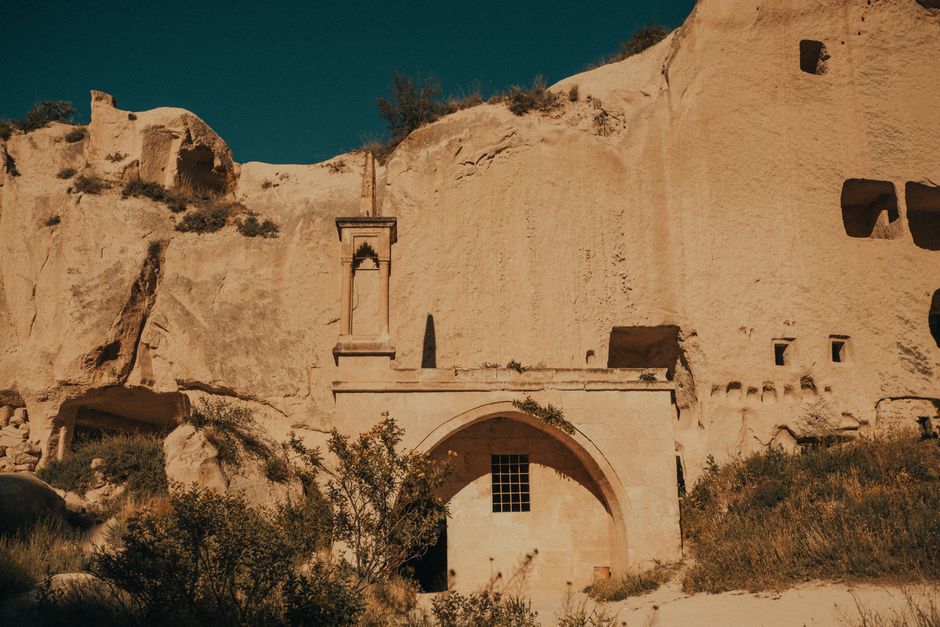
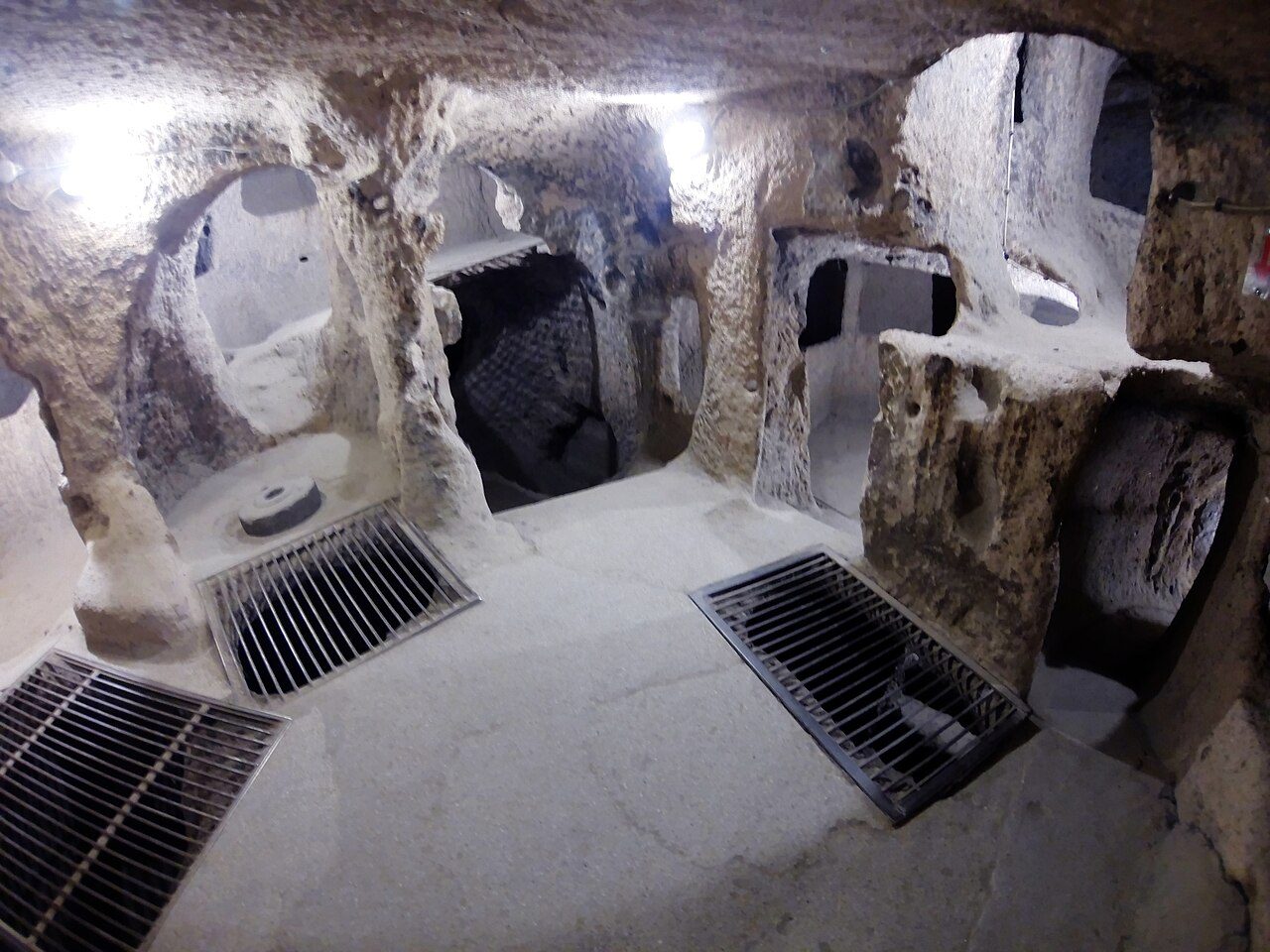
Photo credits (5)
- Moyan Brenn from Italy, CC BY 2.0, via Wikimedia Commons
- Nevit Dilmen ( talk ), CC BY-SA 3.0, via Wikimedia Commons
- Nevit Dilmen ( talk ), CC BY-SA 3.0, via Wikimedia Commons
- Nevit Dilmen ( talk ), CC BY-SA 3.0, via Wikimedia Commons
- The original uploader was Morphosis at Turkish Wikipedia ., Public domain, via Wikimedia Commons