
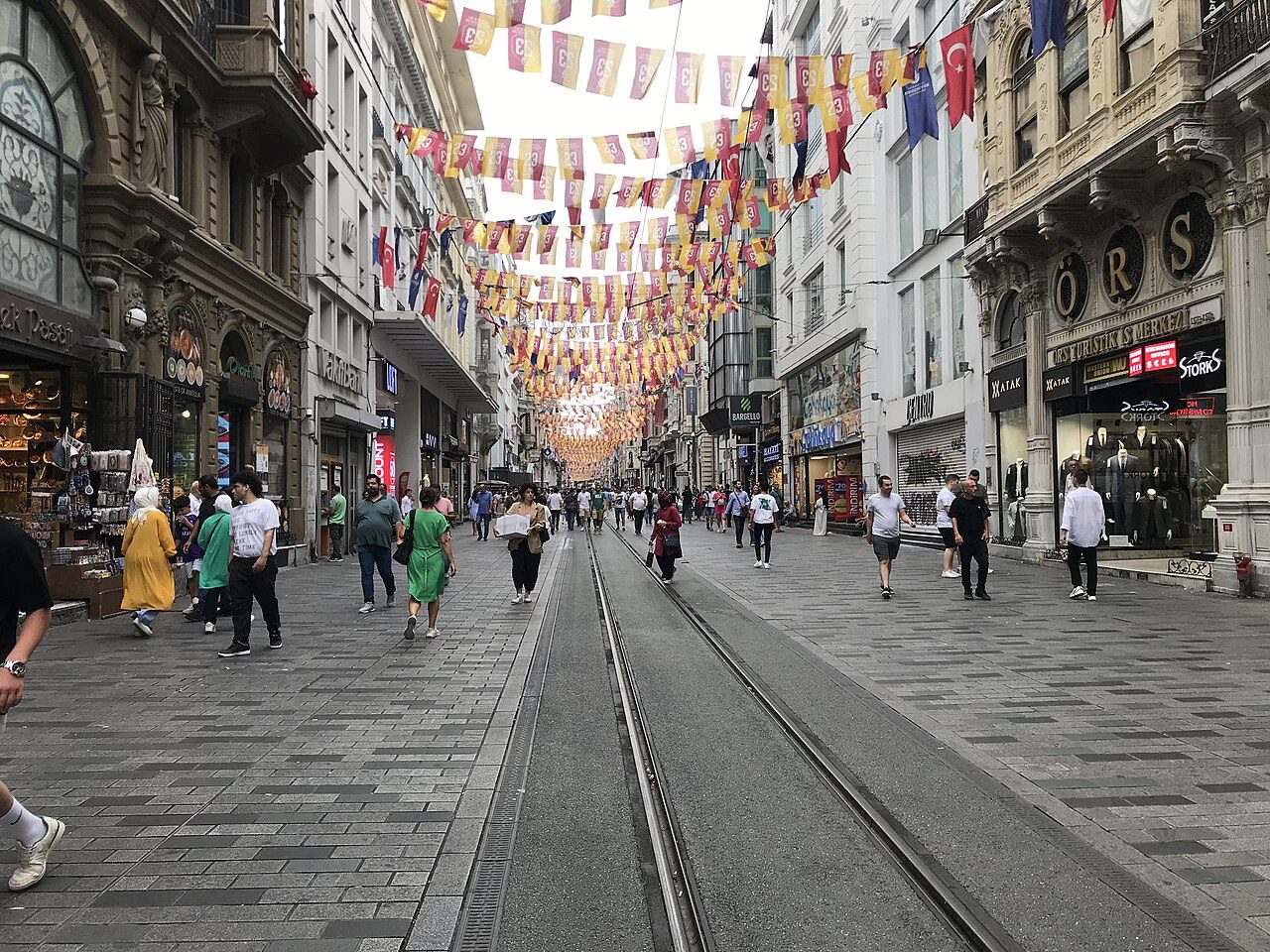
Istiklal Avenue
Once celebrated as the cosmopolitan *Grande Rue de Péra* under late Ottoman rule, this 1.4-kilometer pedestrian spine charts Istanbul’s turn toward European architectural grandeur. Lined with Belle Époque, Art Nouveau, and Neo-Classical facades constructed by Levantines and European architects in the late 19th century, the thoroughfare preserves the diplomatic and intellectual spirit of the pre-republic era. Monumental structures punctuate the stone corridor, from the soaring red-brick exterior of the 1912 Venetian Neo-Gothic Church of St. Anthony of Padua to the cast-iron-and-glass vaulted ceiling of the 1876 Çiçek Pasajı, where sculpted stone caryatids loom over historic dining arcades. Navigating the street immerses travelers in a kinetic wave of foot traffic, punctuated by the sharp bronze bell of the 1920s crimson T2 heritage tram cleaving slowly through the crowd. The sensory atmosphere is rich and layered: the warm, earthy aroma of roasted chestnuts and sesame-crusted *simit* billows from street carts, mingling with the scent of dark Turkish coffee from hidden arcades. Strains of live music—from traditional Anatolian *bağlama* ballads to classical violin—echo off the high limestone walls, drawing wandering eyes from bustling storefronts up to wrought-iron balconies and down toward the medieval silhouette of the Galata quarter.
More in Istanbul
Photo credits (5)
- Antimuonium, CC BY-SA 4.0, via Wikimedia Commons
- Moonik, CC BY-SA 3.0, via Wikimedia Commons
- Diego Delso, CC BY-SA 4.0, via Wikimedia Commons
- Diego Delso, CC BY-SA 4.0, via Wikimedia Commons
- Hunanuk, CC0, via Wikimedia Commons