

Mazeri Village
Tucked into the Dolra River valley beneath the serrated granite horns of Mount Ushba, Mazeri served for centuries as a strategic redoubt of Svaneti’s aristocratic Dadeshkeliani princes. Unlike the communal clans of "Free Svaneti" farther east, this highland hamlet developed under feudal rule, evidenced by austere domestic complexes and fortified watchtowers dating between the ninth and thirteenth centuries. These stone towers (*koshki*), built from uncoursed schist and river cobbles bound with lime mortar, rise four to five stories toward overhanging machicolations. Below them, ground-floor winter halls (*machubi*) once sheltered extended families alongside their livestock around carved wooden hearth partitions, providing self-sufficient bastions during generational blood feuds and avalanche cutoffs. Walking Mazeri’s rutted dirt paths, you encounter an unhurried mountain rhythm framed by immense verticality. The air carries the sharp tang of smoldering pine, wet slate, and wild mountain thyme, accompanied by the dull clank of wooden cattle collars and the steady rumble of the Dolra torrent. Wooden split-rail fences pen in steep pastures where hay ricks dry against the backdrop of dense birch and pine forests. Looking north, the valley terminates abruptly into the sheer, 4,710-meter double-peak of Ushba, its fractured hanging glaciers glowing brilliant white against dark metamorphic rock as cold downdrafts sweep over the village roofs.
More in Mestia
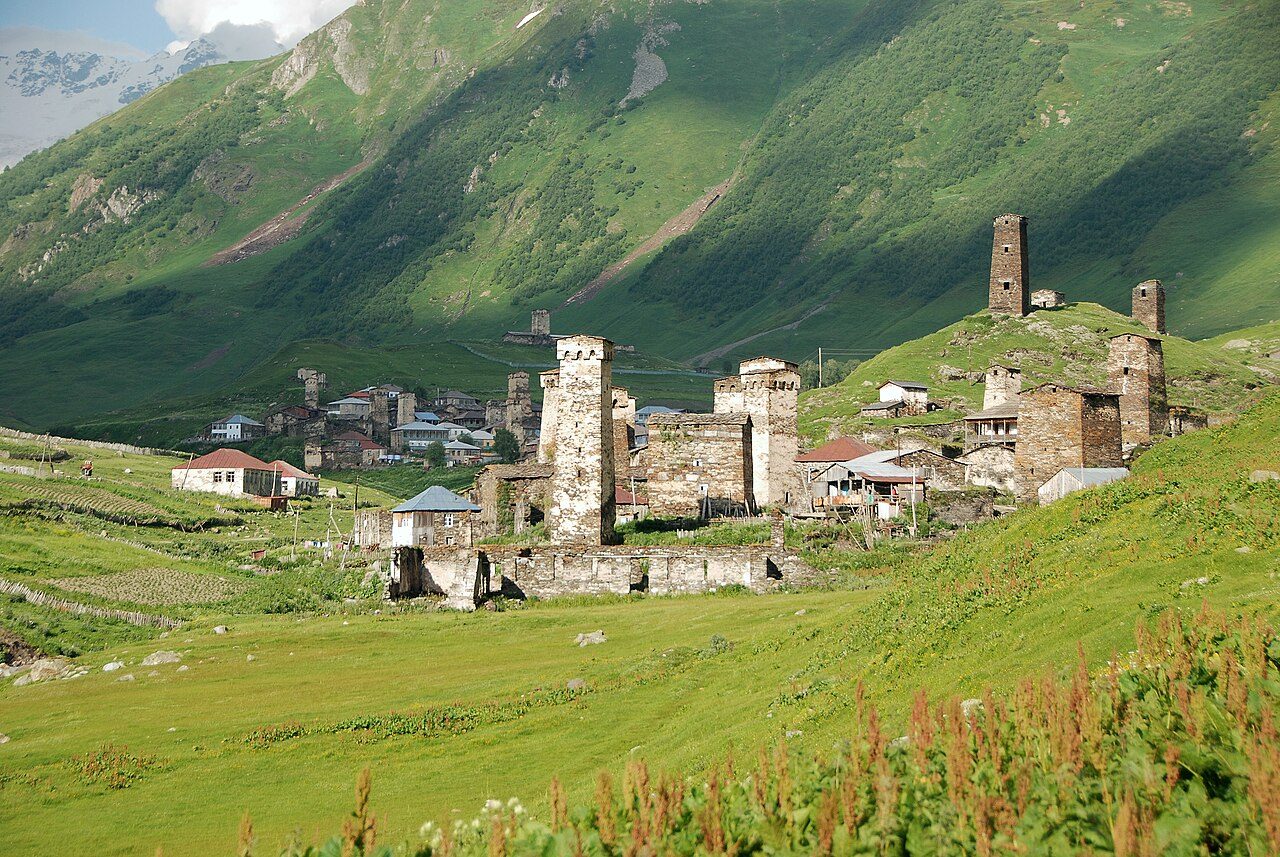
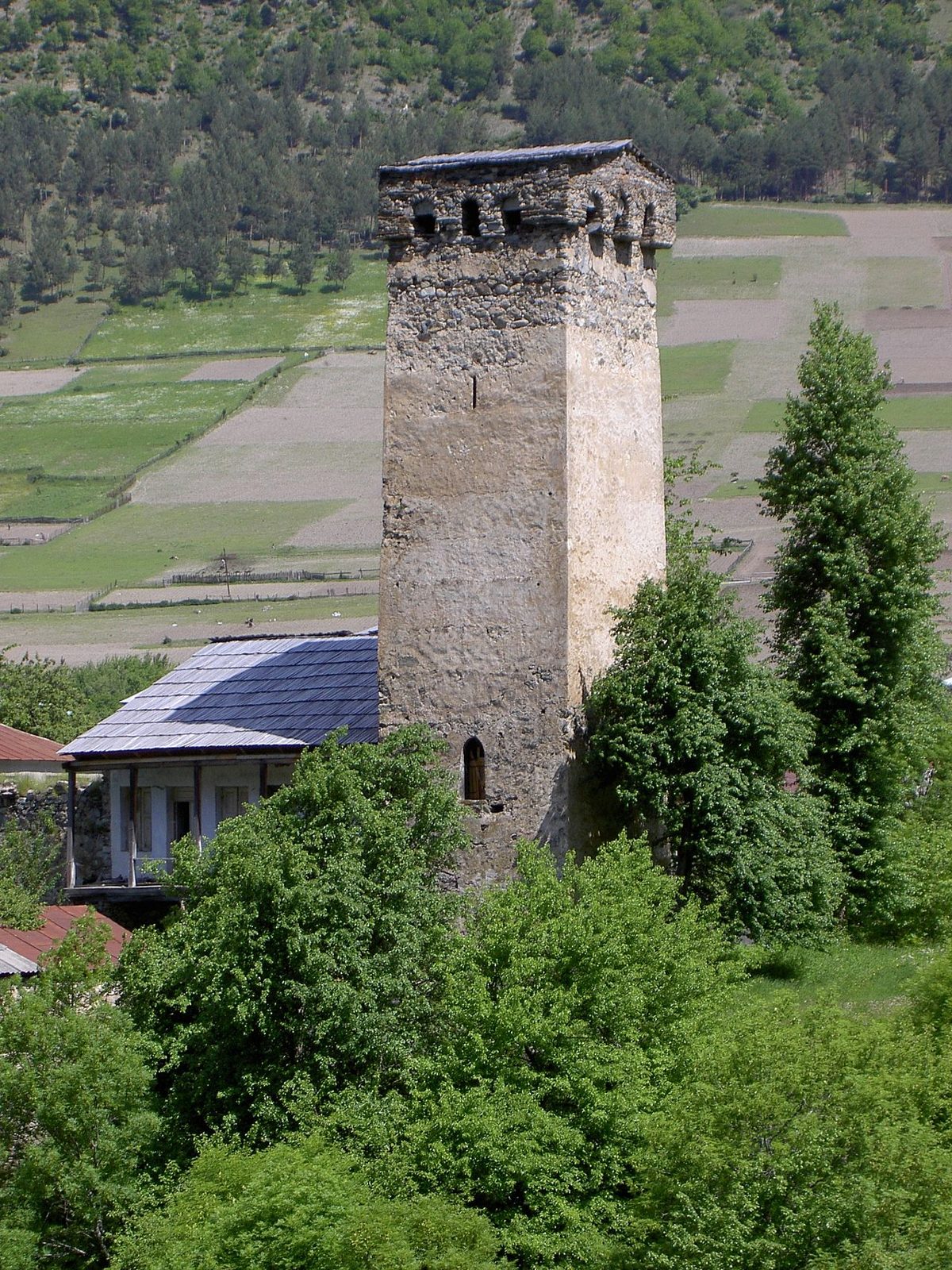
Photo credits (2)
- Florian Pinel, CC BY-SA 3.0, via Wikimedia Commons
- Unknown author, CC BY-SA 3.0, via Wikimedia Commons