
Mestia
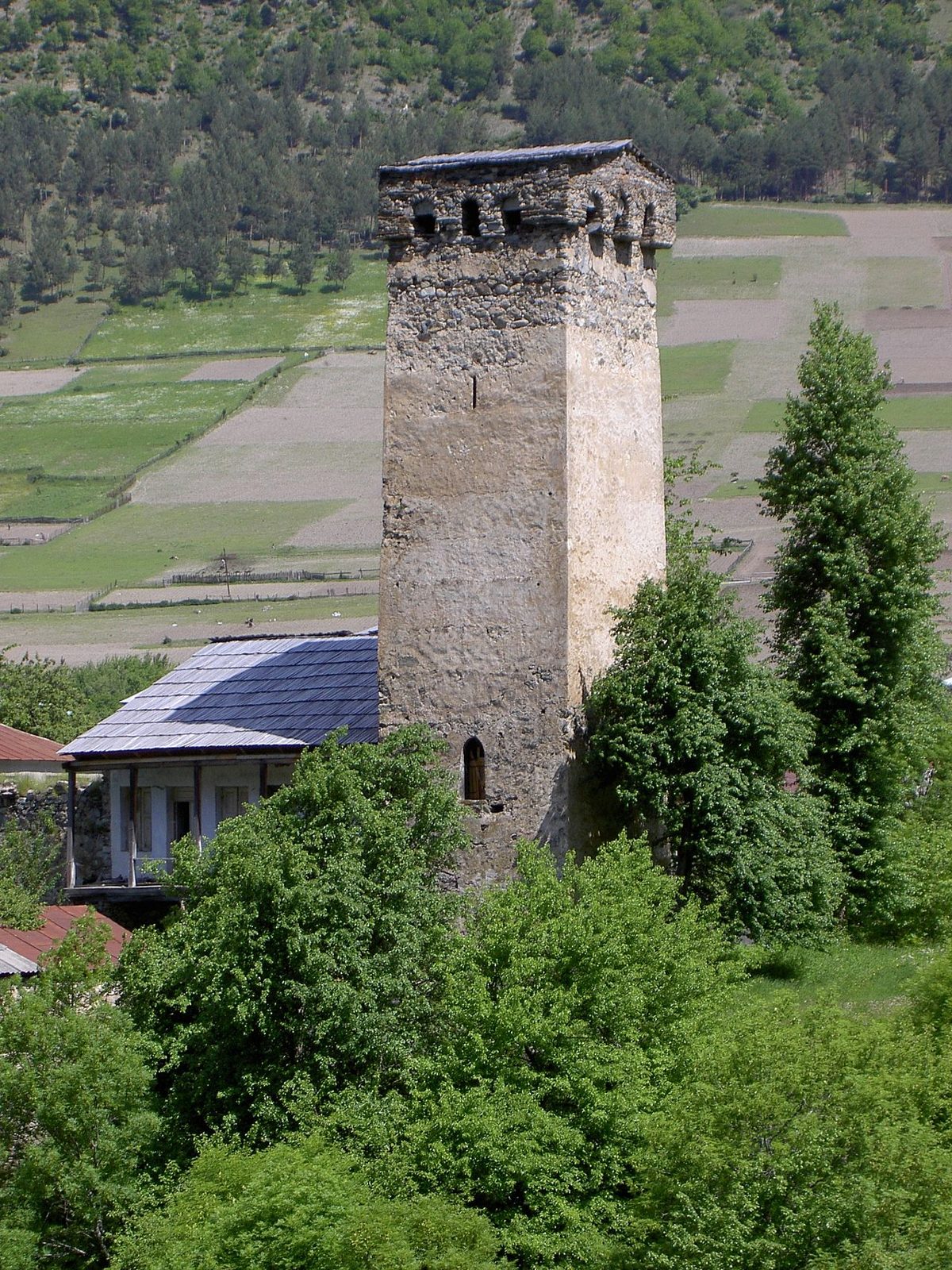
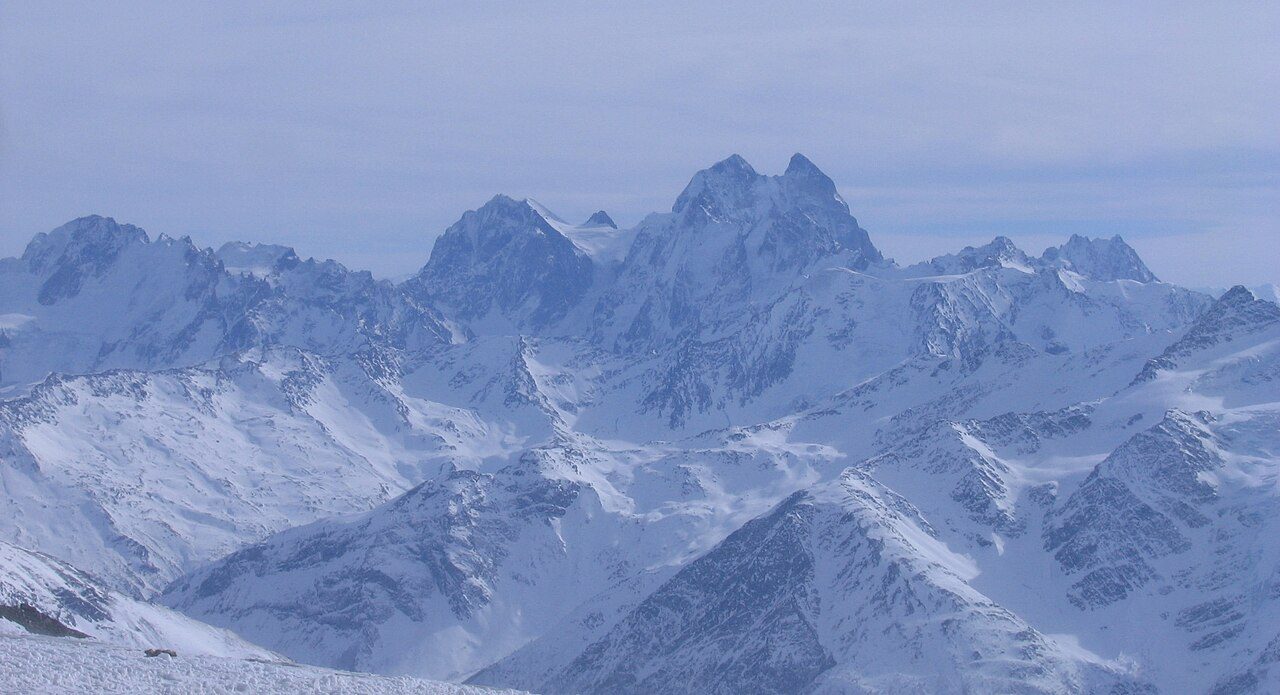
High in the Greater Caucasus of Upper Svaneti, Mestia spreads along the confluence of the Mestiachala and Mulkhura rivers beneath the jagged twin horns of Mount Ushba. Walking its unpaved lanes feels like stepping into a fortified mountain redoubt, where wandering cows amble past weathered slate outbuildings, stacks of split firewood scent the air, and dozens of defensive stone towers pierce the valley skyline. Most of the towers arose between the ninth and thirteenth centuries, built by autonomous clans to shelter families from avalanches and long-running blood feuds. In the older Lanchvali quarter, these stone towers cluster tightly along sloping dirt paths, their narrow arrow slits angled toward the ridges. Across the river, the Svaneti Museum of History and Ethnography houses an extraordinary treasury of tenth-century illuminated Gospels and gold icons saved from lowland invasions. Nearby, the Margiani House Museum offers a look at a traditional machubi, a timber and stone dwelling where extended families and cattle overwintered around a communal carved hearth. Town life revolves around wood-fired ovens producing kubdari, a hearty flatbread kneaded with beef, pork, and dried coriander, alongside chvishtari, a cornbread heavy with salty sulguni cheese. In late winter, families observe Lamproba, a pre-Christian festival where men light birch torches and parade through the snow to honor departed ancestors. For the best weather and open trails, travel between late June and September. You can walk everywhere within Mestia itself, but hire a local four-wheel-drive Delica van when heading over the unpaved passes to outlying hamlets like Ushguli.
Read more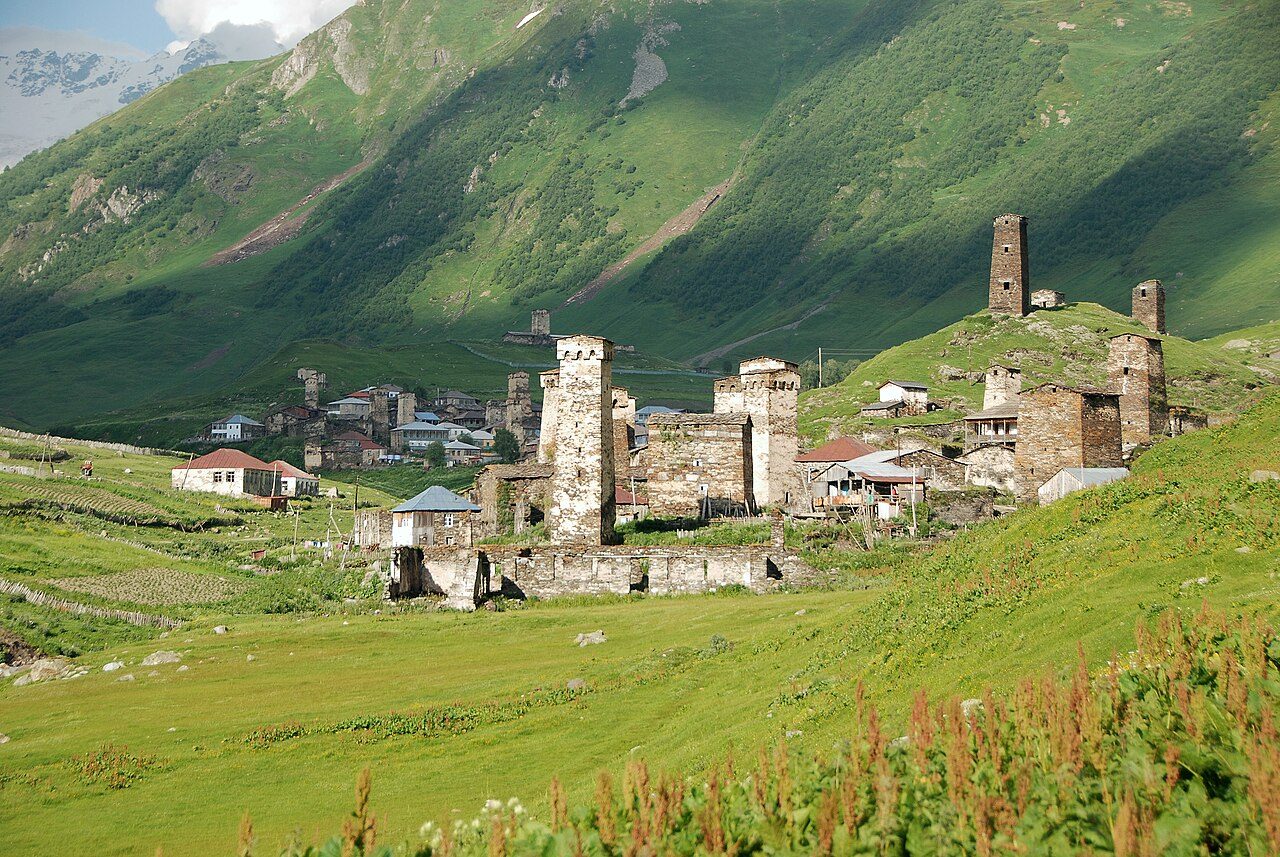
What to see in Mestia

Guides & drivers nearby
Photo credits (3)
- Florian Pinel, CC BY-SA 3.0, via Wikimedia Commons
- Unknown author, CC BY-SA 3.0, via Wikimedia Commons
- User:Stardancer, CC BY-SA 3.0, via Wikimedia Commons