
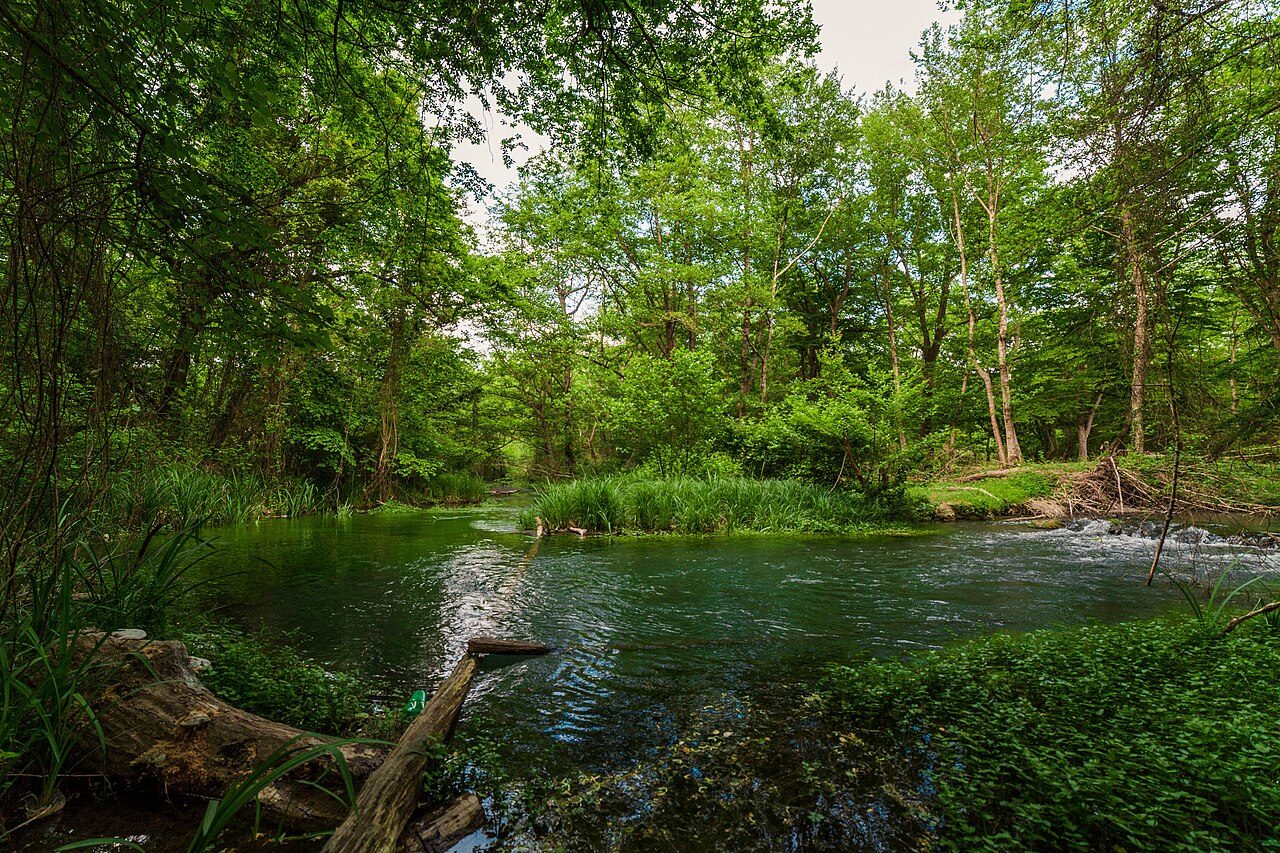
Samur Liana Forest
Sprawling across the alluvial delta where the Samur River meets the Caspian Sea south of Derbent, this primeval woodland is Russia’s only subtropical liana forest—a living botanical relic surviving intact since the Pliocene epoch. For centuries, the native Lezgin people maintained a sacred relationship with these dense groves, leaving towering oriental planes and centuries-old English oaks unharvested as venerated natural shrines. After decades of surviving twentieth-century Soviet canal diversions and groundwater depletion, the fragile biome gained sweeping federal protection with the formal establishment of the Samursky National Park in December 2019, securing its legacy as an irreplaceable bridge between Caucasian broadleaf woods and Caspian coastal lowlands. Entering the interior, travelers leave the dry Dagestani steppe behind to confront an emerald vertical labyrinth. Immense trunks of Caucasian hornbeam, white poplar, and alder are practically smothered in wild flora, strangled and bound by the muscular, woody cables of Greek silk vine (*Periploca graeca*), thorny sarsaparilla, and endemic Pastukhov’s ivy. Walking along the spring-fed mossy creeks, the air turns abruptly cool and heavy with the scent of damp loam and wild garlic. Daylight filters through the dense multi-tiered canopy in diffused viridian shafts, illuminating iridescent kingfishers darting across marsh pools, until the tangled jungle floor gives way without warning to the windswept, slate-gray shingle beaches of the Caspian shoreline.
More in Derbent
Photo credits (6)
- Anzor Agamirzoyev, CC BY-SA 4.0, via Wikimedia Commons
- Alexander Novikov, CC BY-SA 4.0, via Wikimedia Commons
- Alexander Novikov, CC BY-SA 4.0, via Wikimedia Commons
- Vyacheslav Bukharov, CC BY-SA 4.0, via Wikimedia Commons
- Fred Schaerli, CC BY-SA 3.0, via Wikimedia Commons
- Martemmedia, CC BY-SA 4.0, via Wikimedia Commons