
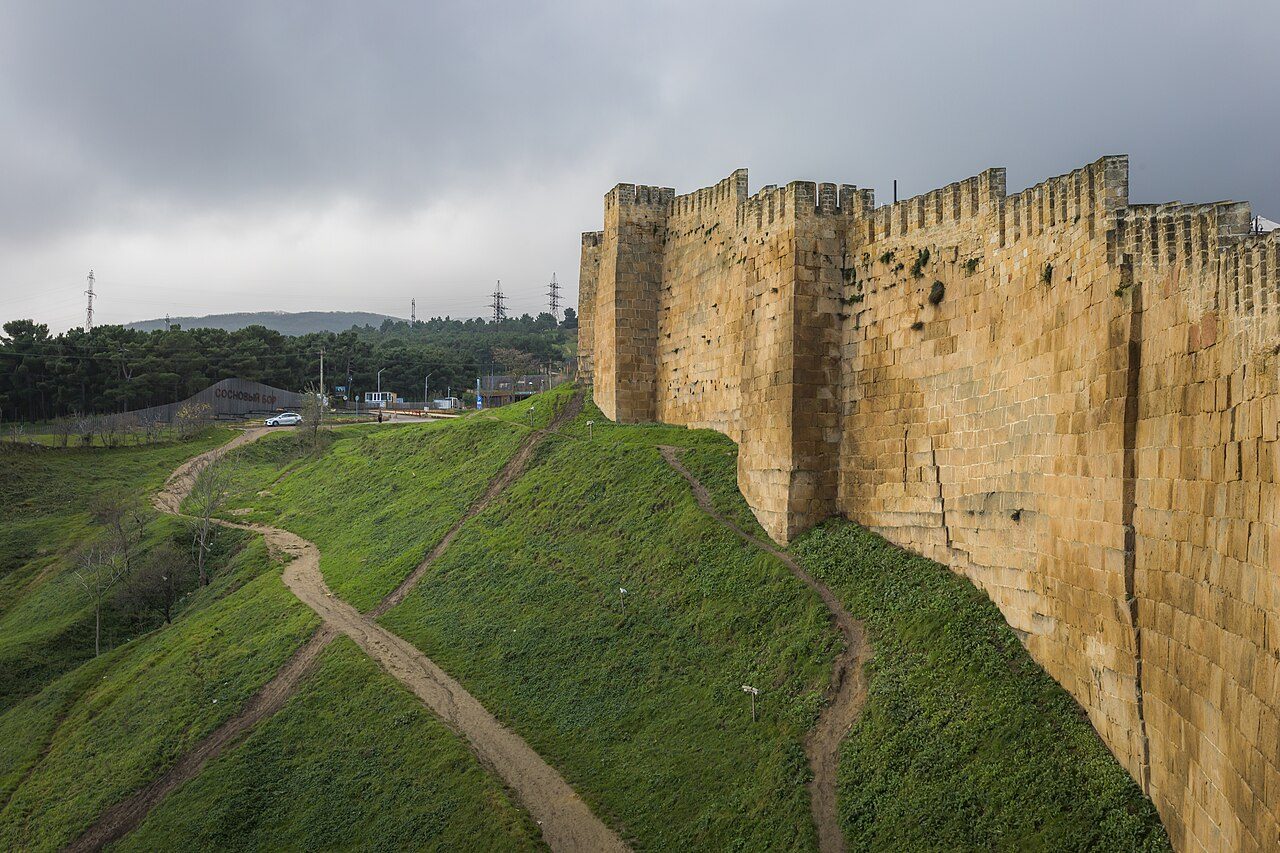
Naryn-Kala Fortress
Commissioned in the sixth century by the Sasanian emperor Khosrow I Anushirvan, this formidable limestone citadel anchored the legendary Caspian Gates, sealing the narrow passage between the Caucasus Mountains and the Caspian Sea against northern steppe incursions. Thick double ramparts built from golden-hued, ashlar-cut blocks march down the Dzhalgan ridge, punctuated by rounded bastions and fortified gates bearing medieval Persian, Arabic, and Russian inscriptions. Within its four-and-a-half-acre perimeter, layers of architectural history overlap: Sasanian water channels feed monumental vaulted cisterns, the remnants of an eighteenth-century khan’s palace stand open to the sky, and a cruciform subterranean hall—widely identified as one of the oldest Christian churches on Russian territory—reveals Derbent’s pre-Islamic heritage. Standing atop the wind-swept northern battlements, you look out over a breathtaking panoramic collision of topography and history. Below, the dense, labyrinthine stone *mahallas* of the Old Town cascade directly toward the steel-gray water of the Caspian, mirroring the original line of defense that once stretched entirely into the sea. The mountain air carries the scent of dried wild herbs and sea salt as you peer down into the Zindan, an eleven-meter-deep subterranean pit prison carved into solid bedrock. Running your hand along the weathered masonry of the parapet, the immense physical weight of Eurasia’s most heavily contested frontier feels immediate and enduring.
More in Derbent
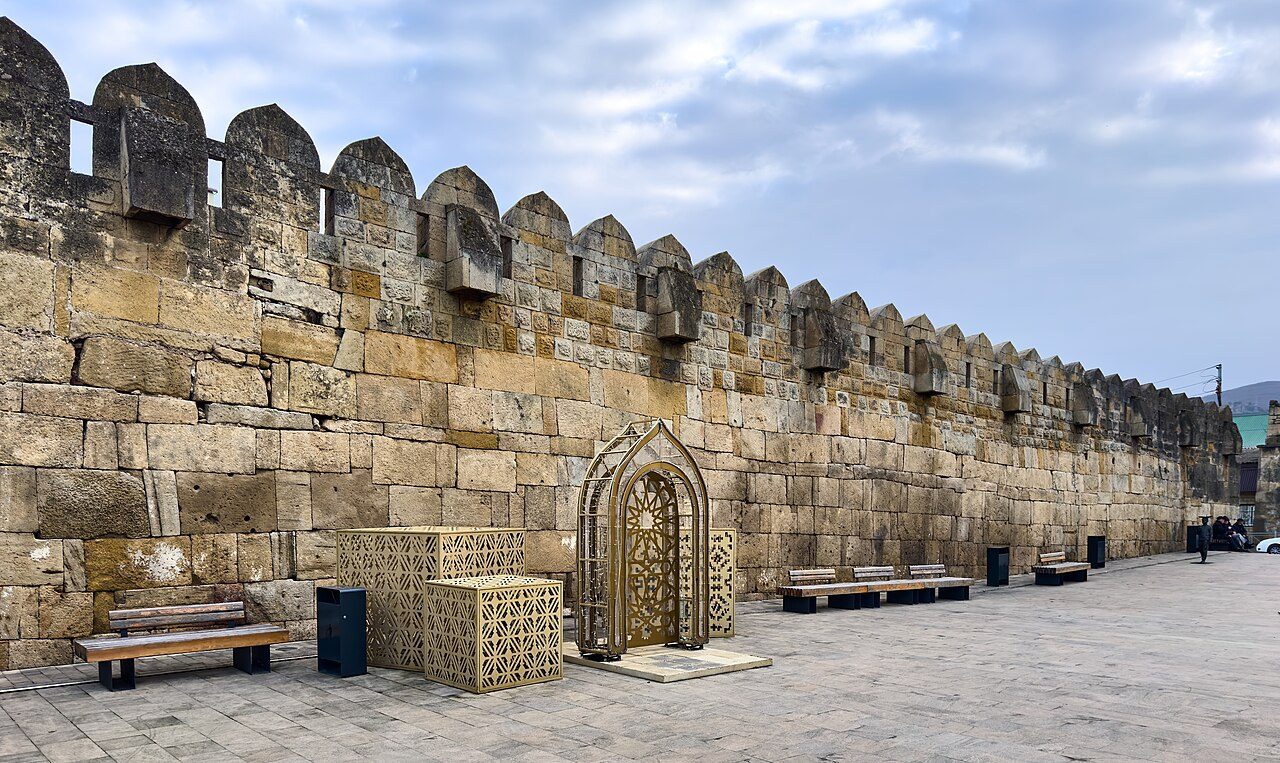
Photo credits (6)
- Alexander Novikov, CC BY-SA 4.0, via Wikimedia Commons
- Alexander Novikov, CC BY-SA 4.0, via Wikimedia Commons
- Vyacheslav Bukharov, CC BY-SA 4.0, via Wikimedia Commons
- Fred Schaerli, CC BY-SA 3.0, via Wikimedia Commons
- Martemmedia, CC BY-SA 4.0, via Wikimedia Commons
- Anzor Agamirzoyev, CC BY-SA 4.0, via Wikimedia Commons