
Old City of Derbent (Magals)
Clinging to the eastern slopes beneath the citadel of Naryn-Kala, Derbent’s Old City unfolds as a living labyrinth divided into nine historic *magals* (neighborhood quarters). Founded in the 6th century under Sasanian Emperor Khosrow I to seal the Caspian Gates against nomadic incursions, these dense districts remain bounded by massive parallel defensive ramparts carved from golden-hued shell limestone. At the core of the lower quarters stands the Juma Mosque, constructed in 733–734 AD as the oldest Islamic sanctuary in the former Russian Empire. In its central courtyard, four towering, centuries-old oriental plane trees shade an expanse of lancet arcades, medieval sundials, and low-slung, whitewashed domes that shelter hypostyle prayer halls supported by monolithic stone columns. Wandering the magals today means traversing a deliberate, disorienting grid of dead-end alleys originally engineered to trap besieging armies. Blind stone facades give little away, broken only by arched lintels, wrought-iron knockers, and intricately carved walnut portals that open into private, sun-dappled courtyards. The air carries the dry scent of mountain dust mingled with woodsmoke, mountain herbs, and baking *chudu* flatbread. Visitors can step down worn staircases into semi-subterranean 17th-century bathhouses topped by skylit stone cupolas, or peer through narrow limestone embrasures along the upper lanes, where sudden vantage points reveal the slate-gray expanse of the Caspian Sea framed by fifteen hundred years of unbroken masonry.
More in Derbent
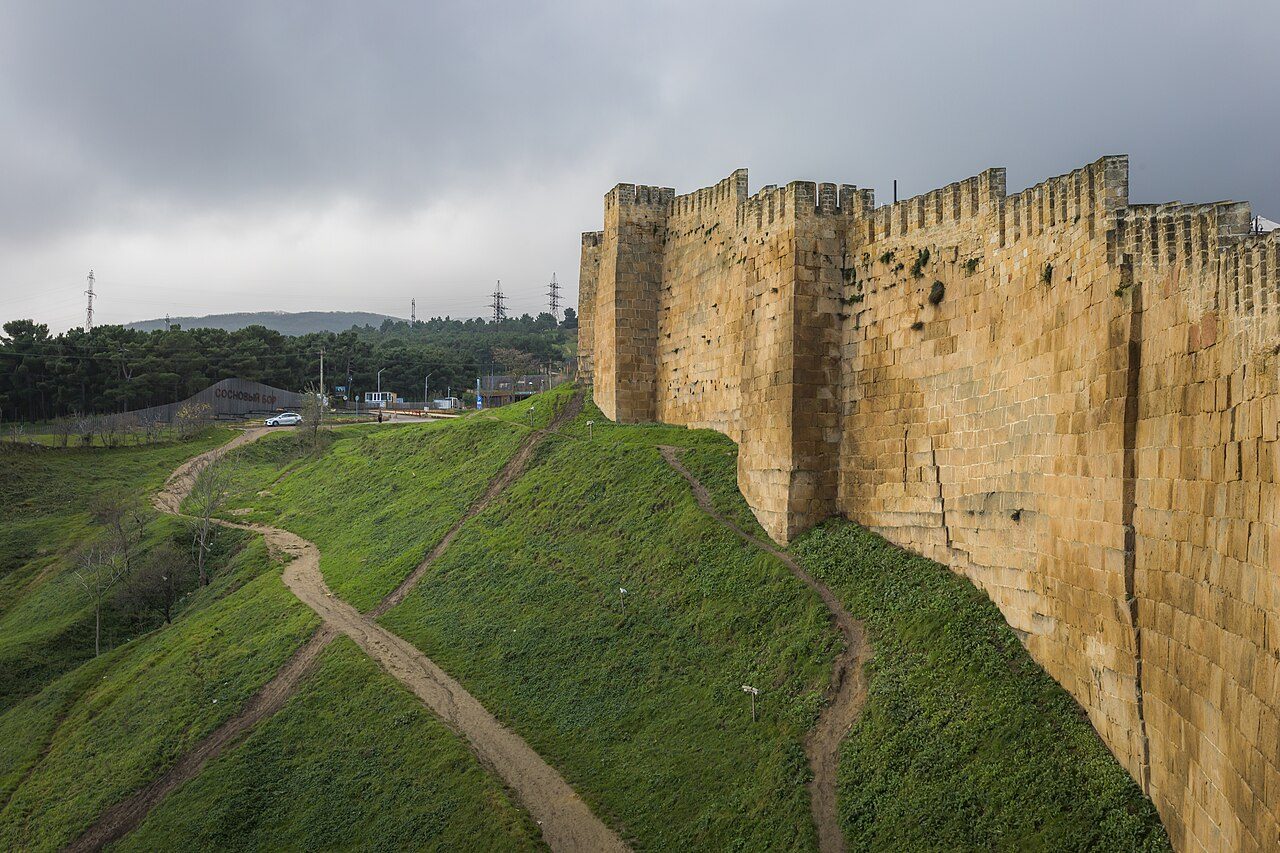
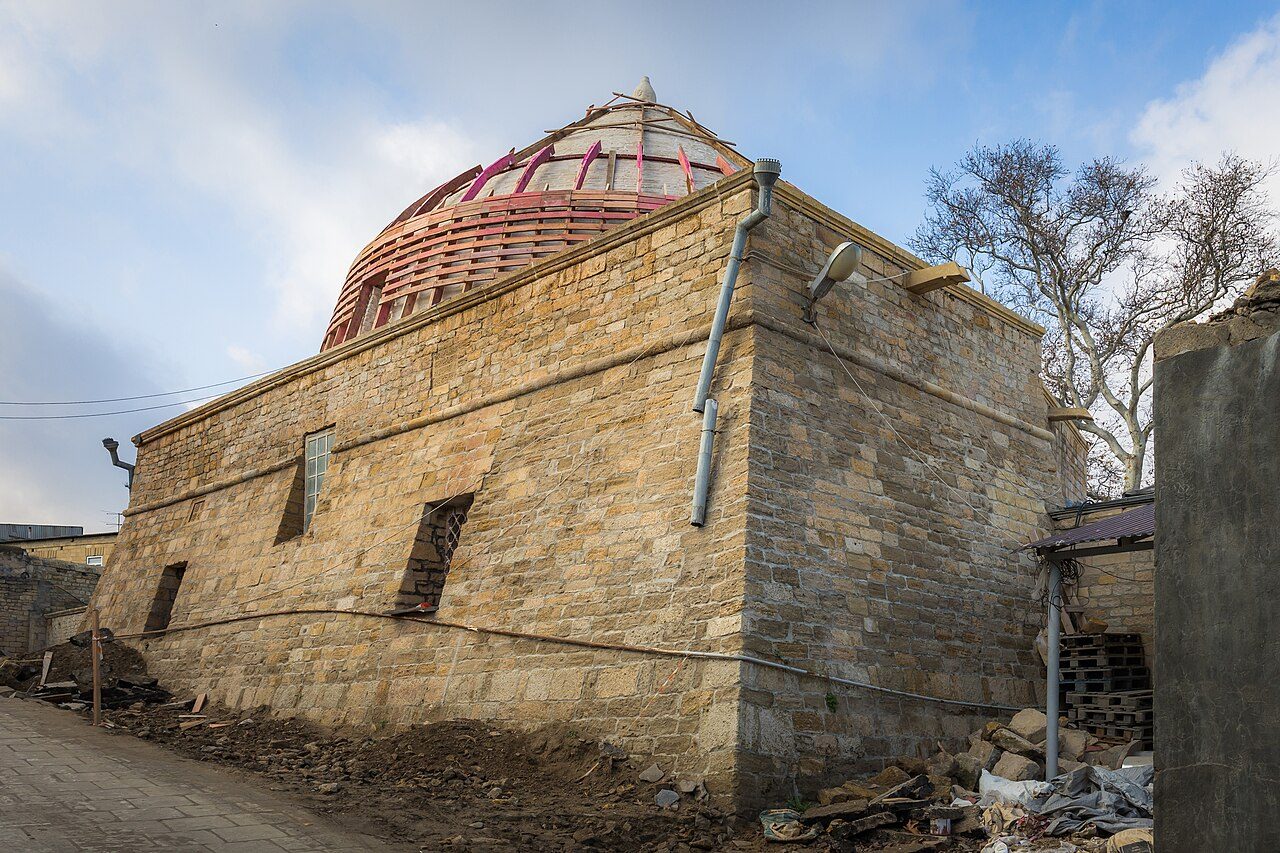
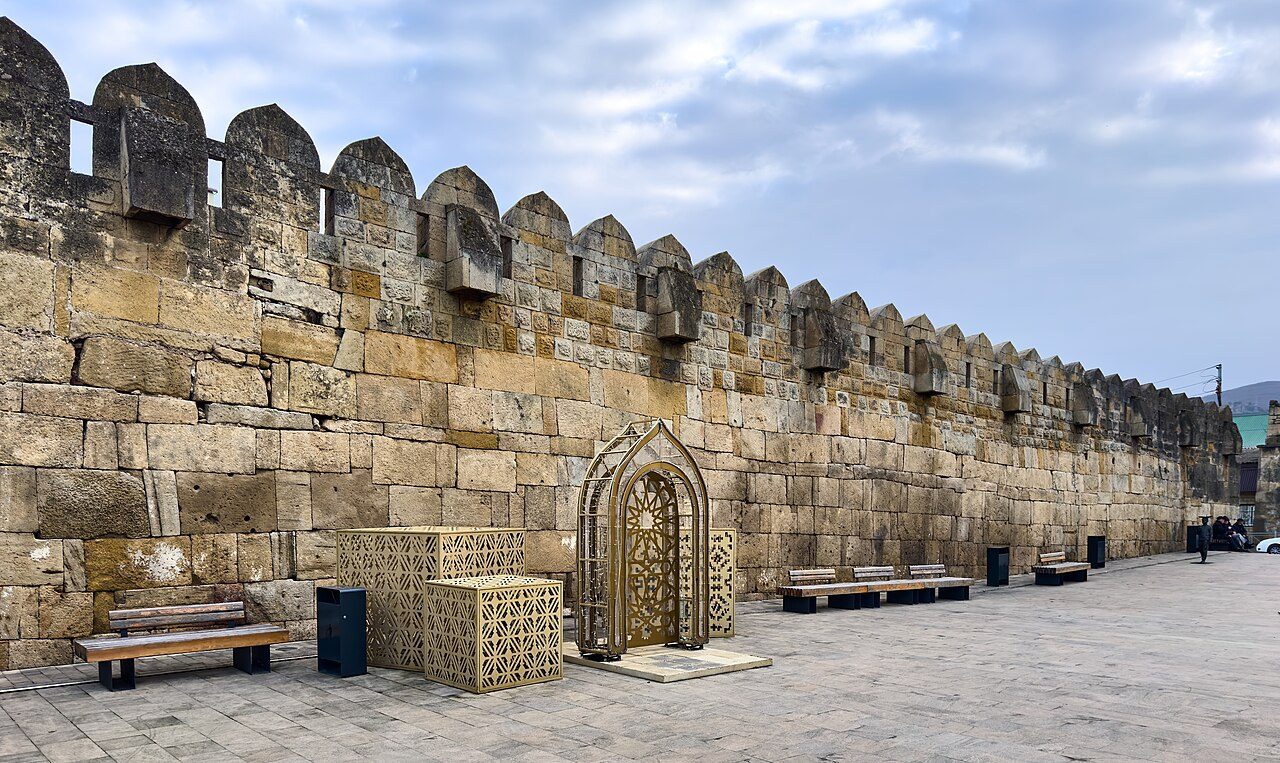
Photo credits (6)
- Martemmedia, CC BY-SA 4.0, via Wikimedia Commons
- Alexander Novikov, CC BY-SA 4.0, via Wikimedia Commons
- Alexander Novikov, CC BY-SA 4.0, via Wikimedia Commons
- Vyacheslav Bukharov, CC BY-SA 4.0, via Wikimedia Commons
- Fred Schaerli, CC BY-SA 3.0, via Wikimedia Commons
- Anzor Agamirzoyev, CC BY-SA 4.0, via Wikimedia Commons