
 New added
Marjan Hill
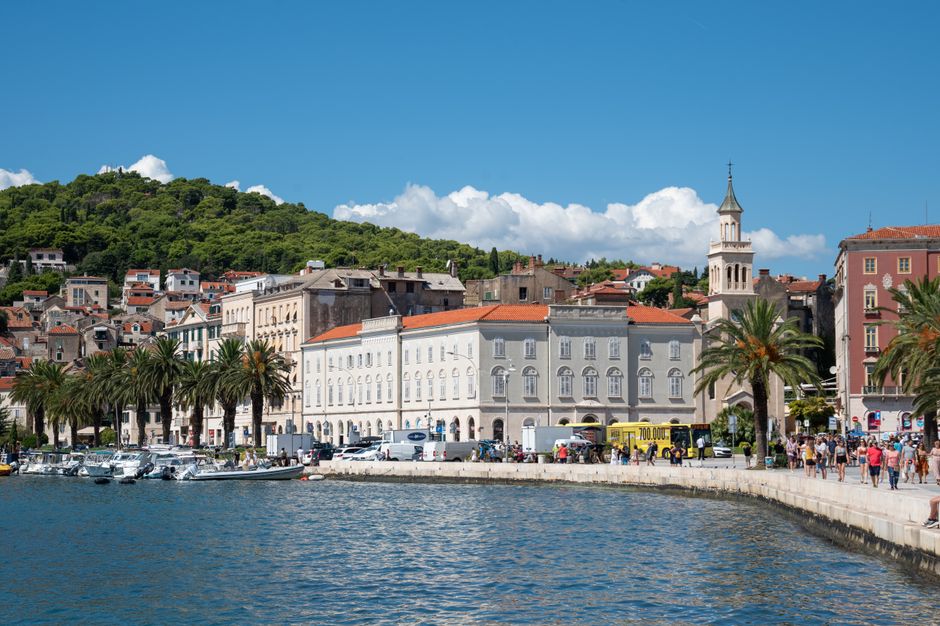
Rising abruptly above Split’s western harbor, Marjan Hill served as an imperial retreat as early as the 4th century, when Roman Emperor Diocletian established recreational walks across its rugged karst ridge. By the Middle Ages, the promontory evolved into a sanctuary for solitary hermits who chiseled troglodytic dwellings directly into the southern vertical cliffs. Architectural treasures still punctuate the rocky trails, notably the 13th-century Romanesque Church of St. Nicholas the Traveler, crowned with a modest stone bell-gable, and the 15th-century Church of St. Jerome, built flush against sheer limestone crags. Farther along the northern slope lies the evocative 16th-century Old Jewish Cemetery, where weathered, horizontal Sephardic tombstones sit sheltered beneath a dense canopy of Aleppo pines planted in the 19th century. Ascending the worn flagstone steps from the medieval Varoš quarter, travelers immediately leave urban clamor behind, immersed in the sharp scent of sun-baked pine needles, wild sage, and sea salt. At the 178-meter Telegrin peak—named for the Napoleonic-era optical telegraph station that once operated here—the view opens into a breathtaking 360-degree Adriatic panorama. To the east, Split’s terracotta rooftops and the sprawling ramparts of Diocletian's Palace unfold beneath the shadow of the grey Mosor mountain range, while to the south, the deep cobalt waters stretch outward toward the pale, shimmering profiles of the islands of Brač and Šolta.
More in Split
Photo credits (2)
- DIREKTOR, CC BY-SA 3.0, via Wikimedia Commons
- Ivan T., CC BY 3.0, via Wikimedia Commons