
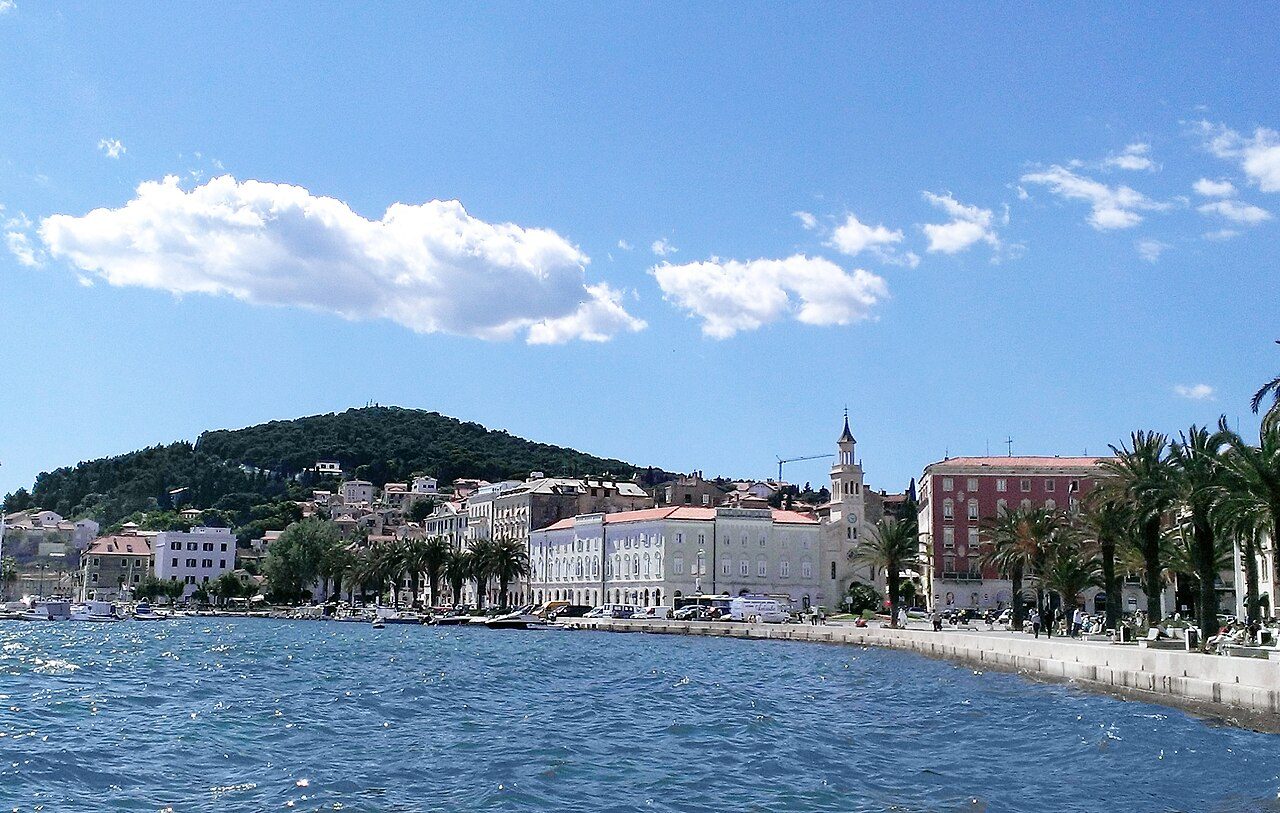
Marjan
Rising abruptly above the terracotta roofs of Split, the limestone promontory of Marjan served as Emperor Diocletian’s private recreational sanctuary in the 4th century before evolving into a rugged spiritual retreat for medieval hermits. Its craggy, vertical cliffs conceal the 15th-century Church of St. Jerome, carved directly into the living rock face beneath a natural stone canopy, where Renaissance scholar Marko Marulić once retreated for solitary contemplation. Weathered 13th-century sanctuaries like the Romanesque Church of St. Nicholas the Traveler perch on coastal ledges, while the solemn Old Jewish Cemetery, founded in 1573, shelters hundreds of horizontal, moss-draped sarcophagus-style tombstones resting silently beneath an aromatic canopy of Aleppo pines. Ascending the worn stone stairways from the historic Varoš neighborhood, travelers transition from bustling city alleys into a sensory sanctuary thick with the scent of wild rosemary, bay laurel, and sun-warmed pine resin. From the balustrade at the first *vidilica* (viewpoint), panoramic vistas open over the turquoise expanse of the Brač Channel, framing the dense grid of Diocletian’s Palace and the hulking ridge of Mount Mosor beyond. Pushing upward toward the 178-meter Telegrin summit—named for a Napoleonic-era optical telegraph station—hikers encounter refreshing maestral breezes and sudden, dizzying drop-offs where chalky cliffs plunge into the translucent Adriatic waters surrounding secluded shingle coves like Kašjuni.
More in Split
Photo credits (2)
- DIREKTOR, CC BY-SA 3.0, via Wikimedia Commons
- Ivan T., CC BY 3.0, via Wikimedia Commons