 New added
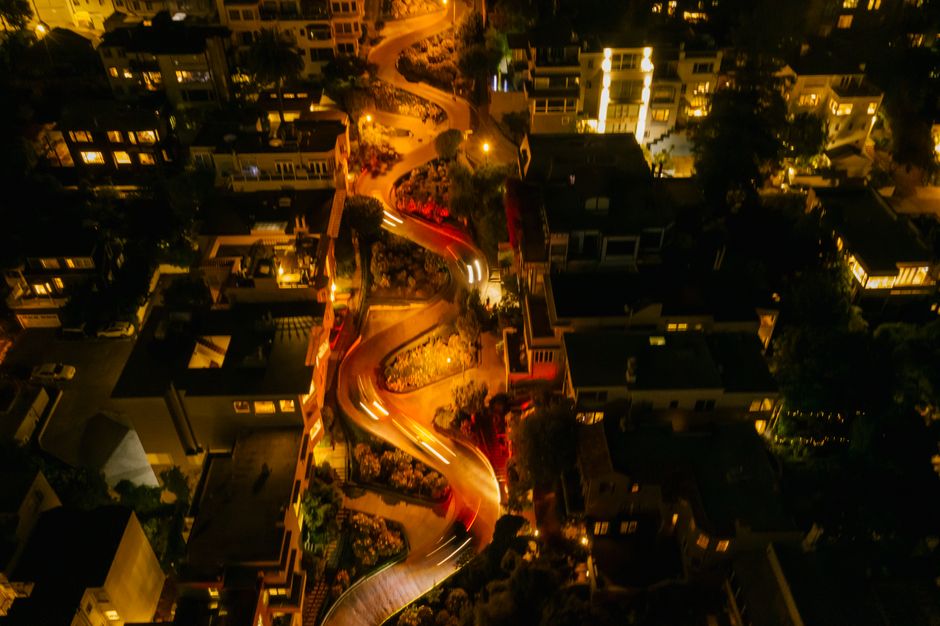
Lombard Street
Conceived in 1922 when property owner Carl Henry recognized that Russian Hill’s precipitous 27-percent natural grade proved hazardous for early automobiles, Lombard Street was ingeniously re-engineered into an asphalt-defying zigzag. Spanning a single 600-foot block between Hyde and Leavenworth Streets, this civic intervention reduced the incline to a manageable 16 percent through eight sharp hairpin turns paved in red vitrified brick. Flanked by an eclectic tapestry of Edwardian townhouses and Mission Revival residences, the switchbacks double as a sunken terraced garden, overflowing with vibrant mophead hydrangeas, manicured bougainvillea, and Italian cypresses that burst in hues of violet, magenta, and deep emerald. Standing at the crest along Hyde Street, travelers are greeted by the rhythmic metallic clang of passing cable cars and sweeping panoramic vistas framing Coit Tower, Telegraph Hill, and the gleaming Bay beyond. Descending the 250 concrete steps running parallel to the roadway, visitors feel the brisk Pacific fog brush against the steep ridge while inhaling the damp perfume of moist garden soil and coastal blooms. At curb level, a hypnotic procession of automobiles crawls downward at a mandated five miles per hour, their tires quietly humming over the textured brickwork as pedestrians pause on landings to appreciate this unique intersection of early twentieth-century urban topography and botanical artistry.