 New added
Chinatown
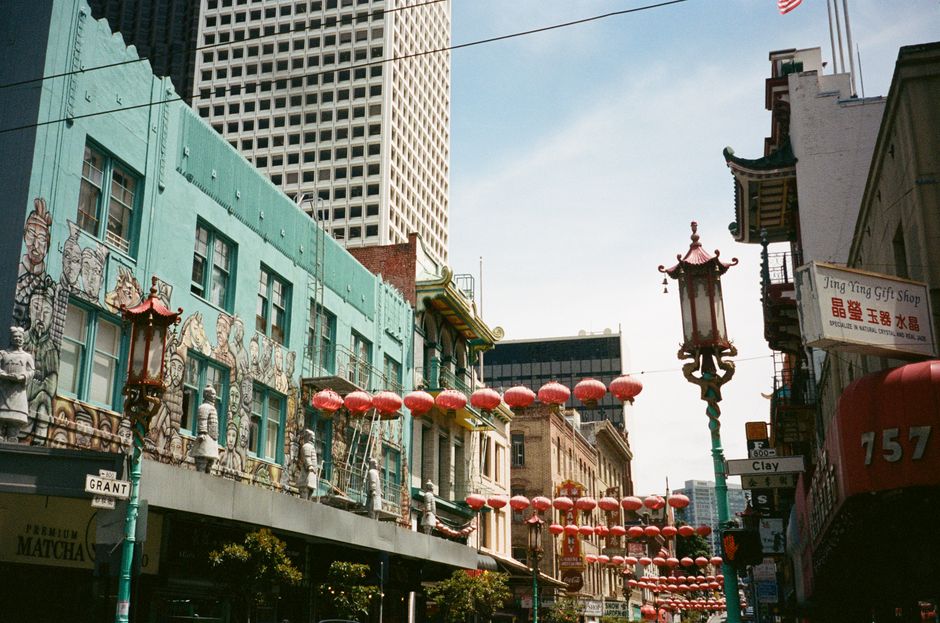
Established during the 1848 Gold Rush as North America’s oldest Chinese enclave, San Francisco’s Chinatown was radically reimagined after the catastrophic 1906 earthquake. Facing municipal efforts to displace the community, merchant Look Tin Eli spearheaded an architectural counteroffensive, commissioning firms to rebuild the flattened district in an eclectic, fantastical pagoda style designed to attract commerce and assert permanence. This calculated revival cloaked standard brick buildings in theatrical flourishes: upturned eaves glazed in jade-green tile, bright vermilion balconies, and cast-iron lampposts entwined with golden dragons along Grant Avenue. Stepping through the 1969 Dragon Gate at Bush Street, flanked by guardian lions, visitors trade downtown glass for an intensely sensory grid of alleys and second-story benevolent halls. In Waverly Place—the historic "Street of Painted Balconies"—the scent of burning sandalwood drifts from the third-floor Tin How Temple, mingling with aromas of star anise and five-spice char siu from ground-level kitchens. The metallic snap of mahjong tiles echoes from private family association parlors, while a block away on Stockton Street, locals haggle over fresh bitter melon, live rockfish, and imported ginseng, keeping a resilient, century-and-a-half-old Cantonese heritage vibrant and immediate.