
Vientiane
Vientiane unfolds along a wide bend of the Mekong River, facing Thailand directly across the water. Unlike the frenetic capitals of neighboring nations, the Lao capital operates at an unhurried cadence across a flat alluvial plain. Tree-shaded avenues reveal faded French colonial villas alongside Buddhist monasteries. Walking through the central streets, the scent of frangipani mingles with woodsmoke and roasting coffee, while river breezes cut through the midday heat. King Setthathirath established Vientiane as the royal seat of Lan Xang in 1560, though much of the urban fabric was reconstructed under French rule after Siamese forces destroyed the city in 1828. Its history remains visible in several key monuments. Pha That Luang, the gold-leafed stupa rebuilt in the 1930s, anchors the eastern edge of the city as the nation's spiritual center. Closer to the river, Wat Si Saket retains its original 1818 cloister, sheltering thousands of miniature ceramic and silver Buddha statues set into tiny wall niches. Along Lane Xang Avenue rises Patuxai, a concrete war monument built in the 1960s with classic Lao motifs, overlooking the tranquil French quarter. Daily routines follow the sun and the riverbank. Morning begins with bowls of khao piak sen noodle soup from vendors near Talat Sao, while evenings draw residents to the riverside promenade of Chao Anouvong Park for sunset walks and plates of grilled fish. Each November, the city swells for the Boun That Luang festival, when monks and pilgrims gather for candlelit circumambulations. Travel is easiest between November and February, when dry air keeps temperatures comfortable for touring the flat streets on foot or by rented bicycle.
Read more
What to see in Vientiane
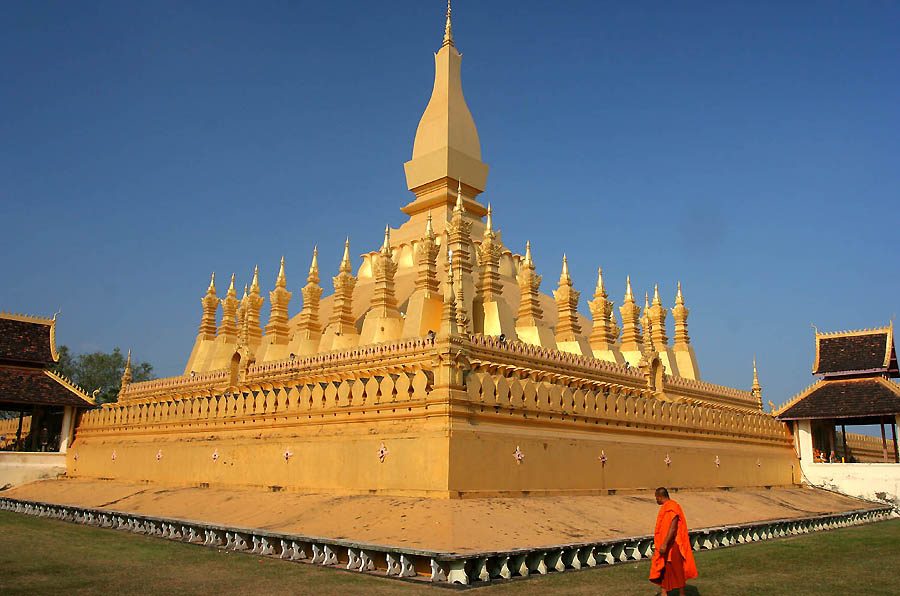
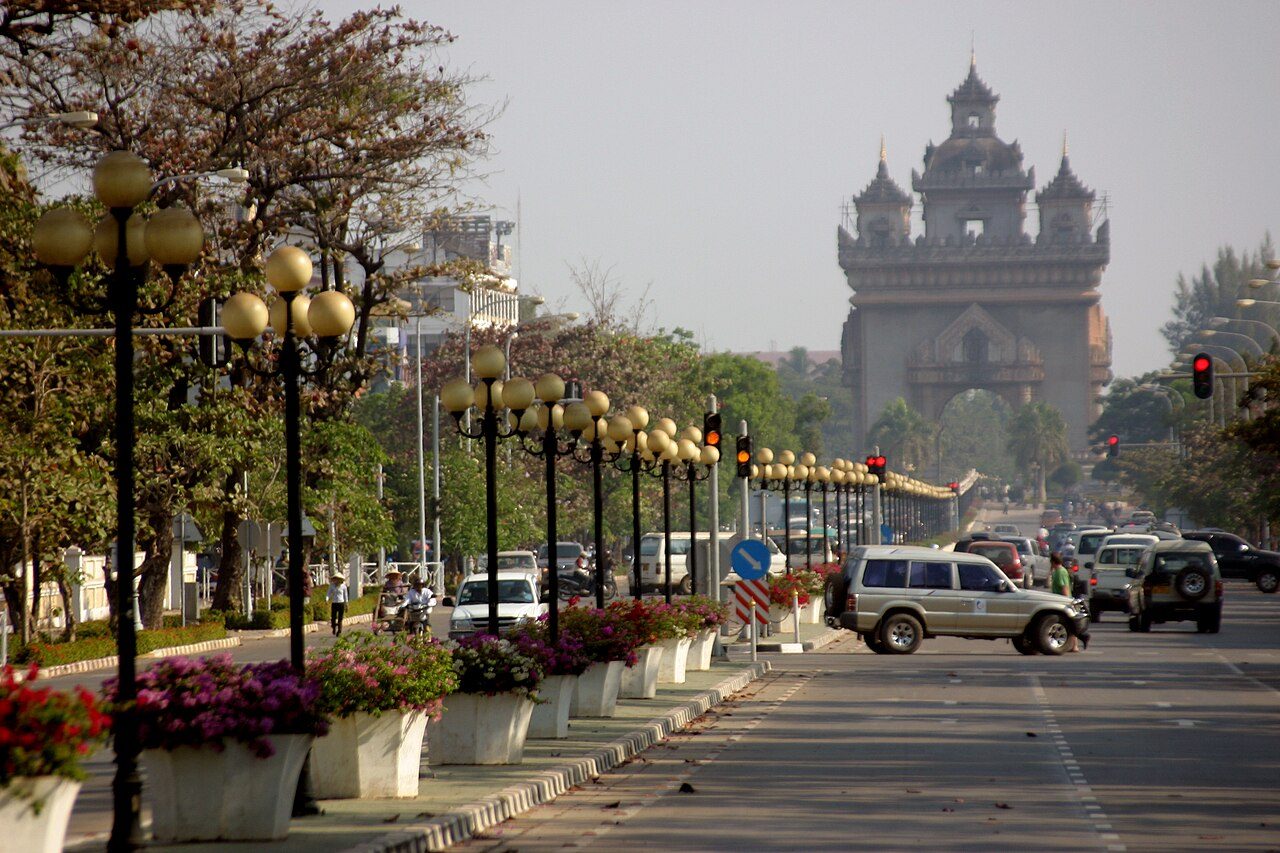
Photo credits (4)
- Mohdirfaniitmandi, CC BY-SA 4.0, via Wikimedia Commons
- Jialiang Gao www.peace-on-earth.org, CC BY-SA 3.0, via Wikimedia Commons
- Gerd Eichmann, CC BY-SA 4.0, via Wikimedia Commons
- User:Mattes, Public domain, via Wikimedia Commons