
Sao Paulo
Perched on the Piratininga plateau in southeastern Brazil, framed by the Serra da Cantareira and cut by the Tietê River, São Paulo sits fifty miles inland from the Atlantic. Walking its pavements brings a dizzying clash of scale: brutalist towers cast shadows over jacaranda trees, and the hum of traffic mingles with the sharp scent of sweet cafézinho poured at corner lunch counters. Founded in 1554 as a Jesuit mission by Manuel da Nóbrega and José de Anchieta, the city boomed with nineteenth-century coffee wealth. Today, distinct neighborhoods anchor its vastness. Along Avenida Paulista, Lina Bo Bardi’s São Paulo Museum of Art hangs suspended from red concrete pillars. A short ride away, Liberdade reflects the world’s largest Japanese diaspora, marked by red torii lanterns and noodle shops. Further west, the hilly alleys of Vila Madalena shelter the kaleidoscopic street murals of Beco do Batman and lively sidewalk botecos. Everyday culture thrives inside the stained-glass vaults of the Mercado Municipal, famous for stacked mortadella sandwiches and fried pastéis. On Sundays, Paulistanos claim Avenida Paulista, which closes entirely to motor vehicles for strolling musicians and cyclists. To bypass the notorious traffic jams, rely on the fast, spotless metro system, and visit between May and September, when clear skies and mild subtropical temperatures make exploring on foot a pleasure.
Read more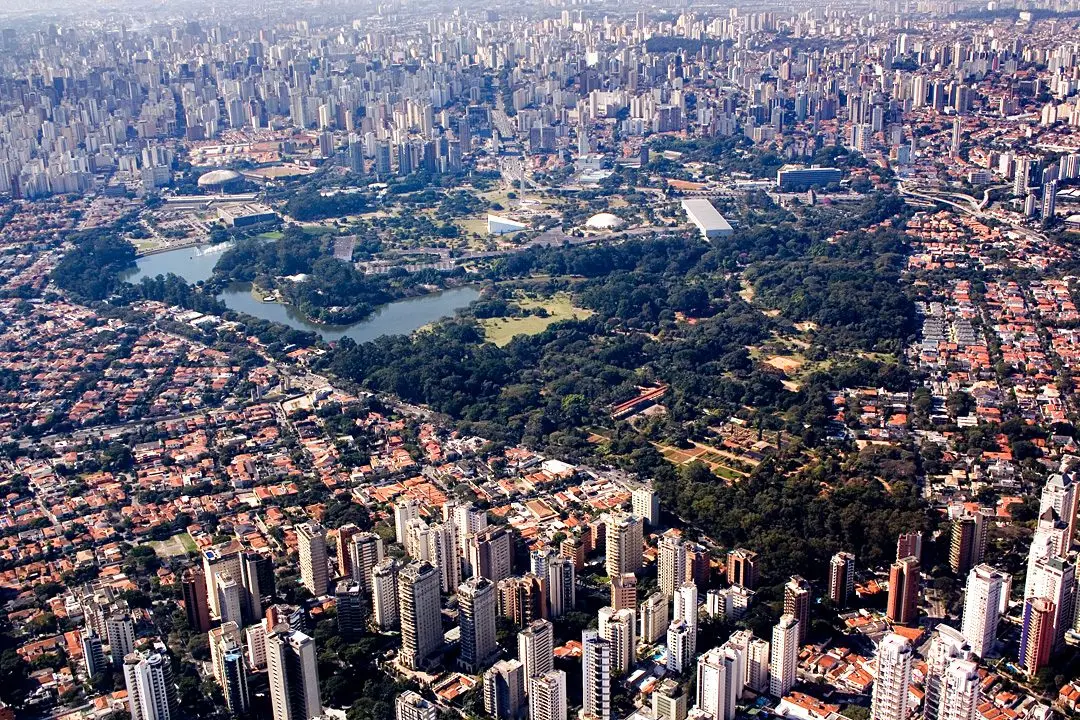
What to see in Sao Paulo
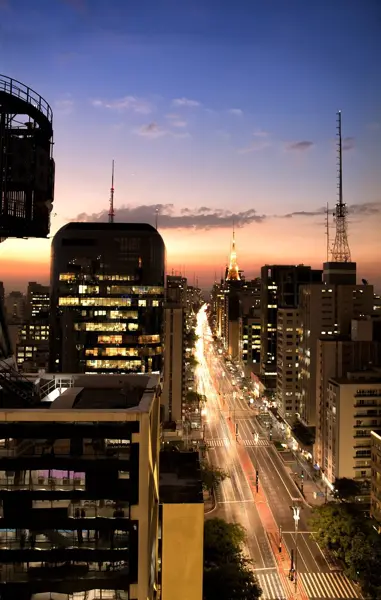
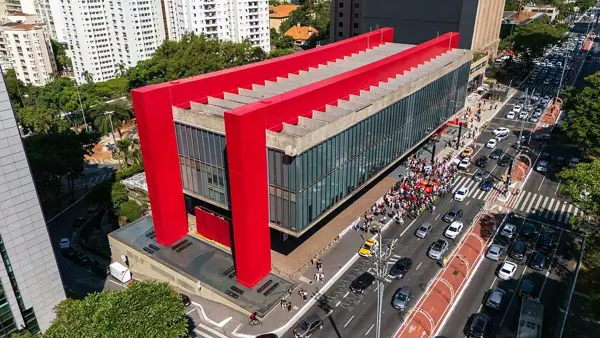
Photo credits (3)
- Fernando Stankuns, CC BY-SA 4.0, via Wikimedia Commons
- Rodrigo Tetsuo Argenton, CC BY-SA 4.0, via Wikimedia Commons
- ProtoplasmaKid, CC BY-SA 4.0, via Wikimedia Commons