
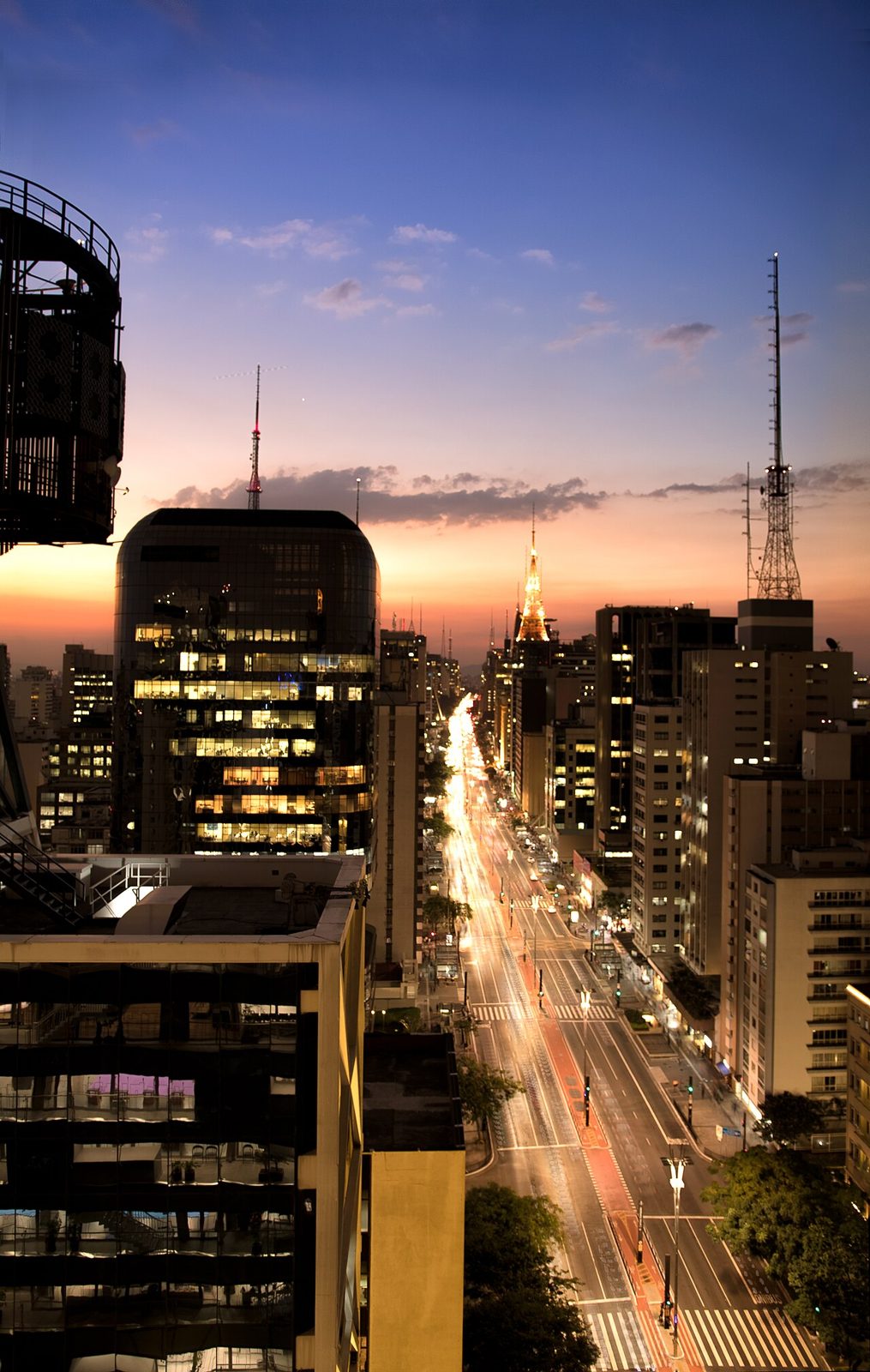
Paulista Avenue
Conceived in December 1891 by engineer Joaquim Eugênio de Lima, Avenida Paulista originated as an opulent ridge of French-eclectic mansions commissioned by the region's ascendant coffee barons. Today, that gilded era survives in rare holdouts like the 1935 neoclassical Casa das Rosas, juxtaposed against soaring corporate towers and illuminated broadcast spires. The avenue's architectural apex is Lina Bo Bardi’s brutalist masterwork, the São Paulo Museum of Art (MASP), inaugurated in 1968. Suspended dramatically between two vermilion-painted, pre-stressed concrete frames, the massive glass-and-concrete box hovers eight meters above the pavement, leaving a striking 74-meter column-free void directly beneath it. Striding along the black-and-white Portuguese stone sidewalks—tessellated into geometric outlines of São Paulo state—travelers immediately absorb the kinetic rhythm of South America’s commercial engine. Standing in the cool shadow of MASP’s underbelly, visitors encounter bustling Sunday antique fairs where vintage coin vendors and vinyl collectors barter against the backdrop of live *choro* ensembles. When the eight-lane artery closes to motor vehicles on weekends, the asphalt transforms into a vibrant public corridor filled with cyclists and buskers, while the savory scent of fried *pastel* drifts past the illuminated, retro-futuristic transmission towers piercing the subtropical sky.
More in Sao Paulo
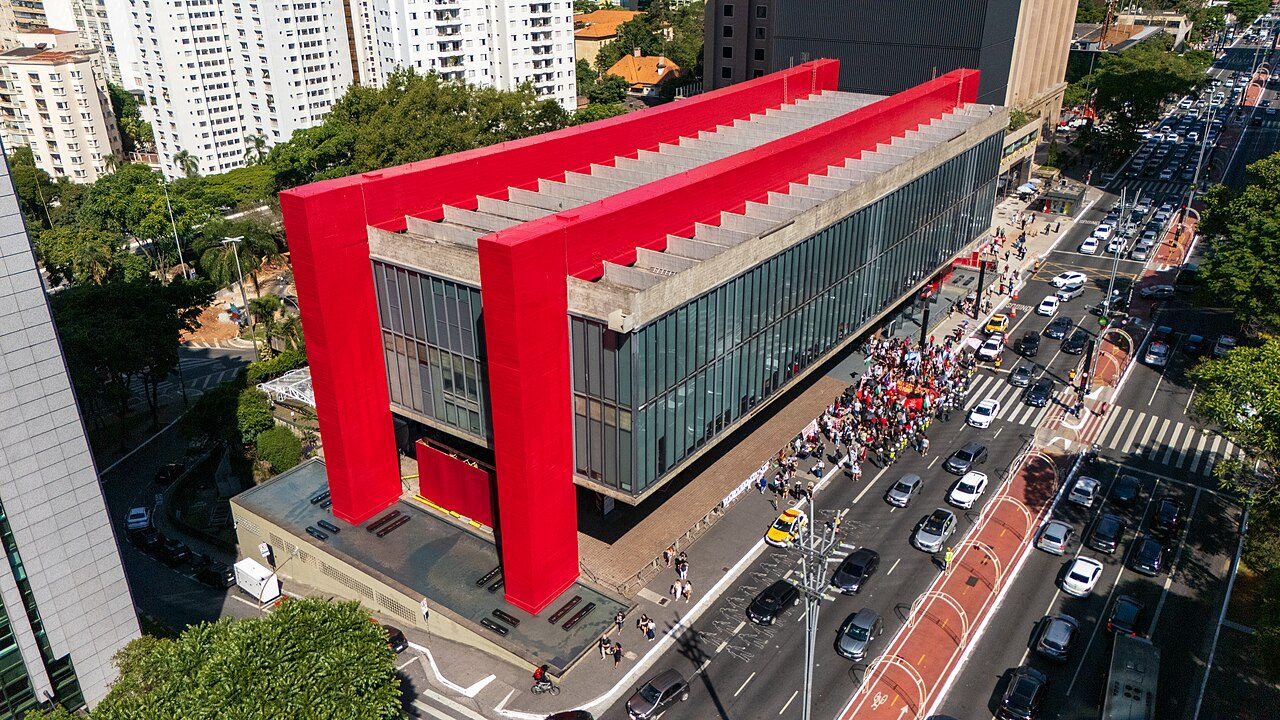
Photo credits (3)
- Rodrigo Tetsuo Argenton, CC BY-SA 4.0, via Wikimedia Commons
- Fernando Stankuns, CC BY-SA 4.0, via Wikimedia Commons
- ProtoplasmaKid, CC BY-SA 4.0, via Wikimedia Commons