
Luang Prabang
Folded between jungle-covered limestone peaks in northern Laos, Luang Prabang occupies a slender peninsula formed by the meeting of the Nam Khan and the Mekong. Walking the shaded lanes feels deeply tranquil. Indigo-dyed textiles hang outside dark-timber shophouses, French louvered windows open onto bougainvillea, and the scent of damp river earth drifts alongside wafts of burning temple incense. Founded as the capital of the Lan Xang kingdom by King Fa Ngum in 1353, the town preserves centuries of Buddhist tradition fused with Indochinese colonial architecture. Near the tip of the peninsula stands Wat Xieng Thong, built in 1560, recognizable by its sweeping three-tiered roof and a vibrant glass mosaic depicting the tree of life. At the town center, the former Royal Palace, erected in 1904, showcases traditional Lao motifs mixed with beaux-arts symmetry, while three hundred stone steps climb Mount Phousi to Wat Chom Si, a gilded stupa overlooking the terracotta rooftops below. Daily life maintains an ancient rhythm. At first light, townsfolk kneel along Sakkaline Road for Tak Bat, filling the alms bowls of orange-robed monks with steaming sticky rice. By mid-morning, the stalls near the river grill dried riverweed dusted with sesame seeds and serve bowls of spicy khao soi noodle soup. The dry winter months from November to February bring mild temperatures and clear skies, making it ideal to navigate the quiet lanes on a rented bicycle.
Read more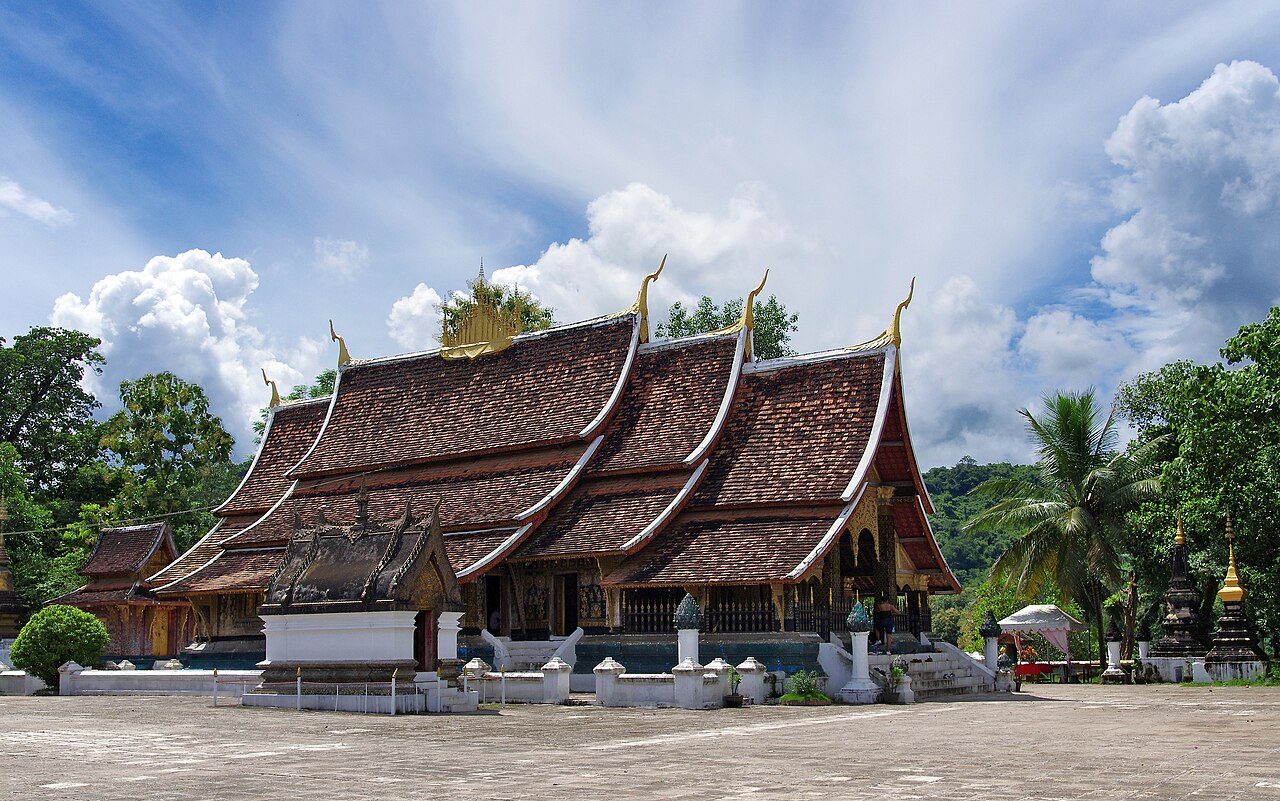
What to see in Luang Prabang
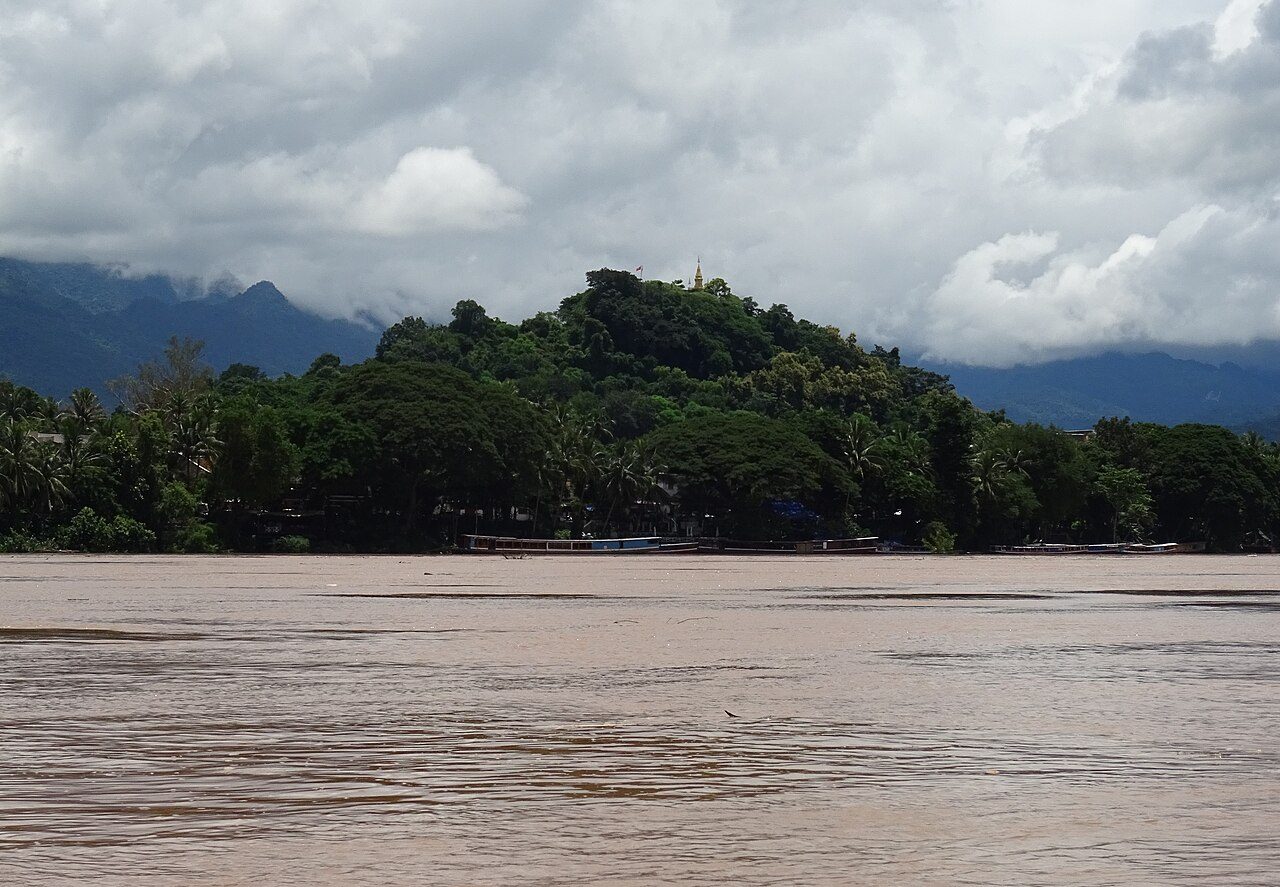
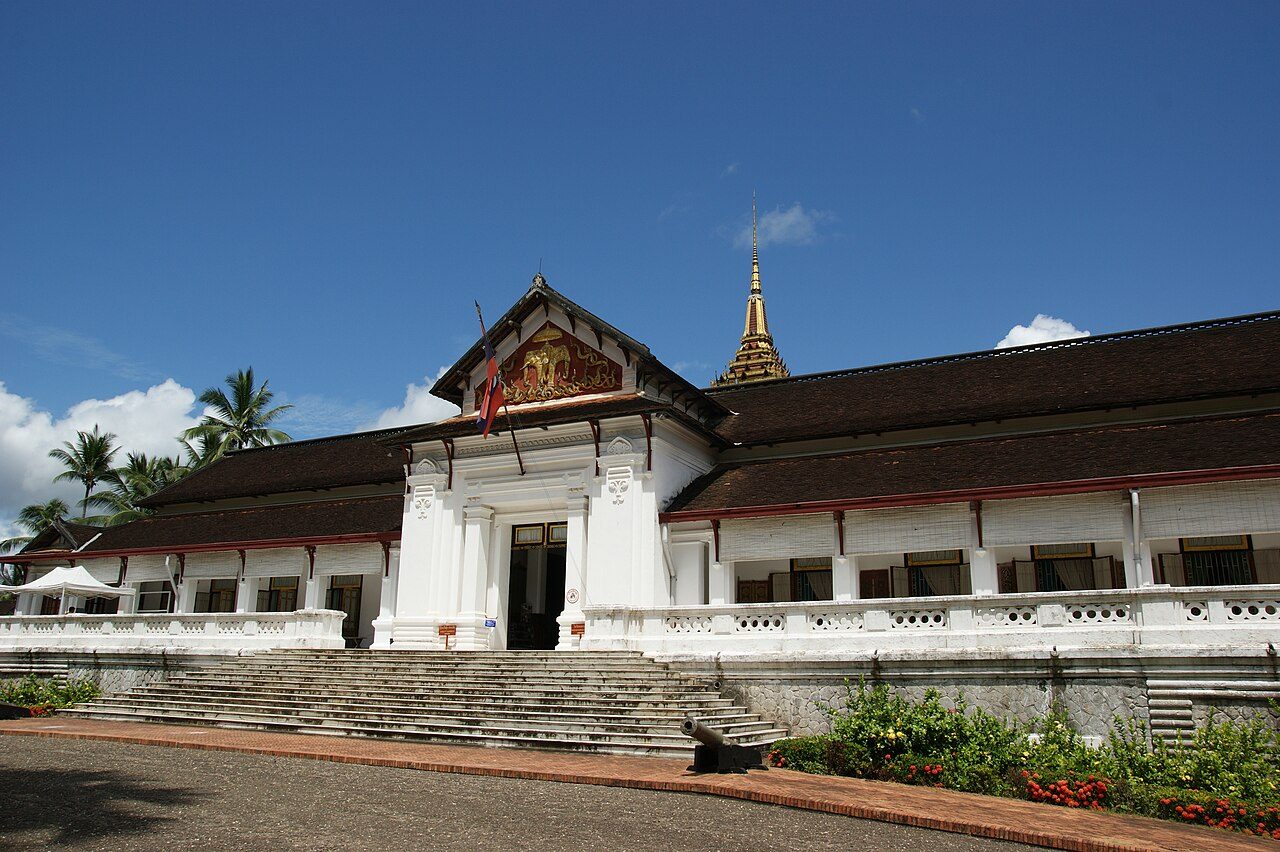
Photo credits (5)
- Phillip Maiwald ( Nikopol ), CC BY-SA 3.0, via Wikimedia Commons
- Basile Morin, CC BY-SA 4.0, via Wikimedia Commons
- Walter.jenner, CC BY-SA 3.0, via Wikimedia Commons
- Christophe95, CC BY-SA 4.0, via Wikimedia Commons
- Allie Caulfield, CC BY 2.0, via Wikimedia Commons