
Borjomi
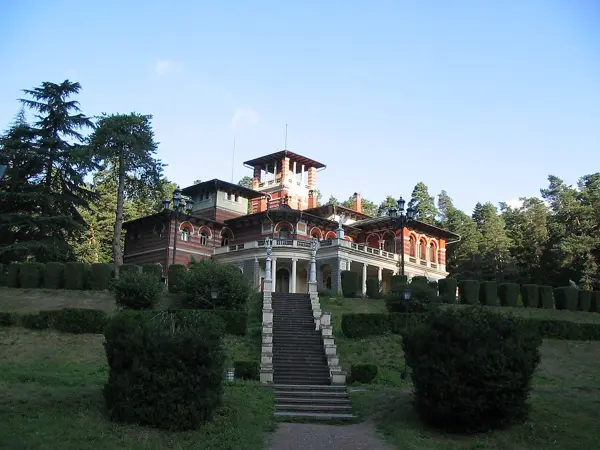
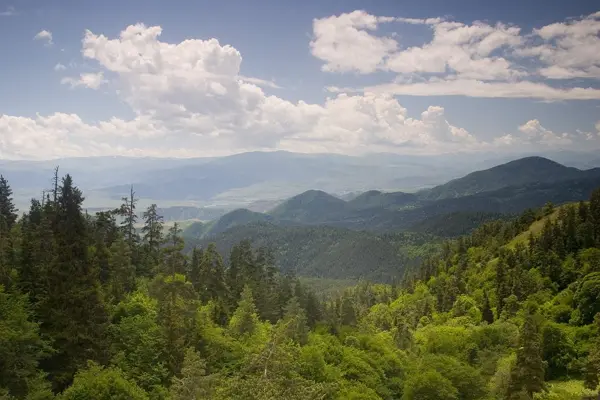
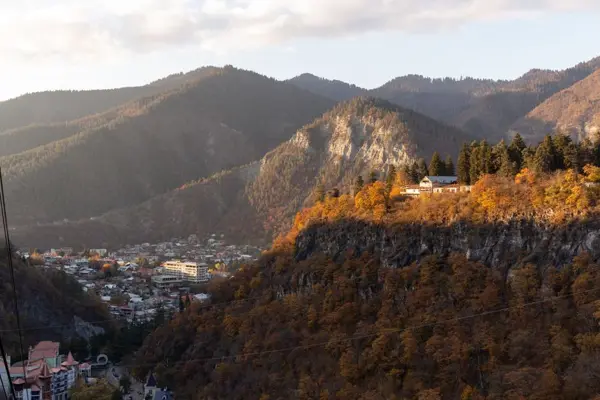
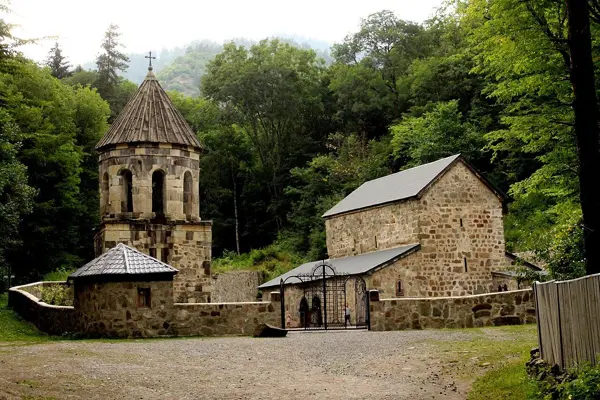
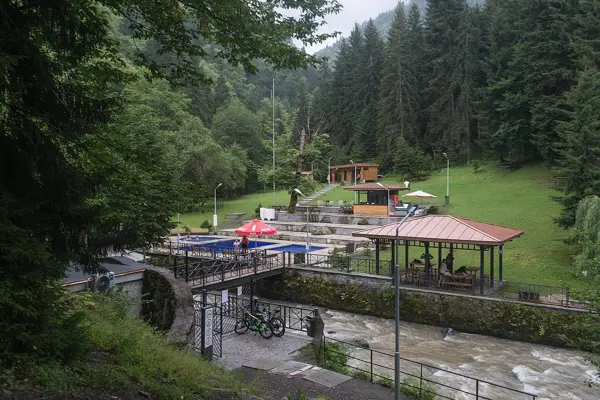
Borjomi straddles the forested slopes of the Lesser Caucasus in southern Georgia, set tightly into the deep gorge where the Borjomula River meets the Mtkvari. Walking along the riverbank path feels quiet and unhurried, with the rush of glacial water echoing between sheer cliffs and carved wooden balconies hanging over the river. The air smells cleanly of damp pine needles, tinged with a faint sulfur steam rising from natural ground fissures. Imperial soldiers revived the mineral springs here in 1829, prompting the Russian royal family to turn the remote valley into an aristocratic spa retreat. Inside the Central Park, travelers still fill thermoses directly from the warm, salty spring beneath a nineteenth-century iron-and-glass pavilion. Just outside the park stands the 1892 Firuza house, built for an Iranian consul with turquoise wooden verandas and inlaid mirrored ceilings. Downriver in Likani, the 1895 Romanov Palace anchors quiet grounds along the water, while a stone footpath behind the town park leads three kilometers through the gorge to open-air thermal sulfur pools. Roadside vendors along Rustaveli Street display jars of pine cone jam, a local specialty boiled each May from young green buds, alongside smoked sulguni cheese and dark wildflower honey. Early autumn provides mild temperatures and yellowing beech forests without the heavy summer tour traffic. The town is small enough to explore entirely on foot, with local marshrutka minibuses readily available to carry hikers toward trailheads in the surrounding national park.
Read more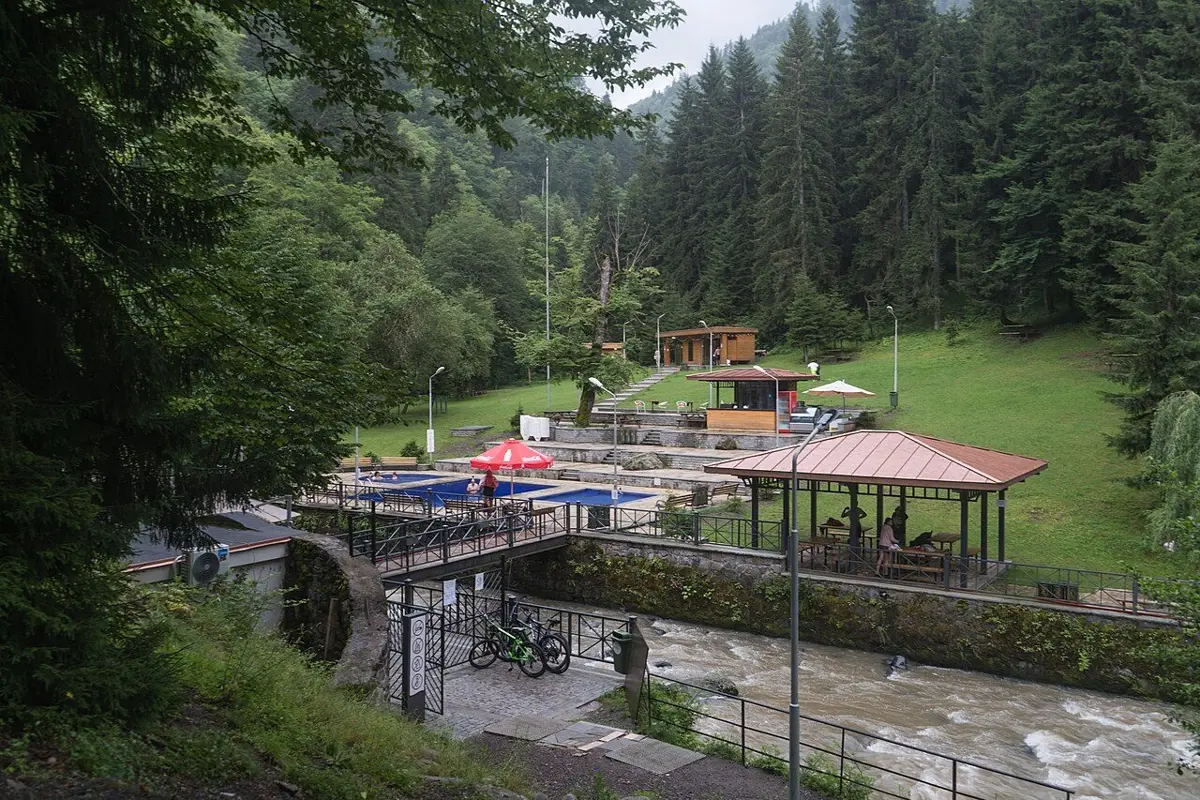
What to see in Borjomi
Guides & drivers nearby
Travel guides for Borjomi
Photo credits (6)
- Alexey Komarov, CC BY-SA 4.0, via Wikimedia Commons
- Dv0rsky from Tbilisi, Georgia, CC BY 2.0, via Wikimedia Commons
- Polscience at English Wikipedia, Public domain, via Wikimedia Commons
- ბაკურ გელაშვილი, CC BY-SA 4.0, via Wikimedia Commons
- Mostafameraji, CC0, via Wikimedia Commons
- ZeevoX, CC BY-SA 4.0, via Wikimedia Commons