

Bakuriani Ski Resort
Long before modern chairlifts scaled its ridges, Bakuriani served as an imperial winter retreat for the Russian Romanov dynasty, who commissioned Alexandre Gustave Eiffel to engineer the iconic 1902 railway bridge linking Borjomi to this alpine outpost via the narrow-gauge *Kukushka* train. By 1935, Soviet planners transformed the pastoral timber settlement into the USSR’s premier high-altitude winter Olympic training ground. Today, the resort unfolds across the northern volcanic folds of the Trialeti Range at 1,700 meters, where traditional pitched-roof wooden chalets and brutalist concrete legacy lodges nestle against old-growth forests of dark Caucasian spruce and Nordmann fir, all shadowed by the sharp, wind-scoured cone of Mount Kokhta. Stepping out onto the snow-packed plateau, travelers are met by the biting sting of subalpine air scented heavily with pine resin and woodsmoke. Modern Doppelmayr gondolas hum continuously, ferrying skiers up to the 2,700-meter peak of Didveli, where blinding white fields yield expansive panoramas of the Shida Kartli plains below. Between carving lines through powdery glades and navigating former Soviet slalom routes, visitors congregate around slope-side wooden huts, hands cupped around terracotta mugs of spiced compote or plates of bubbling *lobio* (bean stew), enveloped by the crunch of frozen snow and the whistle of the narrow-gauge locomotive echoing through the valley.
More in Borjomi
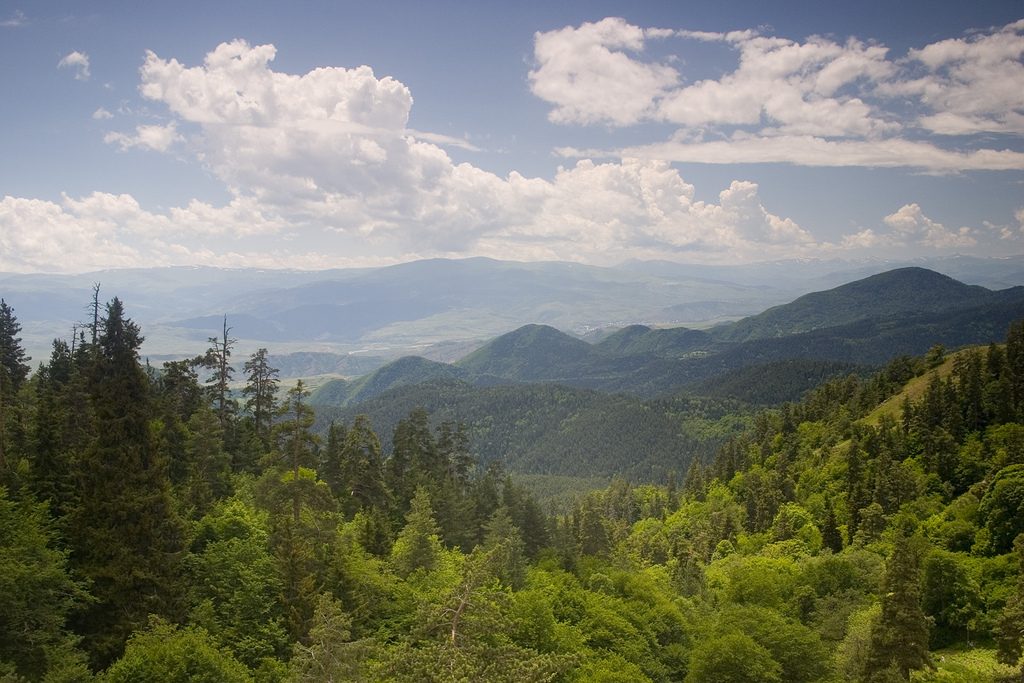
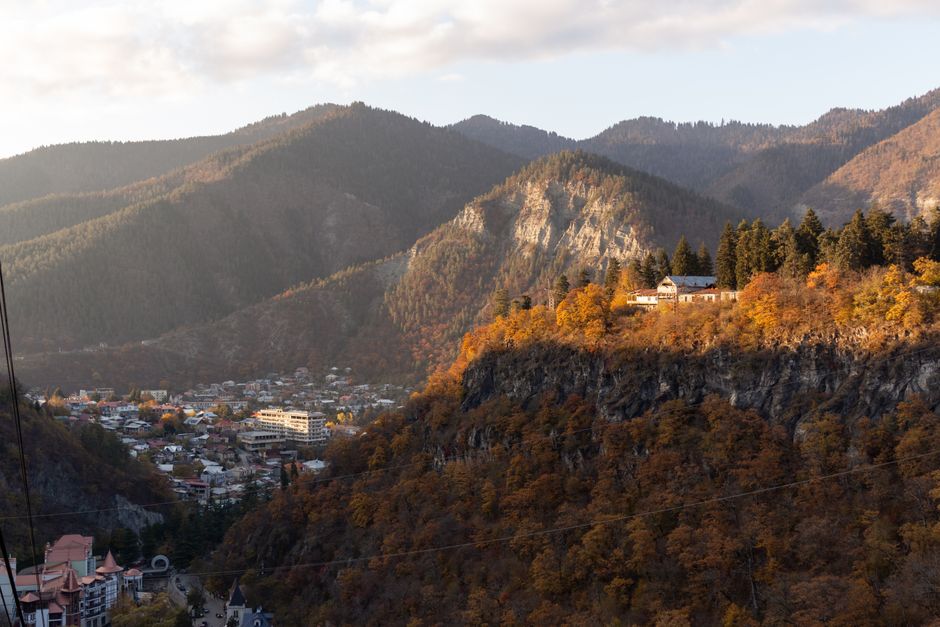
Photo credits (2)
- Polscience at English Wikipedia, Public domain, via Wikimedia Commons
- G.N, CC BY-SA 3.0, via Wikimedia Commons