
 New added
Mineral Water Park
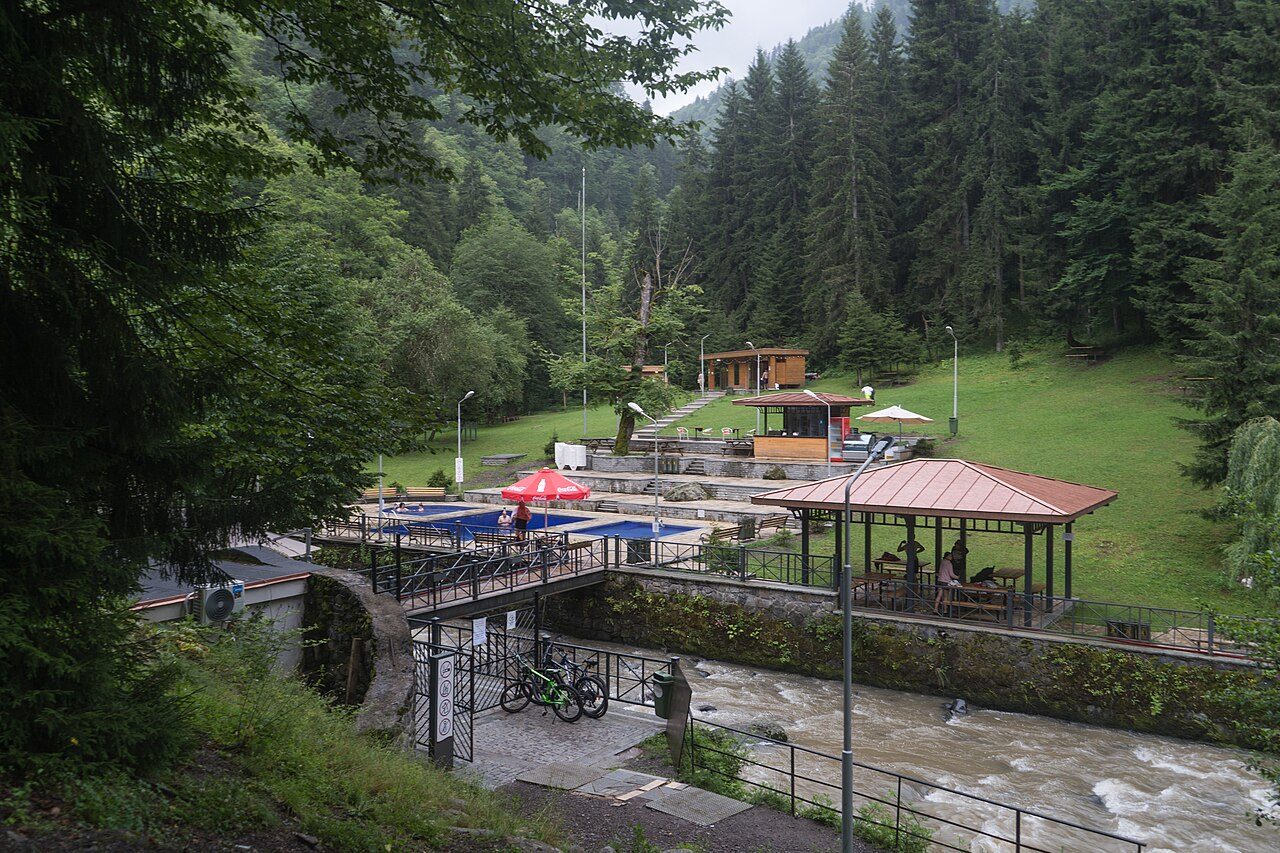
Established in 1850 under Imperial Viceroy Mikhail Vorontsov and later expanded by Grand Duke Mikhail Romanov, this narrow gorge retreat transformed Borjomi into the premier balneological spa of the Russian Empire. The focal point of the park is the iconic Yekaterinsky Spring—named after a tsarist general's daughter miraculously cured by the waters in 1841—housed beneath an ornate, turquoise-painted pavilion with a soaring glass dome and intricate wrought-iron filigree. Flanked by vertical limestone cliffs and the tumbling Borjomula River, the Belle Époque architecture provides a striking, refined contrast to the rugged wilderness of the Lesser Caucasus. Approaching the central pavilion, travelers immediately catch the sharp, volcanic scent of sulfur wafting through the cool mountain air. Visitors queue beside brass taps to fill bottles directly from the subterranean source, tasting the water while it is still warm, naturally effervescent, and heavy with its signature salty, sodium-bicarbonate mineral bite. Continuing past the colonnade along the riverbank path, dense firs filter the daylight as rustic wooden footbridges crisscross the rushing water. Above, a retro Soviet-era cable car glides quietly toward the plateau, while the trail leads deep into the quiet gorge toward steaming, open-air sulfur baths nestled in the forest.
More in Borjomi
Photo credits (6)
- Alexey Komarov, CC BY-SA 4.0, via Wikimedia Commons
- Dv0rsky from Tbilisi, Georgia, CC BY 2.0, via Wikimedia Commons
- Polscience at English Wikipedia, Public domain, via Wikimedia Commons
- ბაკურ გელაშვილი, CC BY-SA 4.0, via Wikimedia Commons
- Mostafameraji, CC0, via Wikimedia Commons
- ZeevoX, CC BY-SA 4.0, via Wikimedia Commons