Planning your first trip to Morocco requires understanding regional contrasts, cultural norms, and transport logistics across its historic cities and landscapes. This practical guide covers essential destinations, local customs, and route options.
A first-time trip to Morocco introduces you to centuries-old medinas, stark mountain ridges, and vast desert expanses. Moving between coastal Atlantic ports, northern peaks, and southern oasis valleys requires clear expectations about cultural etiquette, transit times, and local navigation. Preparing your route in advance ensures a balanced experience across Morocco's imperial cities and varied geography.
Key Destinations for First-Time Travelers
Most first-time itineraries balance the historic energy of the imperial cities with coastal stops and mountain scenery.
Casablanca and Rabat
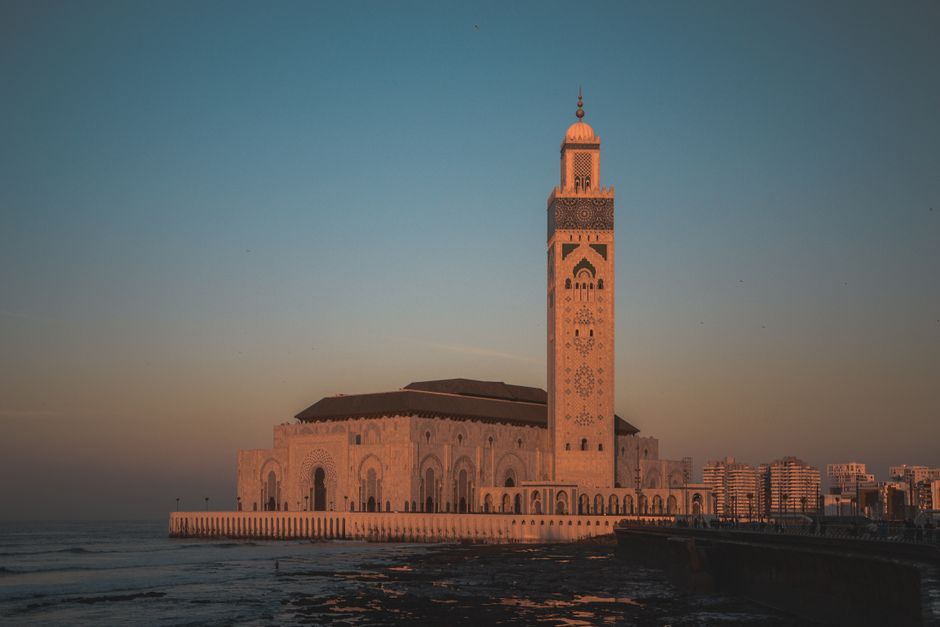
Many international flights land in Casablanca, the country's modern commercial engine. The primary landmark here is the monumental Hassan II Mosque, built on a rocky outcrop over the Atlantic ocean with traditional wood carving, plasterwork, and zellij tile. Along the western shoreline, the seaside boulevard known as the Corniche provides space for evening walks by the water.
Just north along the rail line lies Rabat, Morocco's administrative capital. Rabat has a relaxed pace compared to other major hubs. The historic Kasbah of the Udayas sits on a cliff edge where the Bou Regreg estuary meets the ocean, featuring whitewashed alleys and ancient defensive ramparts.
Tangier and Chefchaouen in the North
In the north, Tangier stands at the crossroads of the Mediterranean and the Atlantic. Travelers explore the fortified Medina and head out toward Cape Spartel, where dramatic coastal cliffs mark the meeting point of two seas.
Further inland within the Rif mountains, Chefchaouen draws visitors for its distinctive blue-washed architecture. Walking the peaceful Blue Streets leads to the lively Plaza Uta el-Hammam, the historic center of the old quarter. For a wide panorama over the town, take the gentle footpath up to the Spanish Mosque just outside the eastern gate.
Marrakech and the South
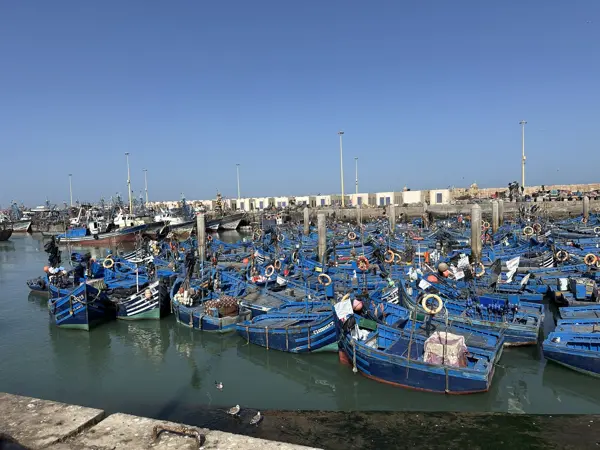
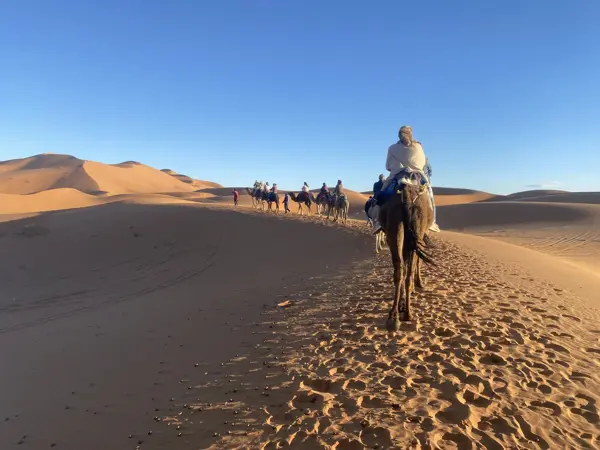
Marrakech serves as the southern gateway for travelers aiming for mountain crossings or desert excursions. The old city vibrates with artisan souks, while nearby routes lead toward coastal fishing ramparts or across the High Atlas toward the dunes of Erg Chebbi.
Morocco Travel Costs and Booking on Tour & Car
Daily spending in Morocco depends on whether you travel by public rail, hire local guides, or book private vehicle transport. On Tour & Car, you can hire verified local guides in Morocco directly, ensuring transparent prices without middleman markups.
When basing yourself in Marrakech, day trips and regional journeys are easy to coordinate:
- Day trip to Essaouira from Marrakech: Spend 6 hours exploring the historic Atlantic coast for $140 for your whole private group.
- 3 days desert tour from Marrakech: Travel through southern valleys toward the dunes on a private 6-hour excursion itinerary for $660 for your whole group.
Using private drivers allows you to travel across mountain passes at your own pace, stopping at roadside viewpoints and heritage sites without the rigid schedules of shared bus tours.
How to Get Around Morocco
Morocco possesses one of Africa's most reliable transit networks, though travel modes vary depending on your itinerary.
- High-speed and regional rail: Modern trains connect Tangier, Rabat, and Casablanca quickly and comfortably. Regular trains link Casablanca down to Marrakech and east to Fes.
- Private drivers and guided tours: For mountain crossings, desert dunes, or direct links between cities without train stations (such as Chefchaouen), private vehicles arranged on Tour & Car provide flexibility and door-to-door comfort.
- Medina navigation: Cars cannot enter historic walled medinas. Prepare to walk on cobblestones and hire licensed luggage carts at main gates if your riad sits deep within the alley network.
Best Time to Visit Morocco
Spring (March through May) and autumn (September through November) offer the most comfortable weather for traveling across Morocco. During these transitional months, northern cities enjoy warm days, the Rif and Atlas mountains are lush, and the southern desert valleys avoid extreme summer heat.
Summer brings intense temperatures to interior cities like Marrakech and desert regions, making midday exploration strenuous. Coastal towns like Tangier and Essaouira stay cooler in summer thanks to constant Atlantic breezes. Winter brings cold nights to the mountains and interior plateaus, but daytime conditions in the south remain sunny and pleasant for touring.
Cultural events also shape the travel calendar. Autumn hosts gatherings such as the Visa For Music conference in Rabat, while the Marrakech International Film Festival takes place in late November, drawing visitors from around the world.
Suggested 7-Day First-Timer Itinerary
This classic week-long route introduces you to Morocco's varied regions efficiently:
- Days 1–2: Casablanca and Rabat. Land in Casablanca, visit the seaside Hassan II Mosque, and take the train to Rabat to explore the Kasbah of the Udayas.
- Days 3–4: Chefchaouen. Head north into the Rif mountains. Spend two days exploring the blue-painted lanes and watching the sunset from the Spanish Mosque.
- Days 5–7: Marrakech and the Atlantic Coast. Travel south to Marrakech to experience the vibrant artisan markets. Dedicate a full day to a private coastal excursion, such as the day trip to Essaouira from Marrakech starting from $140 on Tour & Car.
If you have 10 to 12 days, add an extended southern desert circuit across the Atlas range to Erg Chebbi, or head north to see the maritime bluffs of Tangier.
Essential Etiquette and Practical Tips
Respecting local customs ensures smooth interactions throughout your journey across Morocco.
- Dress modestly: While coastal beach areas and resort hotels accept standard holiday wear, covering your shoulders and knees is appreciated in residential quarters and historic medinas.
- Negotiating in the souks: Bargaining for crafts, leather goods, and carpets is an established social tradition. Approach negotiations with patience, a smile, and good humor.
- Accepting hospitality: If a shopkeeper or host offers you mint tea, accept it with your right hand. Tea culture is a cornerstone of Moroccan welcome and should not be rushed.
- Photography etiquette: Always ask permission before photographing local artisans, street performers, or medina residents. Some individuals may decline or request a small gratuity.