
 New added
Kirstenbosch Gardens
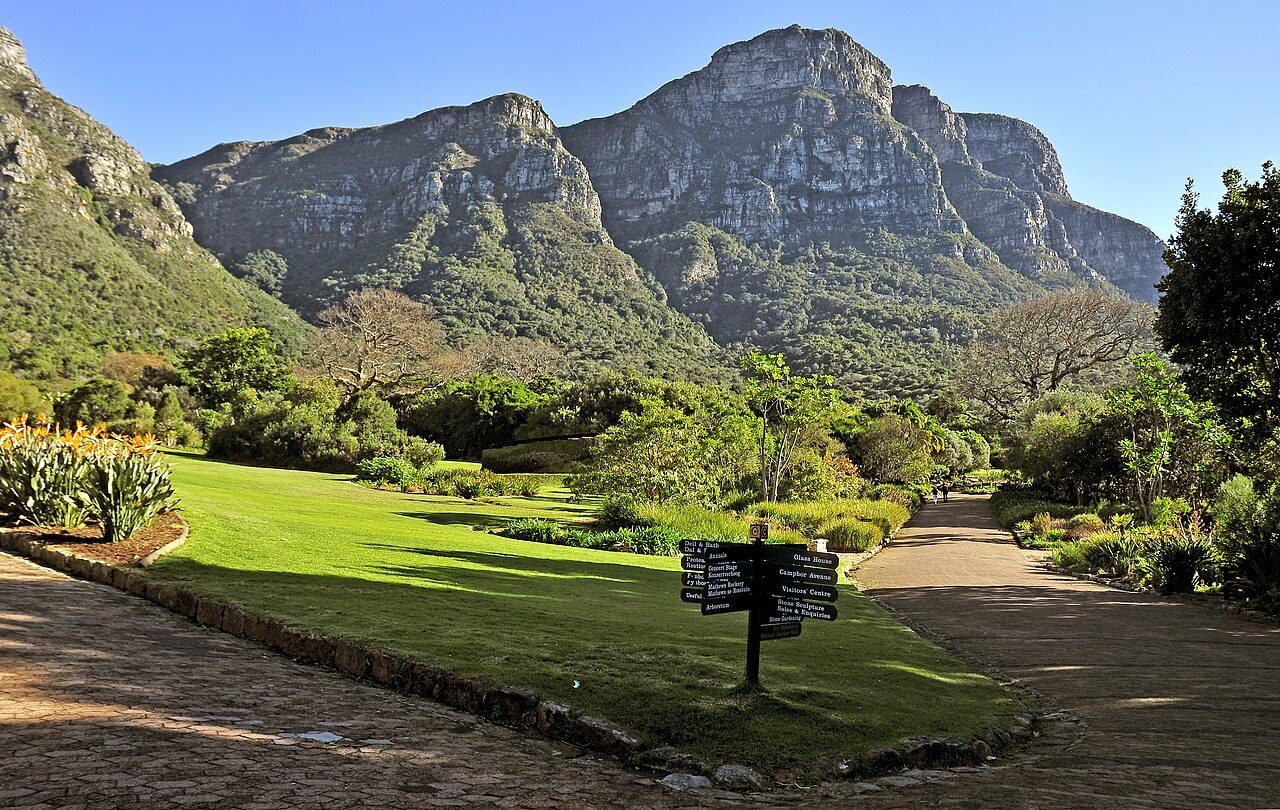
Carved into the eastern buttresses of Table Mountain, Kirstenbosch emerged in 1913 under visionary botanist Harold Pearson, who pioneered the then-radical concept of preserving indigenous flora over cultivating exotic imperial imports. Pearson lies buried amid the living tapestry he championed, not far from a surviving boundary segment of Jan van Riebeeck’s 1660 wild almond hedge. Today, as the crown jewel of the Cape Floristic Region, the garden cascades down dramatic granite crags into terraced beds of prehistoric cycads and fynbos. Visitors are greeted by electric orange pincushion blooms and the velvety artichoke heads of king proteas, juxtaposed against bronze feline sculptures by artist Dylan Lewis that lurk silently among ancient ferns. The sensory centerpiece of the grounds is the Centenary Tree Canopy Walkway, colloquially known as the Boomslang. This sinuous ribbon of galvanized steel and pale timber coils like a serpent through the arboretum, carrying walkers twelve meters above the forest floor. Up in the breeze, the air carries the sharp, resinous perfume of wild camphor and crushed fynbos, punctured by the iridescent blur of malachite sunbirds harvesting nectar. Pausing on the suspended crest of the walkway, travelers experience a thrilling spatial contrast: looking out toward the sprawl of the Cape Flats below, while the sheer, cloud-scraped ramparts of Castle Rock loom vertically above.
More in Cape Town
Photo credits (5)
- LBM1948, CC BY-SA 4.0, via Wikimedia Commons
- Joe Ross from Lansing, Michigan, CC BY-SA 2.0, via Wikimedia Commons
- Photograph by Mike Peel ( www.mikepeel.net )., CC BY-SA 4.0, via Wikimedia Commons
- Ad Meskens You are free to use this picture for any purpose as long as you credit its author, Ad Meskens . Example: © Ad Meskens / Wikimedia Commons If you use…, CC BY-SA 4.0, via Wikimedia Commons
- dconvertini, CC BY-SA 2.0, via Wikimedia Commons