
 New added
Boulevard
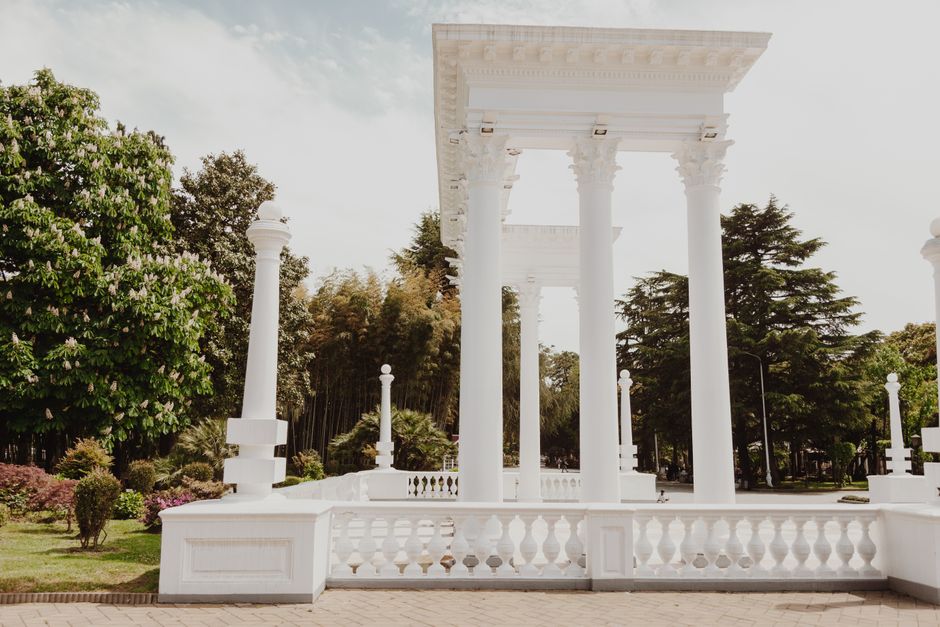
Initiated in 1881 by the regional governor and cultivated into living art by Prussian gardener A.I. Ressler and French horticulturist Michael d’Alfons, the Batumi Boulevard began as a seaside sanctuary along the Black Sea shore. Stretching across seven kilometers, the park embodies a layered history of landscape design, merging nineteenth-century European botanical curation with dramatic twentieth-century architecture. At its cultural core stand the stark white neoclassical arches of the 1934 Colonnade, originally built as a formal gateway to the water’s edge. Shaded avenues of century-old Canary palms, towering maritime pines, and dense bamboo groves reflect d’Alfons’s early vision of adapting exotic flora to the lush, humid Adjarian coast. Walking the promenade, travelers encounter the briny coastal breeze intermingling with the scent of blooming magnolias and cypress needles. At the northern perimeter, the historic greenery gives way to striking modern landmarks, anchored by Tamara Kvesitadze’s monumental kinetic steel sculpture, *Ali and Nino*, whose mechanical figures slowly merge and pass through one another in an eight-minute cycle of tragic union. Nearby, the spiraling, 130-meter Alphabet Tower pierces the horizon. As twilight settles, choreographed French musical fountains cast vibrant reflections across stone plazas, and the rhythmic crunch of gravel underfoot yields to expansive views of the sun dropping below the open sea.
More in Batumi
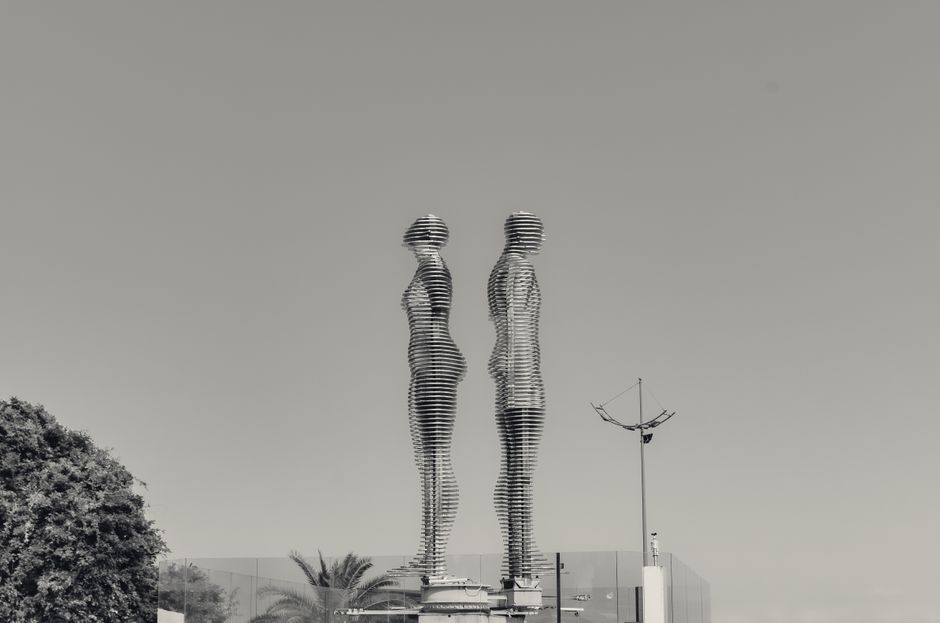
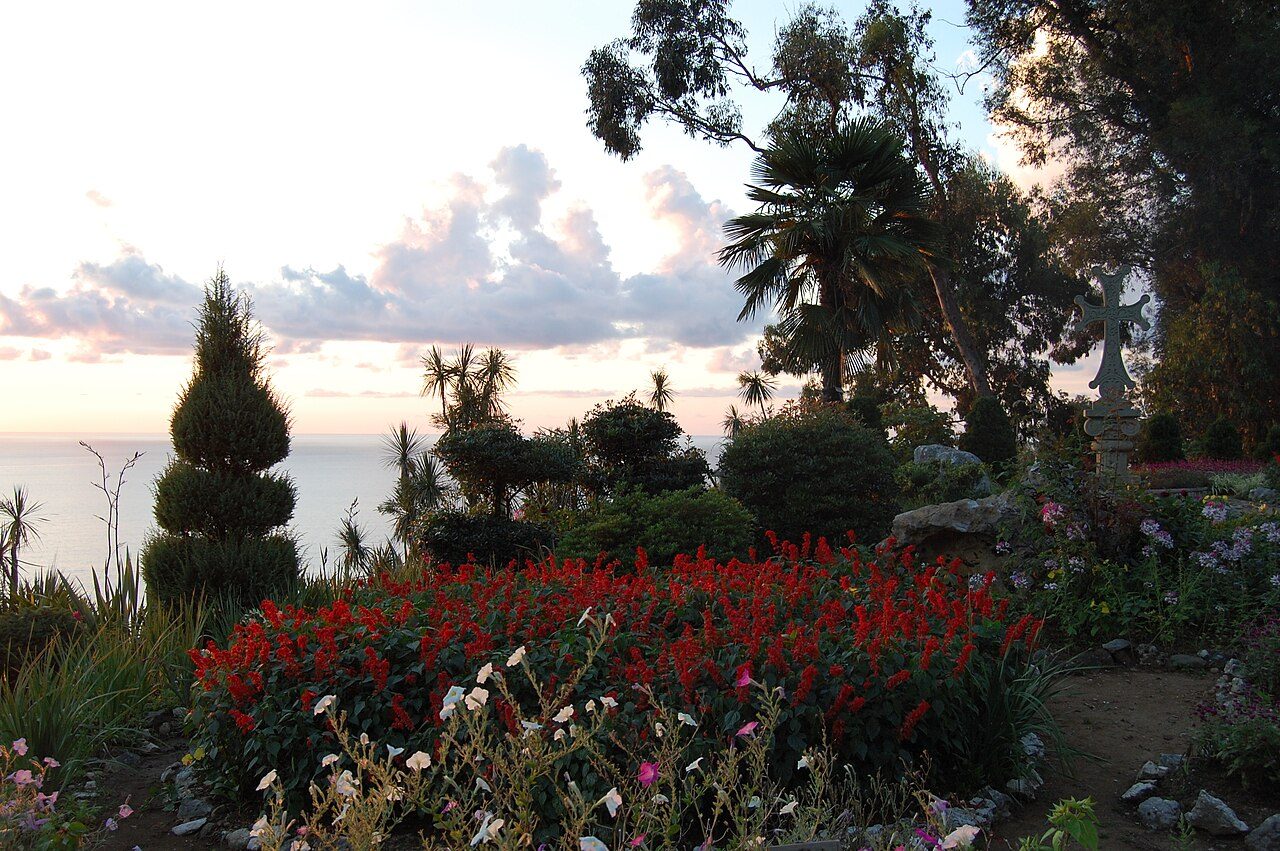
Photo credits (4)
- Alexey Komarov, CC BY-SA 4.0, via Wikimedia Commons
- Paata vardanashvili, CC BY-SA 4.0, via Wikimedia Commons
- Andrzej Wójtowicz from Poznań, Poland, CC BY-SA 2.0, via Wikimedia Commons
- Krzysztof Ziarnek, Kenraiz, CC BY-SA 4.0, via Wikimedia Commons