
 New added
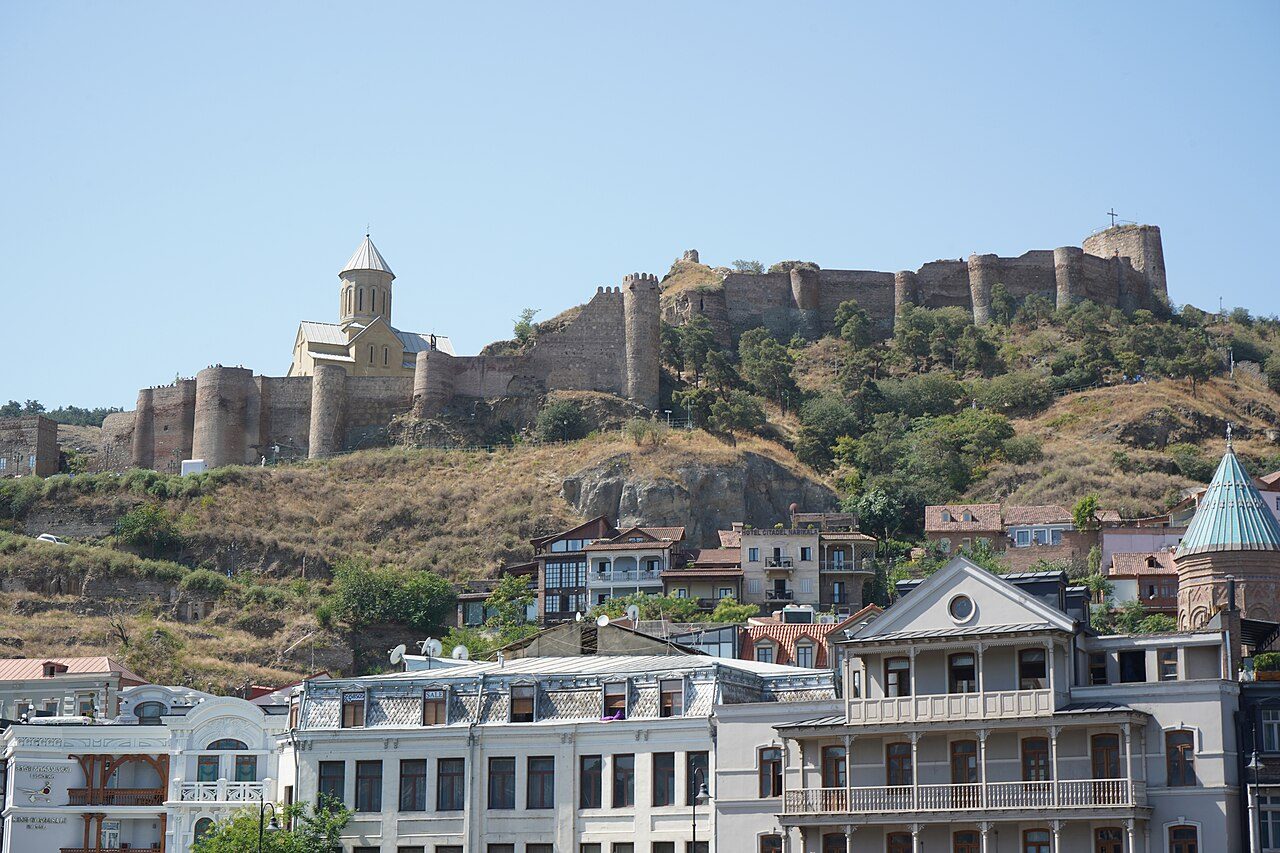
Narikala Fortress
Perched precipitously on the craggy Sololaki Ridge above the churning Mtkvari River, Narikala’s battle-scarred ramparts trace back to a 4th-century Sasanian citadel known as *Shuris-tsikhe*. Over subsequent centuries, the stronghold transformed into a layered palimpsest of empire: Umayyad emirs reinforced its brick bastions in the 8th century, King David the Builder expanded its defensive curtain in the 11th century, and Mongol rulers rechristened it *Narin Qala* (“Little Fortress”). Though an 1827 lightning strike on a Russian gunpowder magazine collapsed the upper citadel, the lower enclosure retains its crenellated medieval walls and the cross-domed Church of St. Nicholas, rebuilt in the 1990s upon 13th-century foundations and adorned with rich frescoes detailing Georgia’s canonized monarchs. Ascending to the battlements—either via the Rike Park cable car or the steep, flagstone lanes of the Betlemi quarter—visitors encounter sheer, unfenced parapets of rough-hewn stone and mortar. The air here carries a distinct whiff of mineral-rich steam rising from the subterranean brick domes of the Abanotubani sulfur baths below. Standing atop the wind-scoured ruins in the shadow of the colossal Kartlis Deda statue, travelers absorb a panoramic tableau of Tbilisi: a tangle of pastel-hued wooden balconies, soaring church spires, and the narrowing gorge where Georgia’s capital has defended its sovereignty for millennia.
More in Tbilisi
Photo credits (4)
- U.S. Army photo by Sgt. LaShic Patterson, Public domain, via Wikimedia Commons
- Marcin Konsek, CC BY-SA 4.0, via Wikimedia Commons
- Nodar Ambartsumov, CC BY-SA 4.0, via Wikimedia Commons
- Michal Gorski, CC BY-SA 3.0, via Wikimedia Commons