
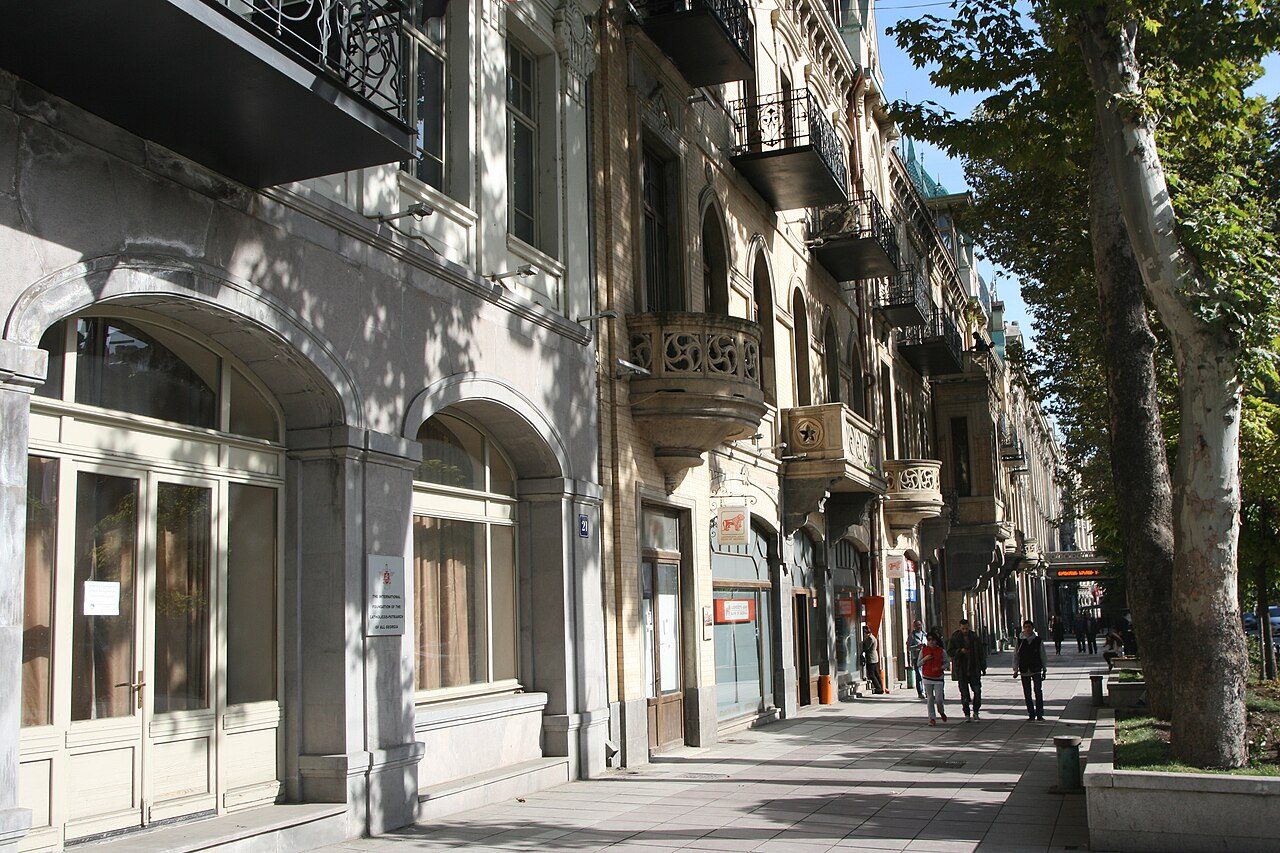
Rustaveli Avenue
Commissioned in the mid-19th century under Tsarist viceroy Mikhail Vorontsov and rechristened in honor of Georgia’s medieval epic poet Shota Rustaveli, this 1.5-kilometer boulevard serves as Tbilisi’s political and cultural spine. It has repeatedly served as the crucible of modern Georgian statehood, bearing witness to the anti-Soviet demonstrations of April 9, 1989, and the pivotal Rose Revolution of 2003. Architecturally, the avenue unfolds as an eclectic open-air gallery: the 1896 Tbilisi Opera and Ballet Theater flaunts an exotic Moorish Revival facade wrapped in horizontal ochre-and-crimson stripes with ornate horseshoe arches, while the austere, column-fronted former Parliament building exemplifies monumental 1930s Soviet Classicism, standing directly opposite the carved limestone reliefs of the Kashveti Church. Strolling along the broad flagstones beneath a sweeping green canopy of mature plane trees, travelers encounter a sensory clash of grand history and contemporary street life. The pavement is accented by whimsical bronze sculptures of bohemian musicians, while independent vendors spread out Soviet-era pins, antique rugs, and dog-eared poetry collections against ornate neoclassical balustrades. The aroma of dark Georgian coffee and warm cheese-filled breads wafts from basement bakeries, mixing with the sharp mountain breeze channeled down from Mount Mtatsminda. Standing near the Rustaveli National Theatre, visitors feel the city's living pulse—where theatrical crowds spill past political memorial plaques into bustling, lantern-lit cafe terraces.
More in Tbilisi
Photo credits (4)
- Michal Gorski, CC BY-SA 3.0, via Wikimedia Commons
- Marcin Konsek, CC BY-SA 4.0, via Wikimedia Commons
- Nodar Ambartsumov, CC BY-SA 4.0, via Wikimedia Commons
- U.S. Army photo by Sgt. LaShic Patterson, Public domain, via Wikimedia Commons