 New added
Japanese Bridge
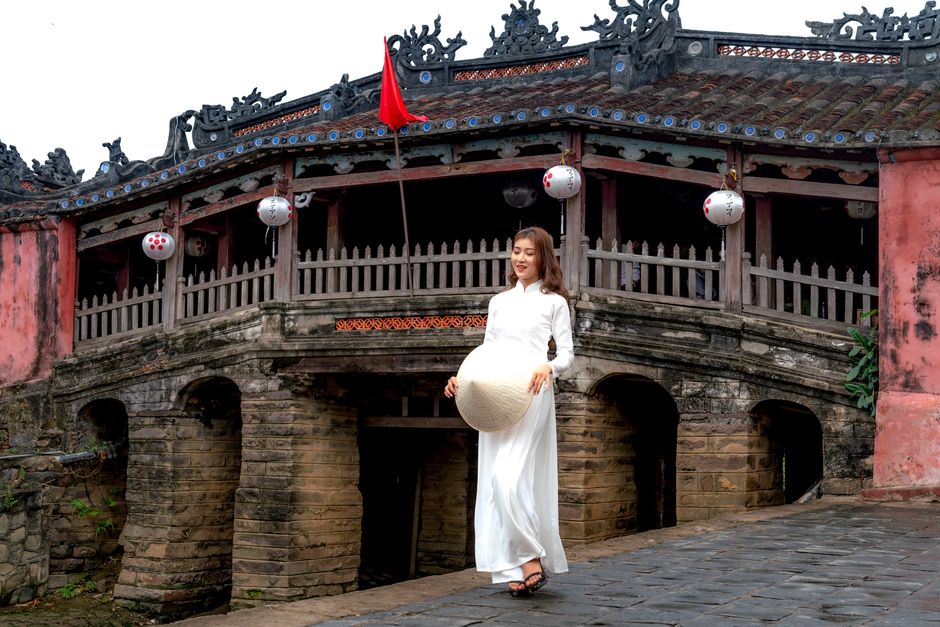
Erected in the 1590s by Hoi An’s merchant enclave, the Japanese Covered Bridge—known locally as Chùa Cầu—was engineered to span the canal separating the town's Japanese and Chinese trading quarters. Beyond practical transit, tradition credits its placement to a geomantic endeavor: pinning the heart of Namazu, a mythical subterranean monster whose restless thrashing was thought to trigger catastrophic earthquakes across Asia. Architecturally, the eighteen-meter span marries Japanese structural pragmatism with Vietnamese and Chinese flourishes. Its arched wooden superstructure rests atop weathered stone piers, sheltered beneath an undulating canopy of moss-dusted yin-yang ceramic tiles. Guarding the opposing portals stand pairs of stone sentinels—monkeys at one threshold and dogs at the other—marking the imperial zodiac years in which construction traditionally began and concluded. Stepping beneath the bridge’s low-slung eaves, travelers leave the tropical heat for a shadowy corridor perfumed by smoldering sandalwood incense. Halfway across the span, an integrated Taoist shrine opens to the side, dedicated not to the Buddha, but to Bac De Tran Vu, the northern deity summoned by ancient mariners to quell floods and typhoons. Centuries of footsteps have buffed the dark ironwood floorboards to a smooth, resonant sheen that creaks underfoot. Leaning against the carved balustrades, visitors gaze through timber lattice windows onto the slow-moving canal below, watching paper lanterns drift past the faded mustard-yellow facades of the surrounding ancient town.