 New added
Akbar’s Tomb
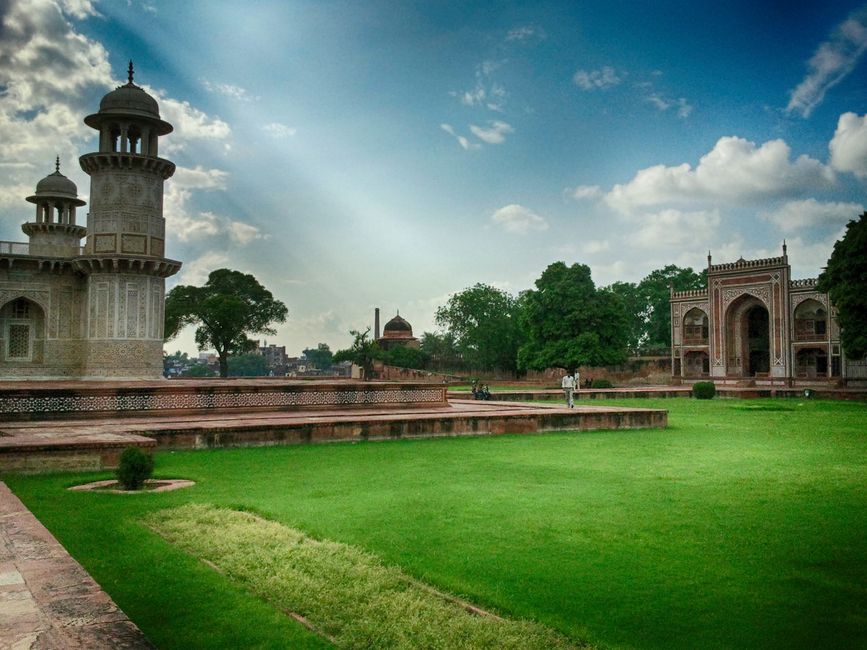
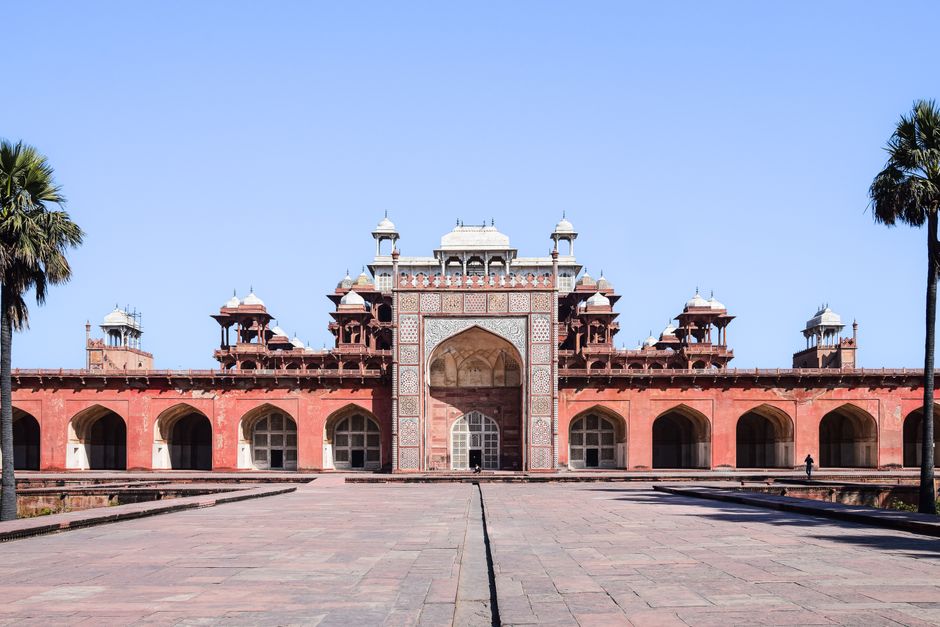
Rising from the tranquil groves of Sikandra on the outskirts of Agra, this red sandstone and white marble complex reflects the eclectic vision of the third Mughal emperor. Initiated by Akbar around 1605 and completed by his son Jahangir in 1613, the mausoleum discards orthodox Islamic convention by eschewing a crowning dome, opting instead for a four-tiered pyramidal structure crowned with an open-air marble terrace. Visitors approach through a colossal southern gateway inlaid with bold geometric mosaic and anchored by four slender white minarets, stepping out into a classic Persian *charbagh* (four-quartered garden) where blackbuck deer and peacocks wander between water channels. Inside, the sensory experience shifts dramatically from sun-drenched gardens to cavernous hush. A deep vestibule, adorned with vaulted gold, turquoise, and coral-red arabesques, funnels travelers down a steeply inclined, unlit ramp into the subterranean crypt. At the corridor’s end rests Akbar’s actual grave—a simple, unadorned alabaster slab engulfed in absolute shadow. Climbing back to the uppermost tier delivers a striking contrast: an expanse of blindingly bright white marble cloisters surrounding a finely chiseled cenotaph exposed to the open sky, framed by perforated *jali* screens that catch the afternoon breeze and cast intricate geometric shadows across the floor.