 New added
Taj Mahal
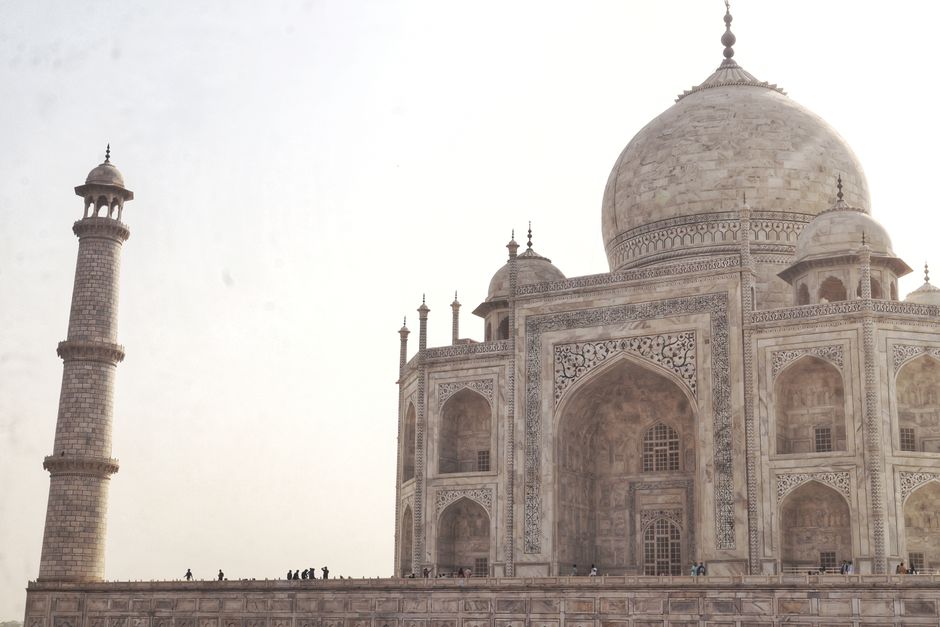
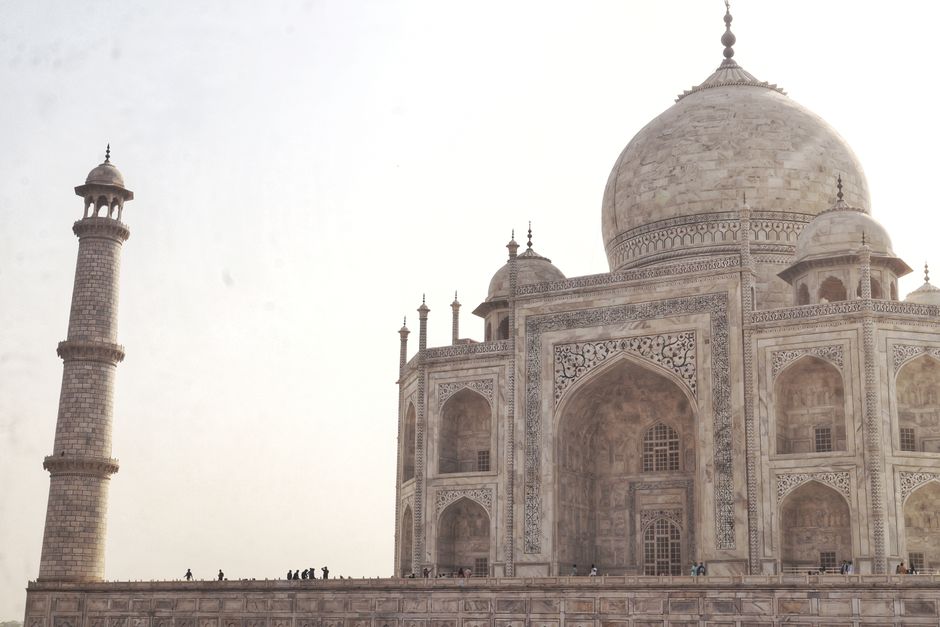
Rising above the banks of the Yamuna River, this monument of grief and devotion was commissioned in 1631 by Mughal Emperor Shah Jahan following the death of his empress, Mumtaz Mahal. Architect Ustad Ahmad Lahori directed thousands of stonecutters, calligraphers, and inlayers to realize this apex of Indo-Islamic symmetry, completing the central marble complex over two decades. The mausoleum's iconic silhouette features a 73-meter bulbous onion dome framed by four tapering, three-tiered minarets, which were engineered with a slight outward lean to protect the central crypt in the event of an earthquake. Crossing the threshold of the red sandstone Great Gate, travelers encounter the gleaming white Makrana marble mirrored across the water channels of a quadripartite Persian *charbagh* (paradise garden). Moving closer, the monumental scale gives way to staggering lapidary detail: vaulted *iwans* are adorned with masterfully cut *parchin kari* (pietra dura inlay), where semi-precious lapis lazuli, carnelian, and jade blossom into sinuous floral vines and fluid Qur'anic inscriptions. Standing on the marble plinth, visitors watch the crystalline facade transform in real time with the changing light, shifting from a delicate rose gold at sunrise to an incandescent, blinding white at midday, before settling into an ethereal, ghostly silver beneath the evening sky.